
Group exhibitions, projects; Partnership projects
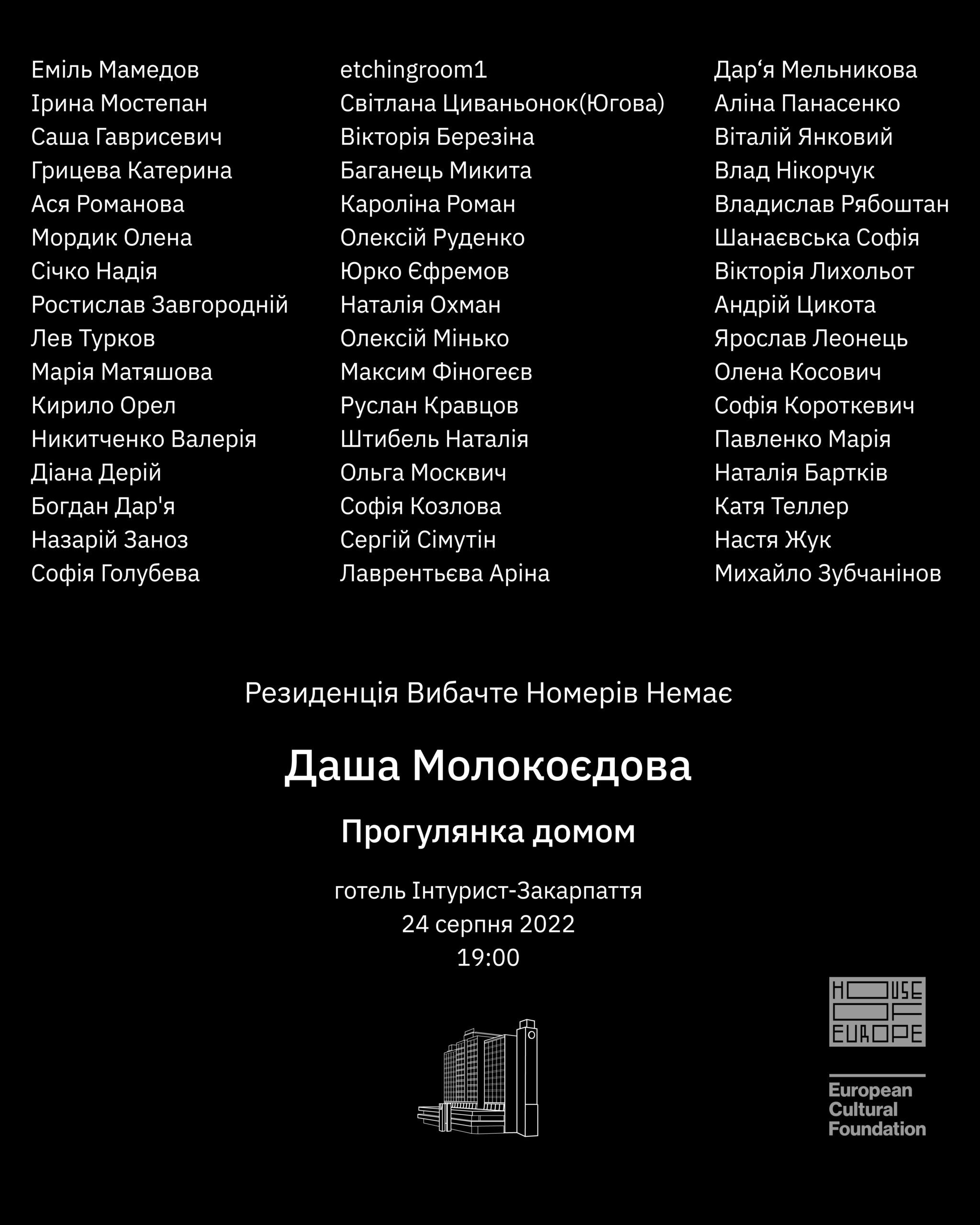
Group exhibition “Walking home”
Residence Sorry No Rooms Available
Curator Dasha Molokoedova
August 24 – September 1, 2022
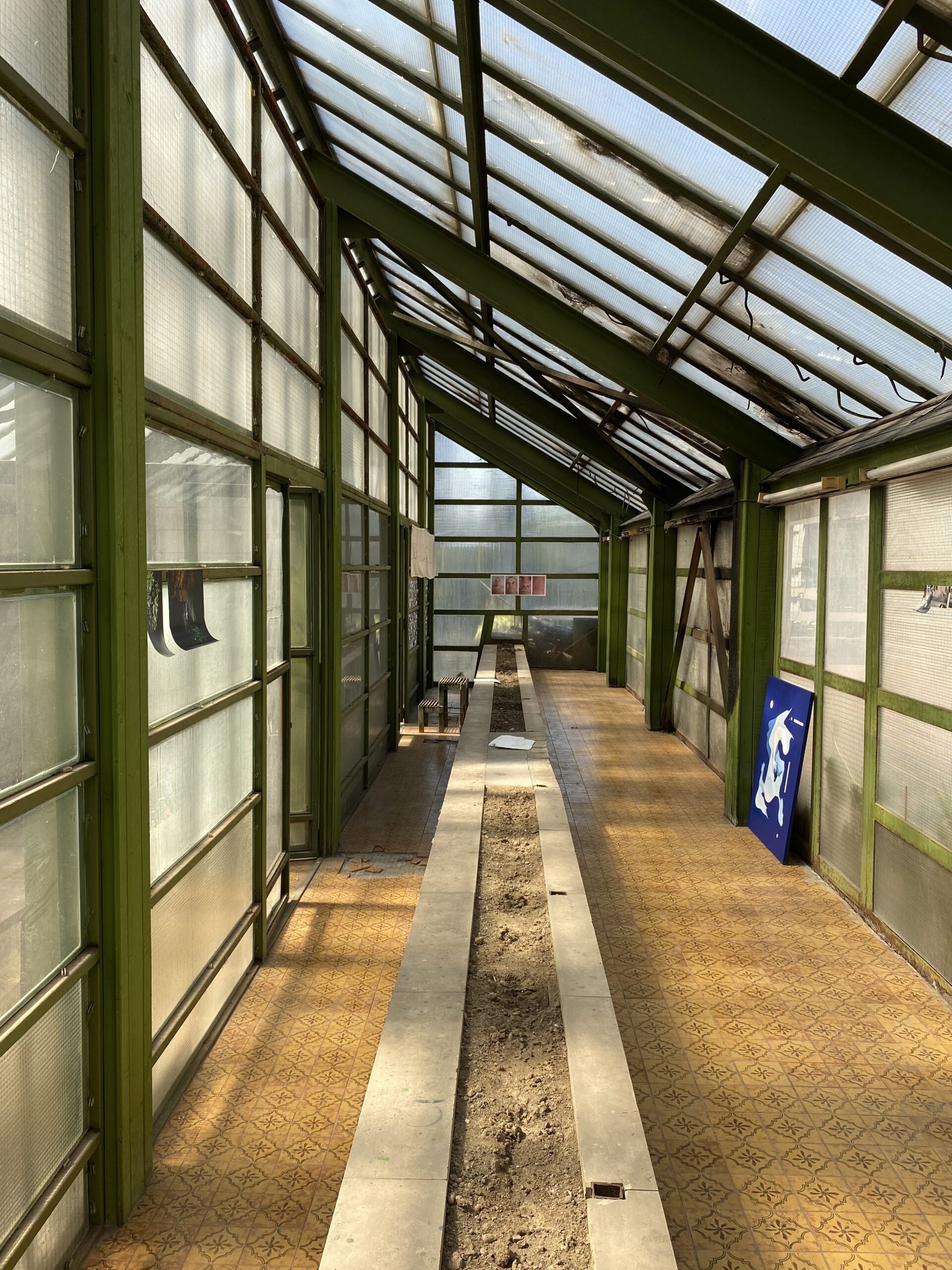
Place: Hotel “Intourist-Zakarpattia”, Glass space, corridor to the inner courtyard, rooms: 1416, 1224, Double room and other places
Participants of the exhibition:
Dana Marianchuk, Daria Melnikova, Alina Panasenko, Vitaly Yankovy, Vlad Nikorchuk, Vladyslav Ryaboshtan, Shanaevska Sofia, Roksolana Zharkova, Viktoria Lykholyot, Andriy Tsikota, Yaroslav Leonets, Olena Kosovych, Yulia Stankevich, Katya Teller, Nastya Zhuk, Mykhailo Zubchaninov, etchingroom1, Svitlana Tsivanyonok(Yugova), Victoria Berezina, Baganets Mykyta, Karolina Roman, Oleksiy Rudenko, Yurko Efremov, Nataliya Okhman, Oleksiy Minko, Maksym Finogeev, Ruslan Kravtsov, Natalia Shtibel, Olga Moskvych, Sofia Kozlova, Sergey Simutin, Arina Lavrentieva, Emil Mamedov, Iryna Mostepan, Sasha Havrysevych, Hrytseva Kateryna, Diana Drabik, Olena Mordyk, Nadiya Sichko, Stanislava Ovchinnikova, Rostislav Zavhorodniy, Lev Turkov, Maria Matyashova
Kyrylo Orel, Valeriya Nikitchenko, Diana Derii, Bohdan Darya
Nazarii Zanoz, Sofia Golubeva, Daryna Berdynskikh, Mikhail Markyn, Dasha Molokoedova.
Curator’s text:
The house is constructed of photos, videos, audio, paintings, graphics, poetry, feelings, memories, concrete walls and desire. The desire to show, tell and be heard. The exhibition “Walking Home” will present the works of artists from different parts of Ukraine, with different stories and relationships with their homes.
At the moment when the house becomes a time, a person, a thought, when black and white are mixed, when the roof flies off, when the house was only in the middle, when the house is here, we get a common building, completed or not, on which you can walk and feel this something close to home and immortal, which sometimes we do not delay or delay so much that it hurts.
We invite you to the exhibition “Walking Home”, we will take a short walk, and then – around the houses.
Dasha Molokoedova’s residence was made possible thanks to the support of:
European Cultural Foundation
House of Europe
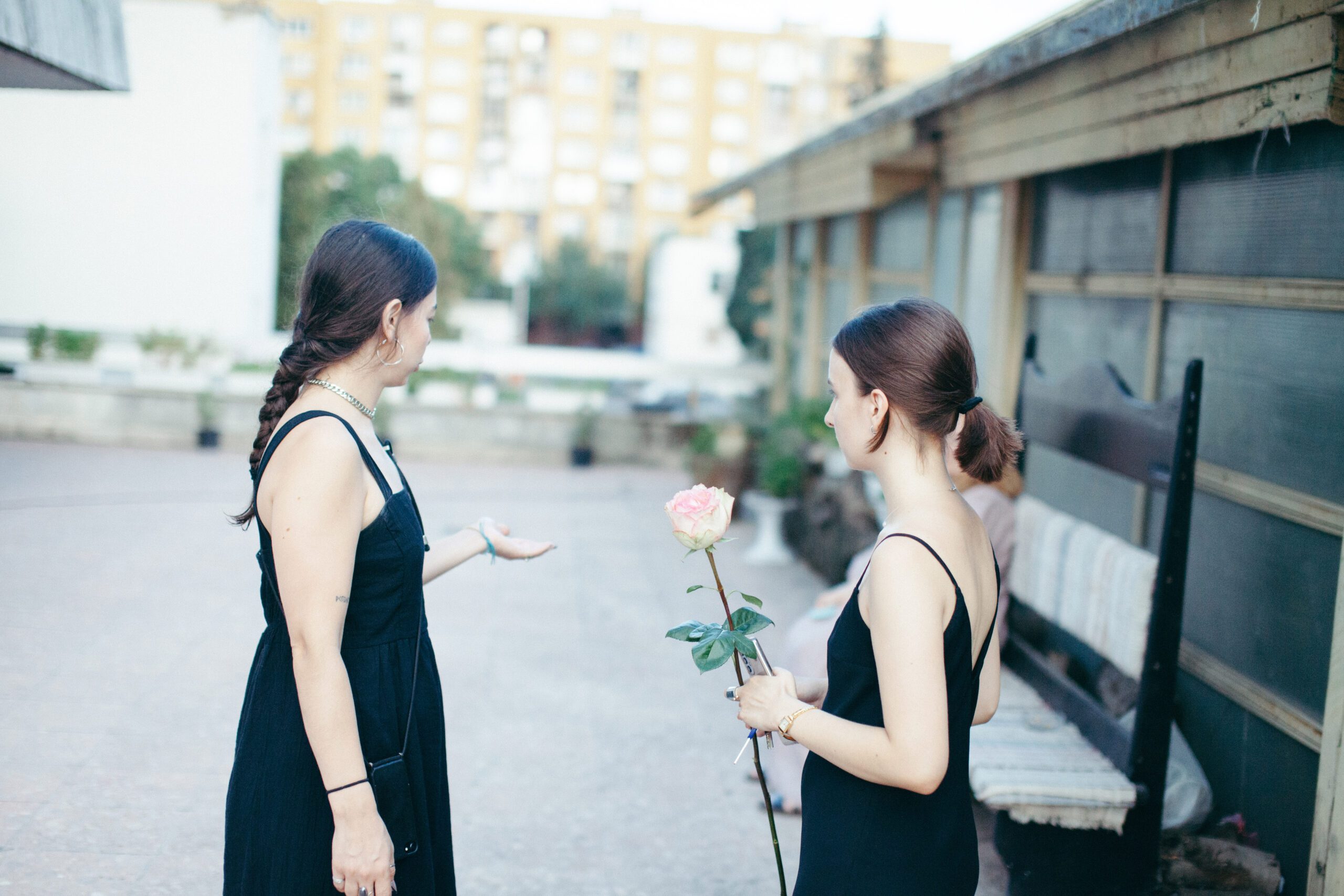
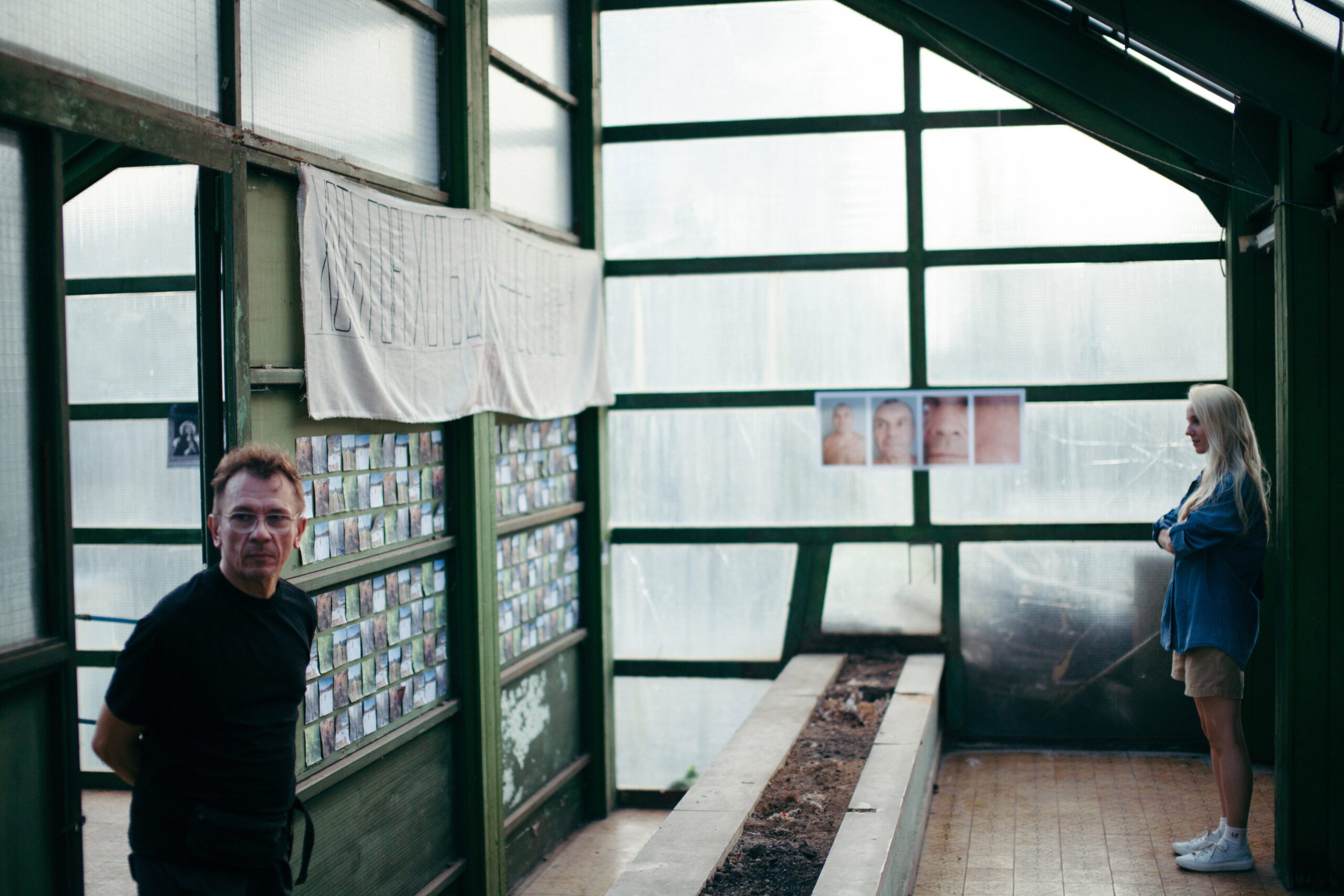
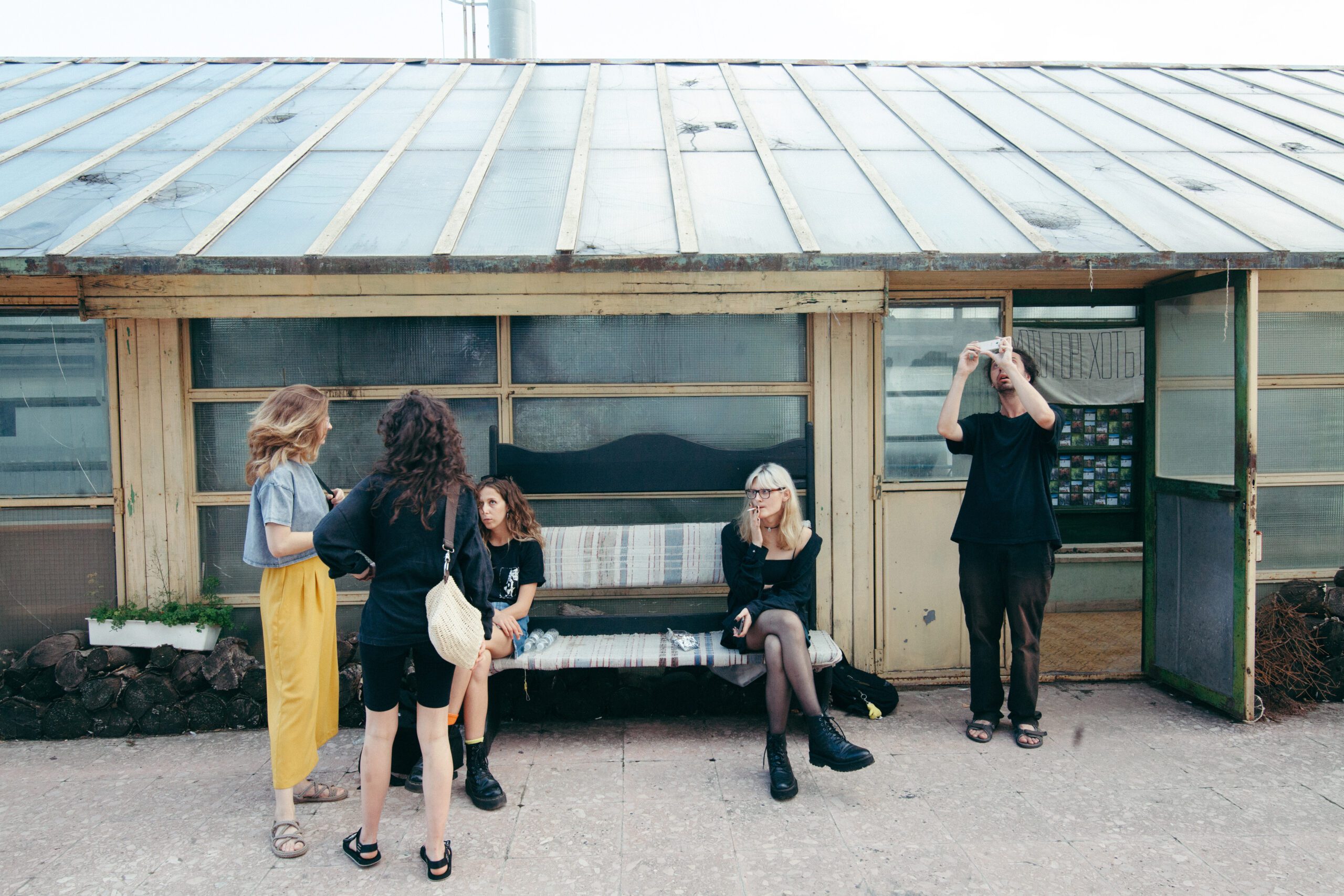
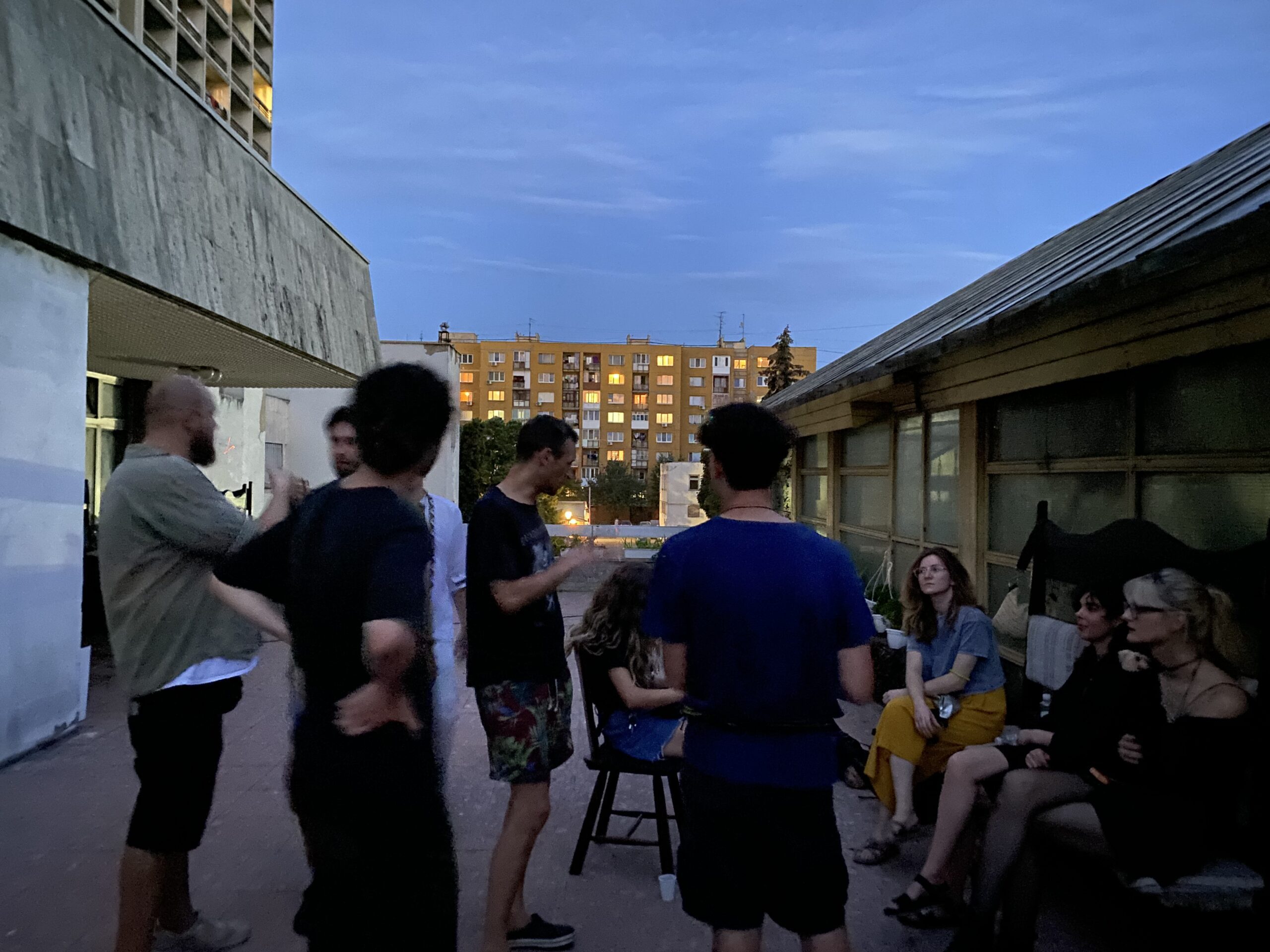
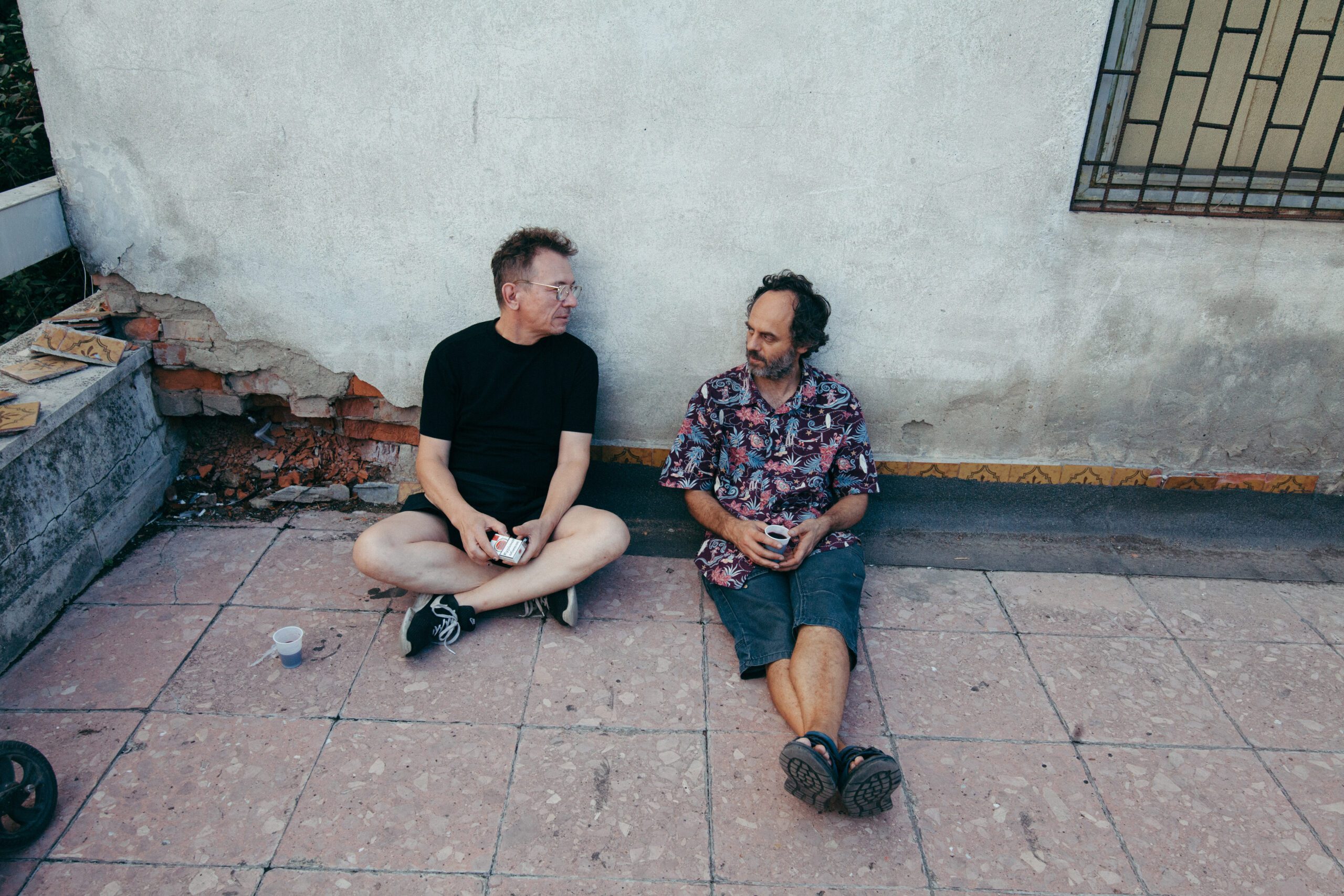
Fragment of the group exhibition “Walking Home”
Exhibition documentation – Photo credit M. Melnychenko, P. Ryaska
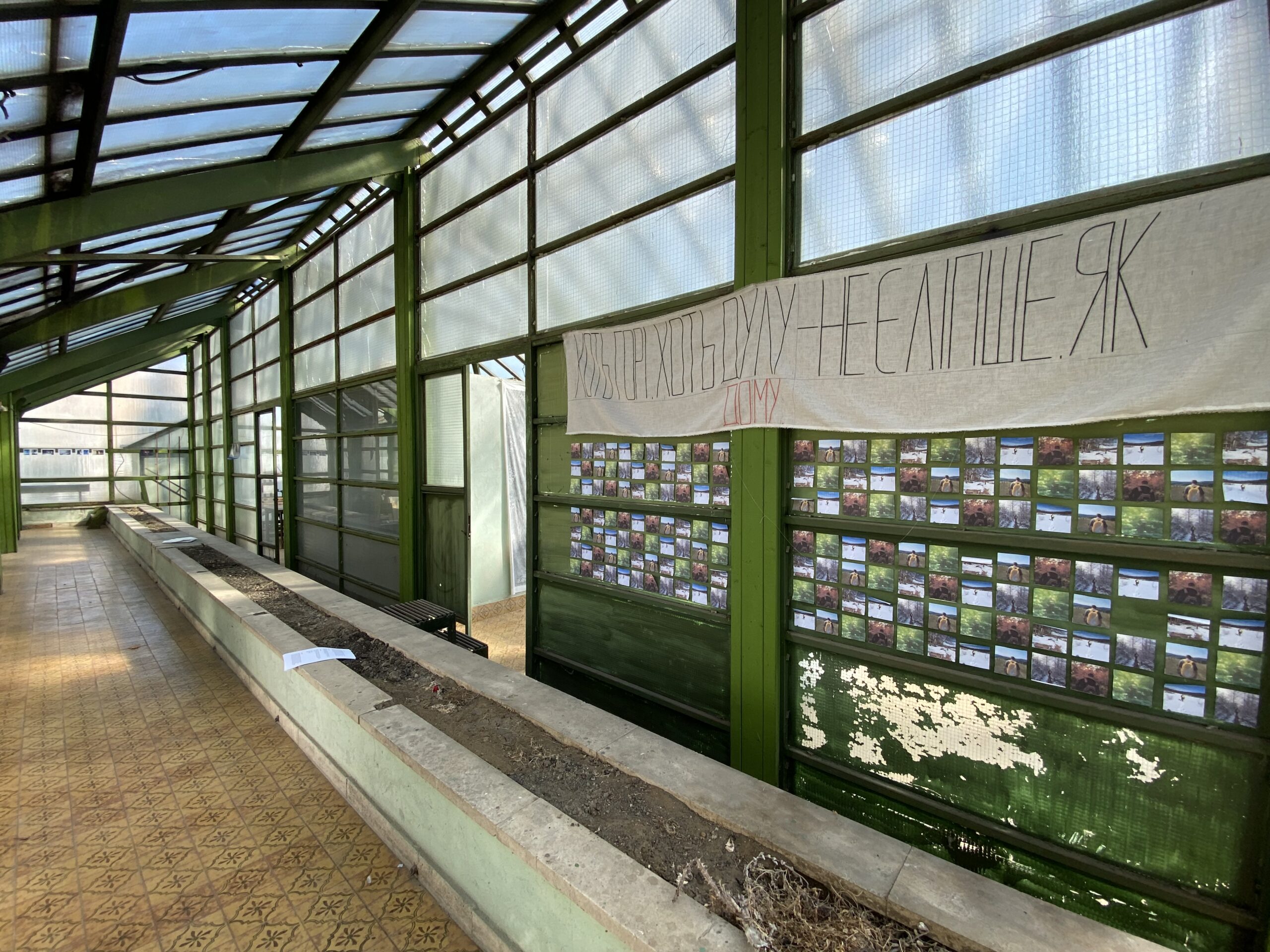
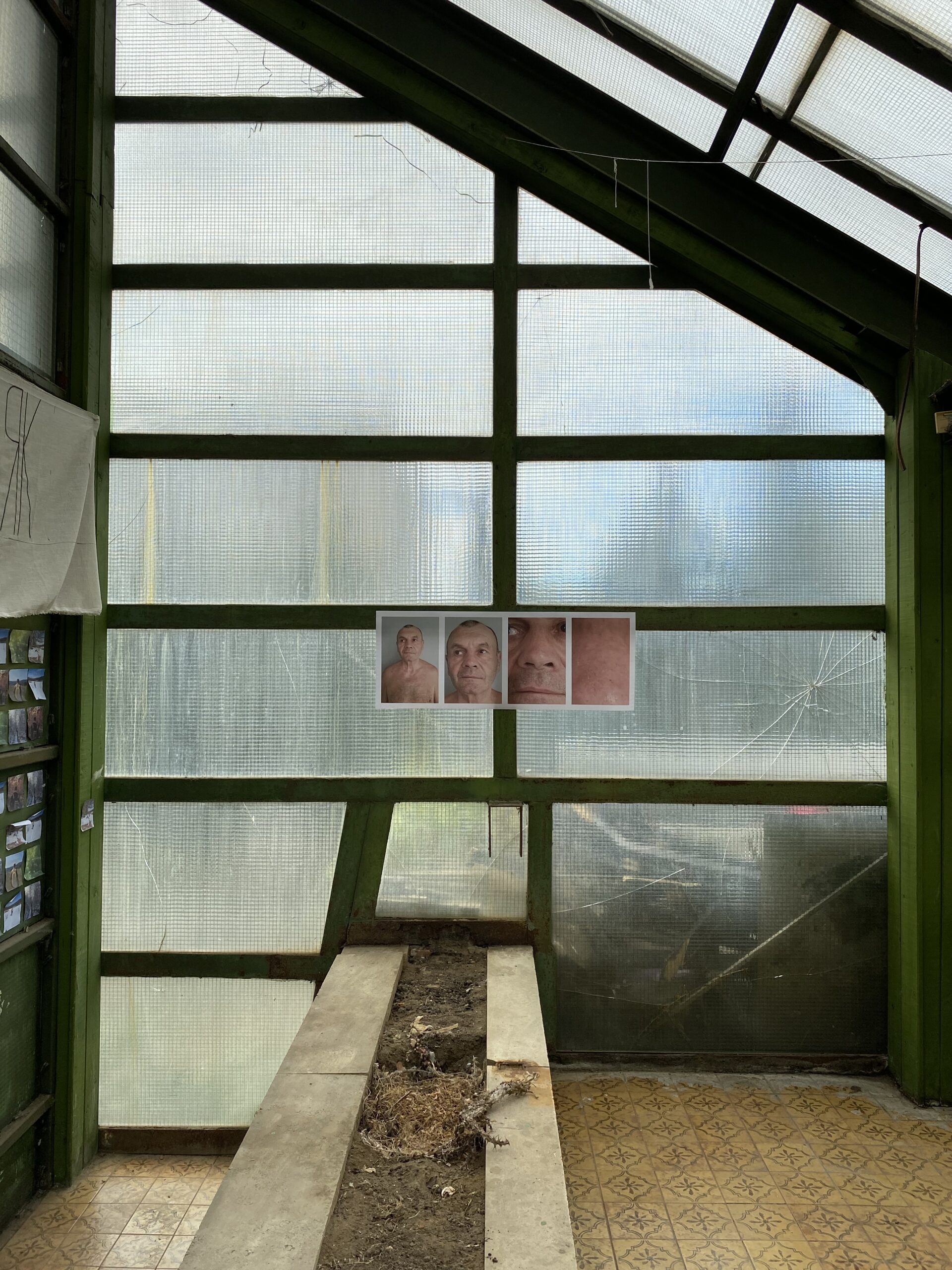
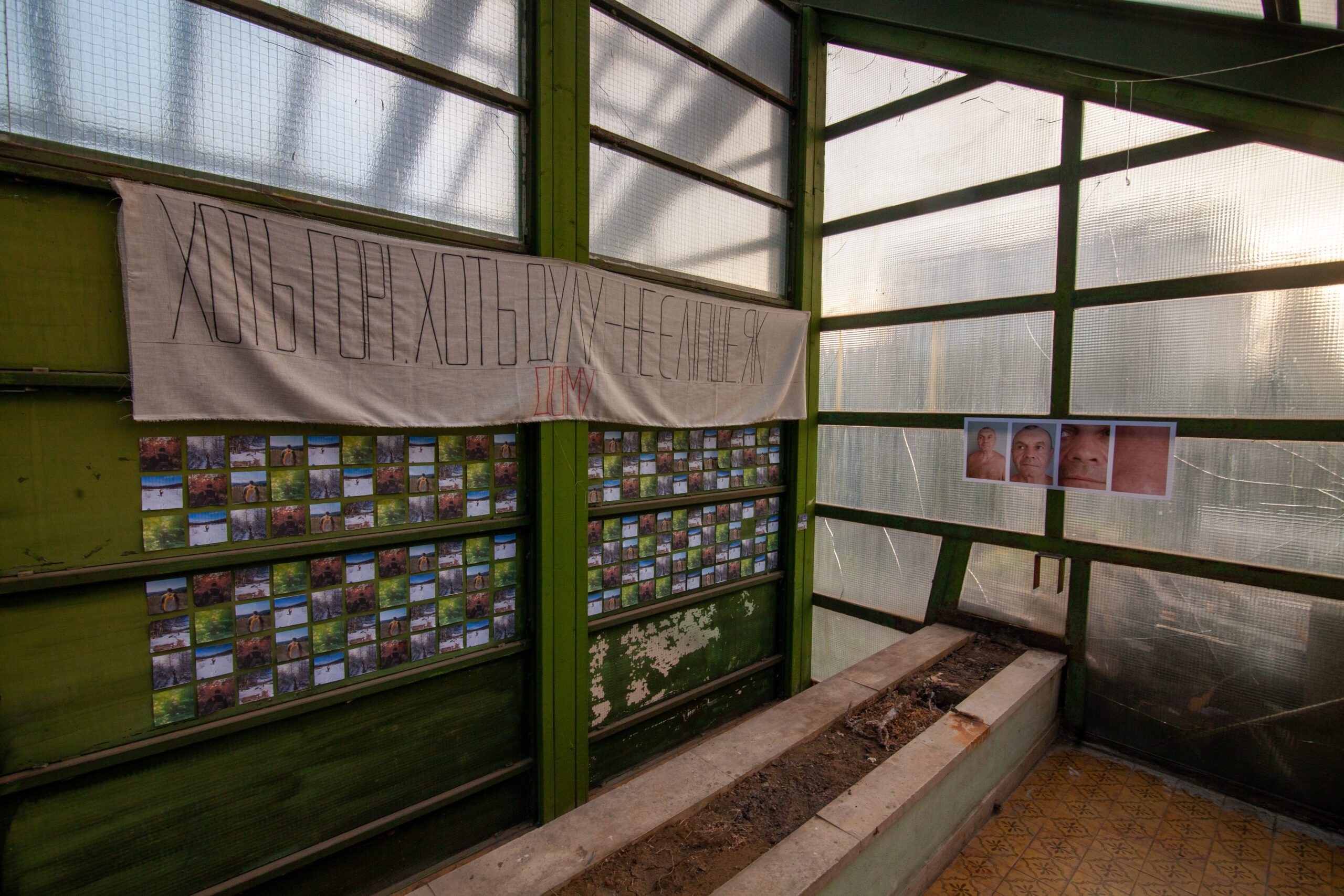
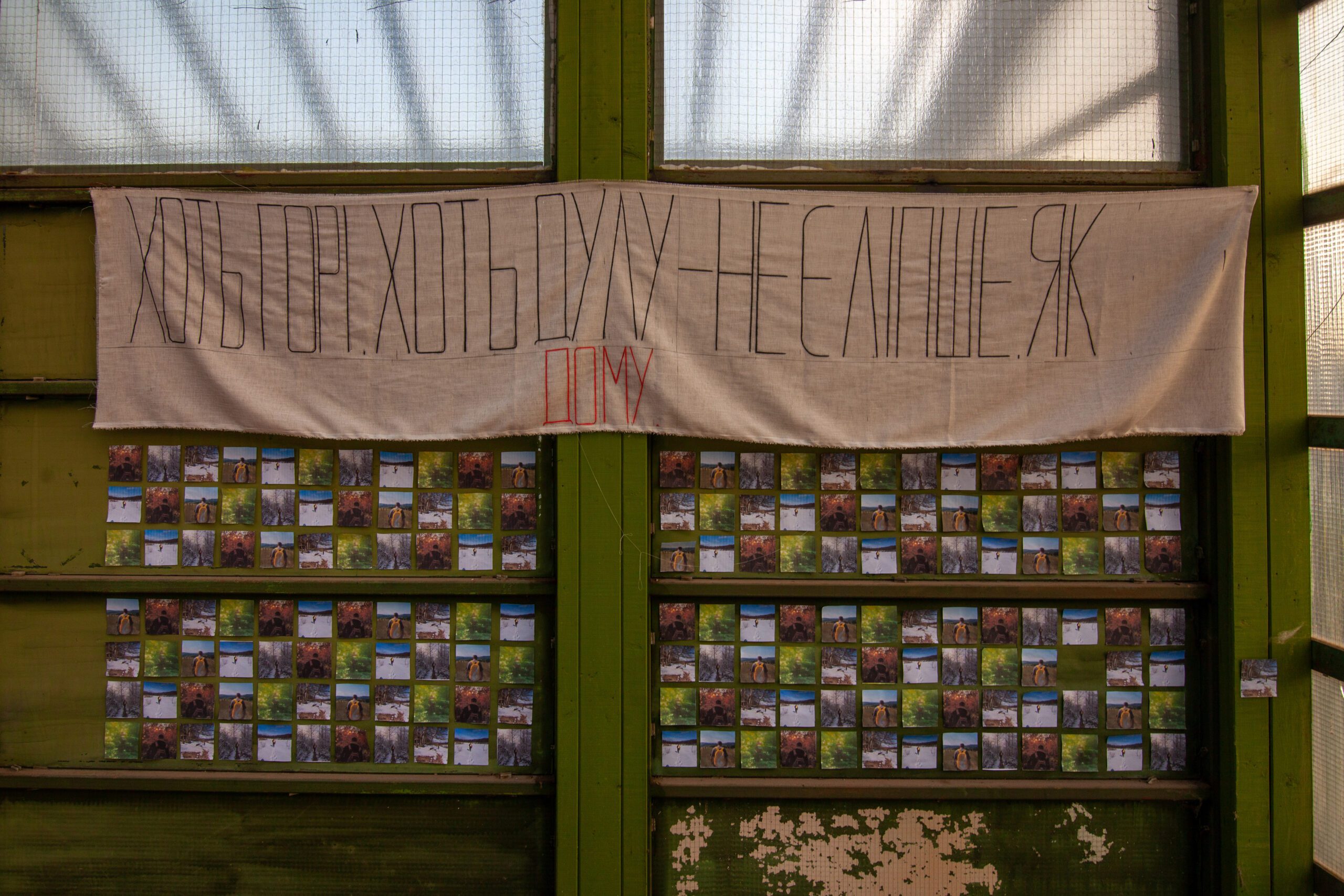
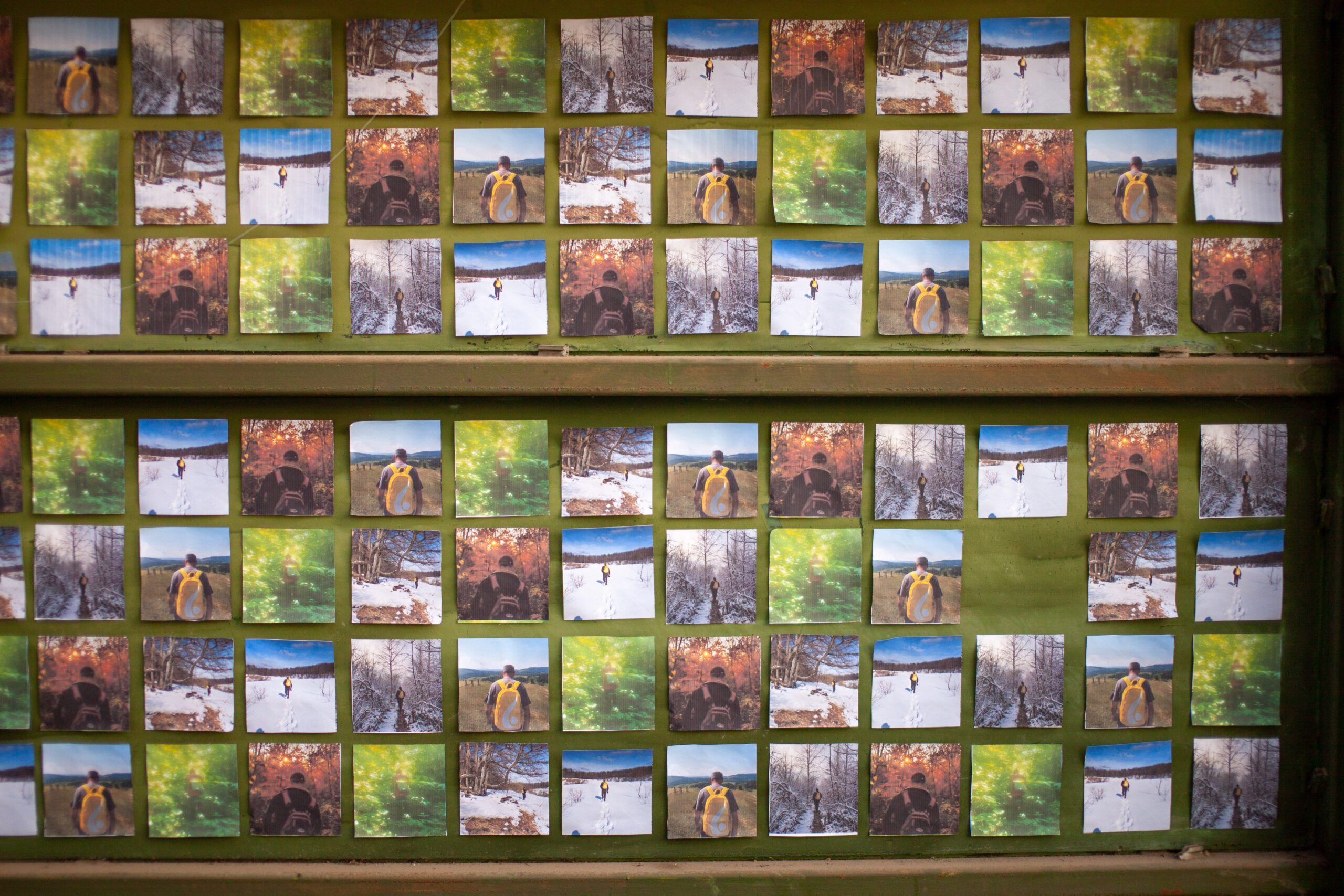
Natalia Shtibel
“WHETHER IN THE MOUNTAINS OR IN DULU – THERE IS NOTHING BETTER THAN HOME.”
1) November 2021 Antalovetska Polyana
2) August 2021 Antalovetska Polyana
3) July 2021 Yavirnyk
4) March 2021 Antalovetska Polyana
5) February 2021 Antalovetska Polyana
6) August 2020 Yavirnyk
I go to the forest with Dad. And this is the refrain. In places. In people. In words. In actions. One of them is actions that border on words. After all, action is walking, words are speaking. Rhyme – refrain – repetition – learning. Phrase: “THOUGH IT HURTS, THOUGH IT’S AWAY – THERE IS NOTHING BETTER THAN HOME.” My Dad acts in it, speaks in it, is in it. Refrain It is difficult to assess the fairness of the phrase. Winding circles around without finding home. Home in the head.
“HOME IN THE HEAD”
There is no home. Home is your head and my head.
Nishpore take a look find
Someone else’s home. And not your own.
Home is your head and my head.
There is nothing better than home.
Exhibition documentation – Photo credit Mykhailo Melnychenko
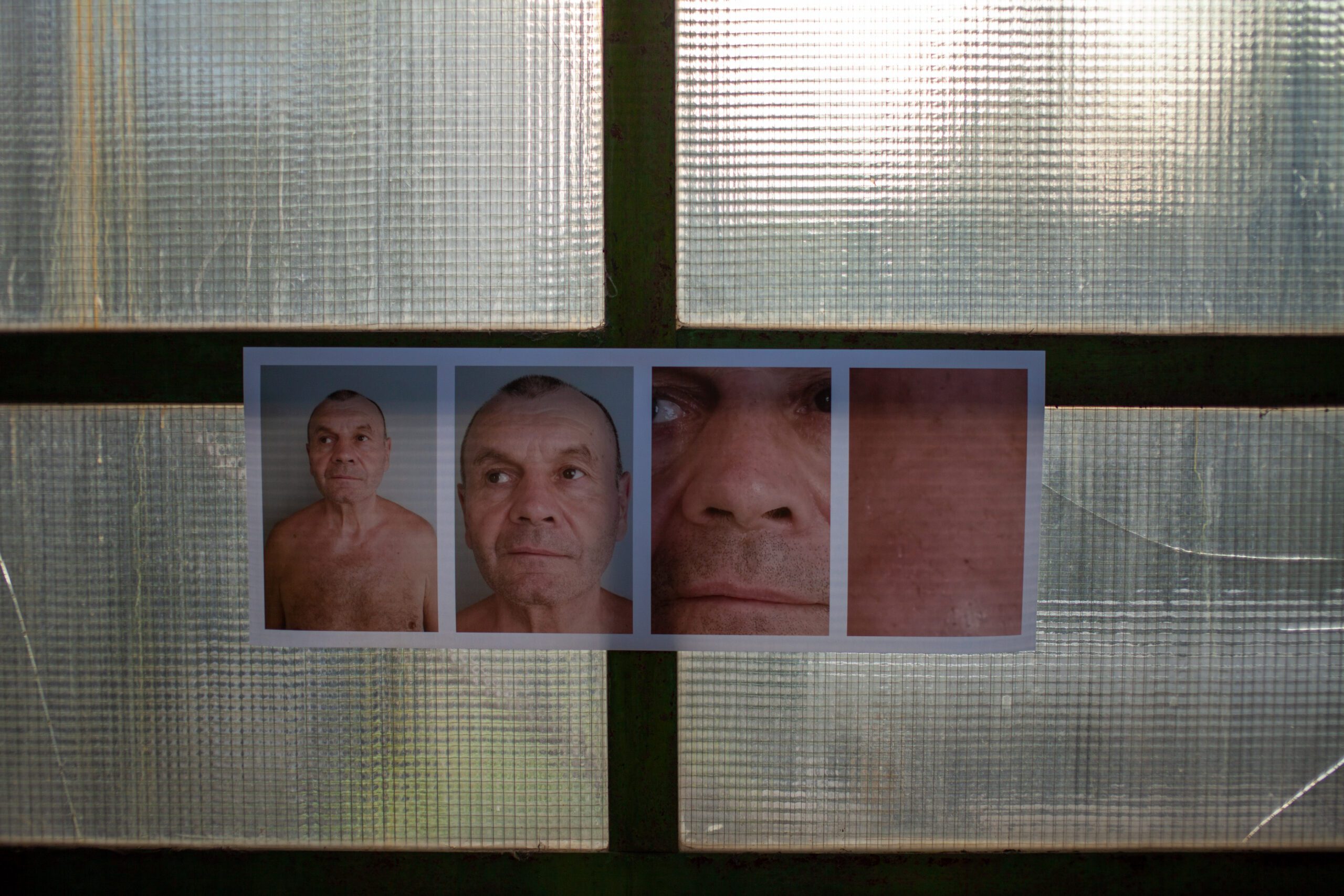
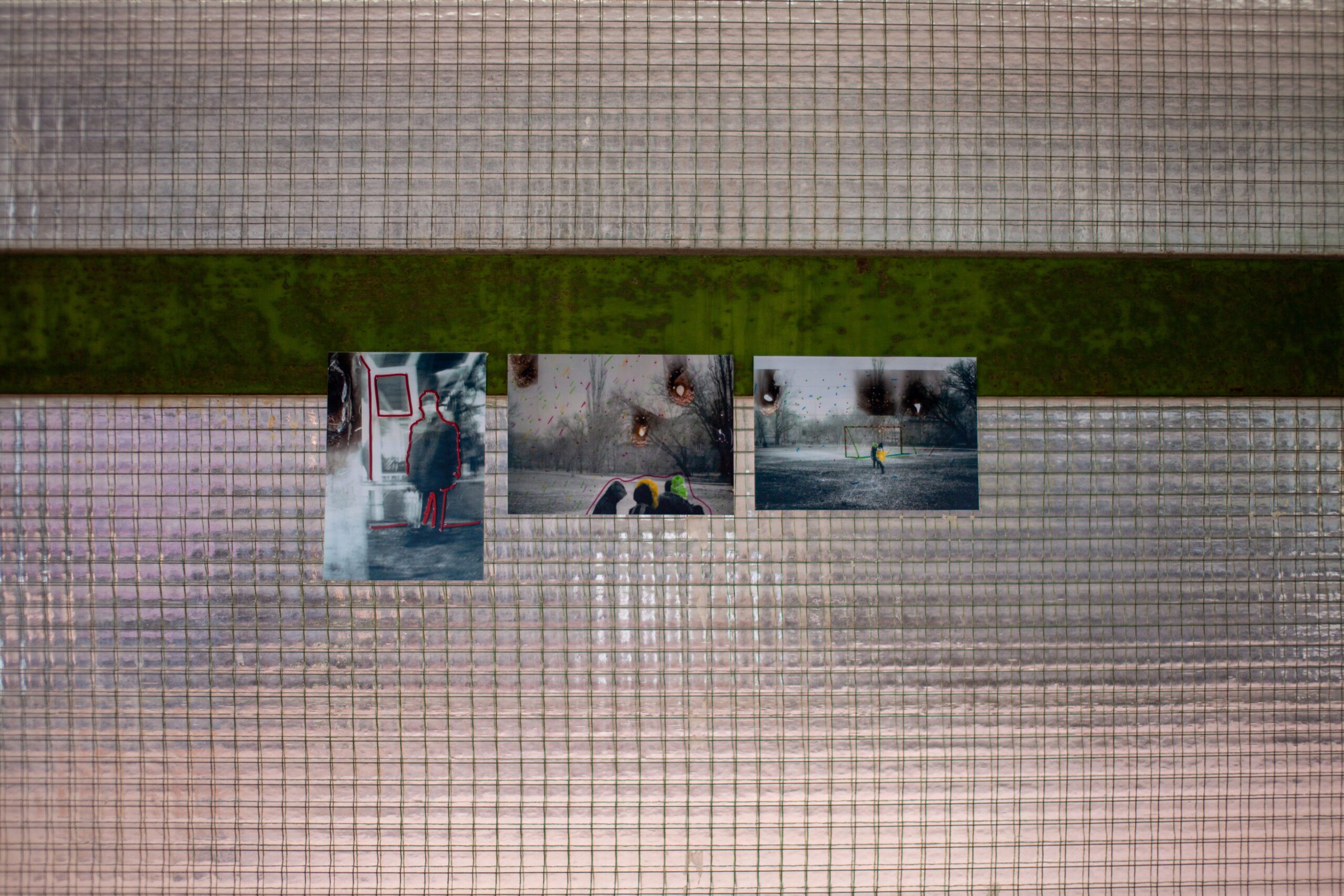
Alina Panasenko
Donbas in colors is my photo project, made in 2019-2022 in the city of Severodonetsk, in the backyard of school #5, where I personally studied. The main message is that war denies childhood.
Exhibition documentation – Photo credit Mykhailo Melnychenko
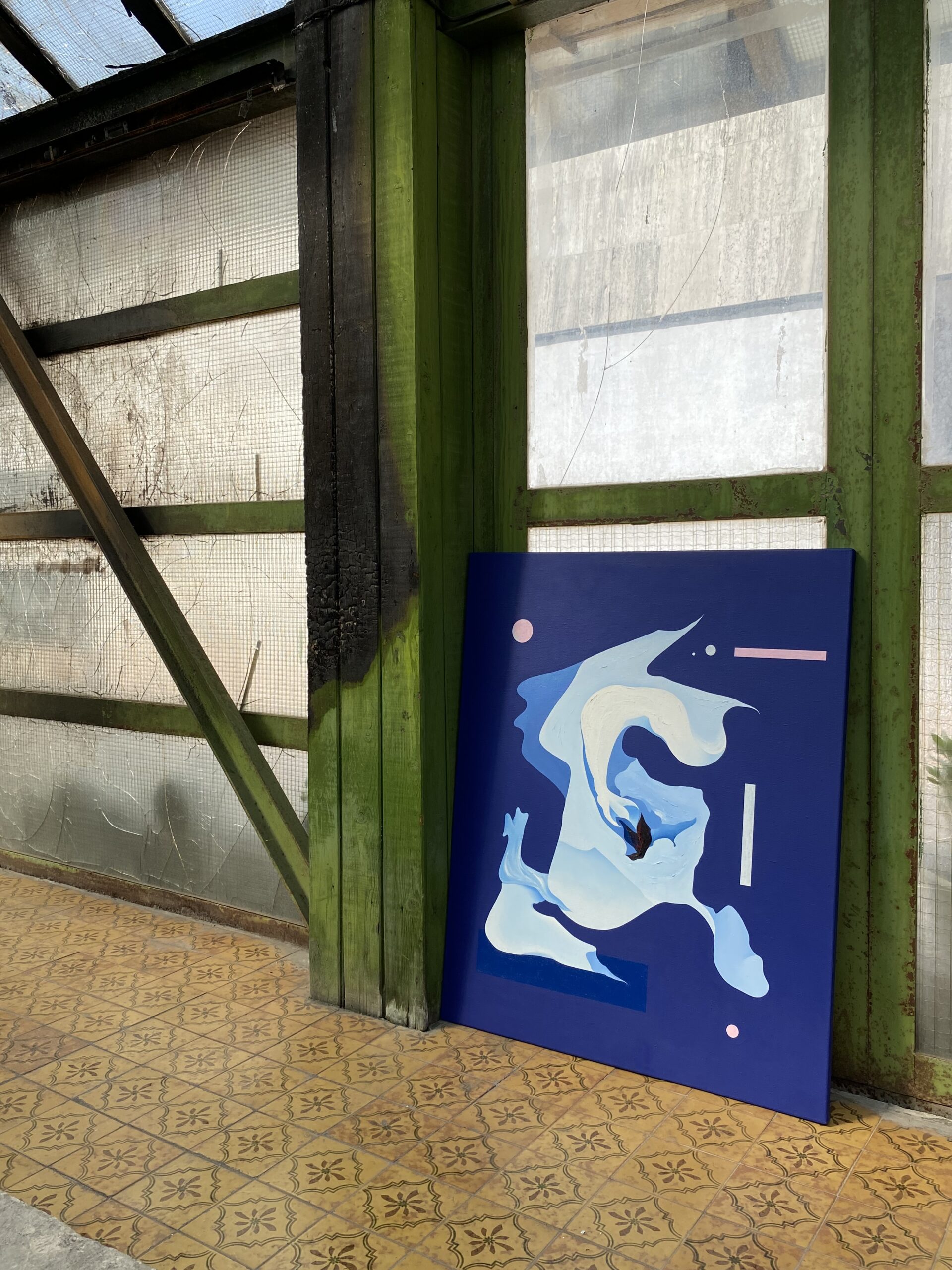
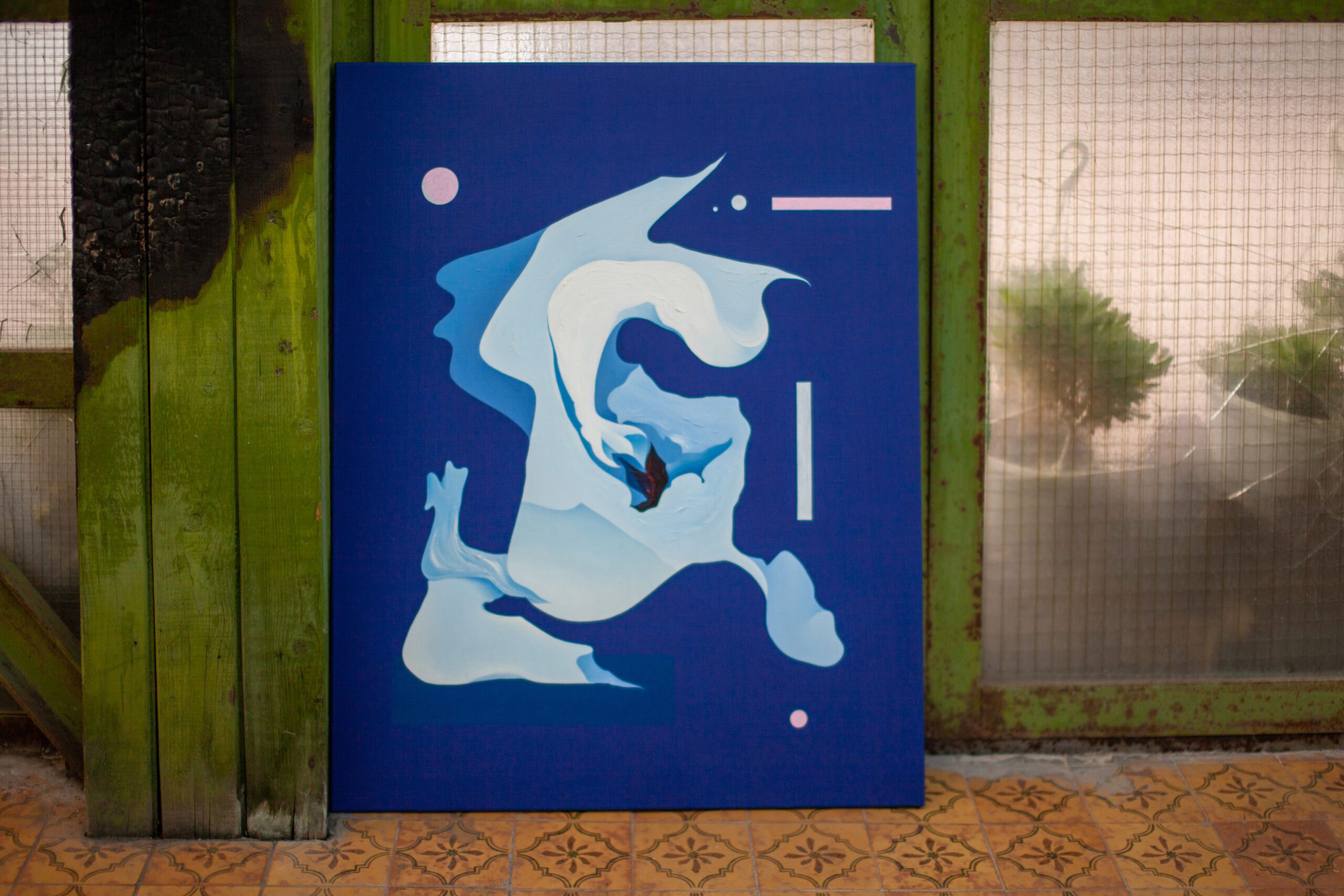
Rostyslav Zavhorodniy
Congratulations. I would like to present one of the works called “Indoor plant” from the series “Sensitive beings”. The graphic series of works was started back in 2020 on the eve of the first wave of the Covid-19 disease. “Sensitive beings” is a kind of reflection on the changes in the environment and the tension from not understanding what awaits us next. Recently, a graphic series of works was presented in the form of several paintings, the continuation of which I am currently working on. The series includes figurative painting depicting plants, animals and human figures, which are transformed through the prism of the author’s own vision
Exhibition documentation – Photo credit: 1 – Petro Ryaska, 2 – Mykhailo Melnychenko
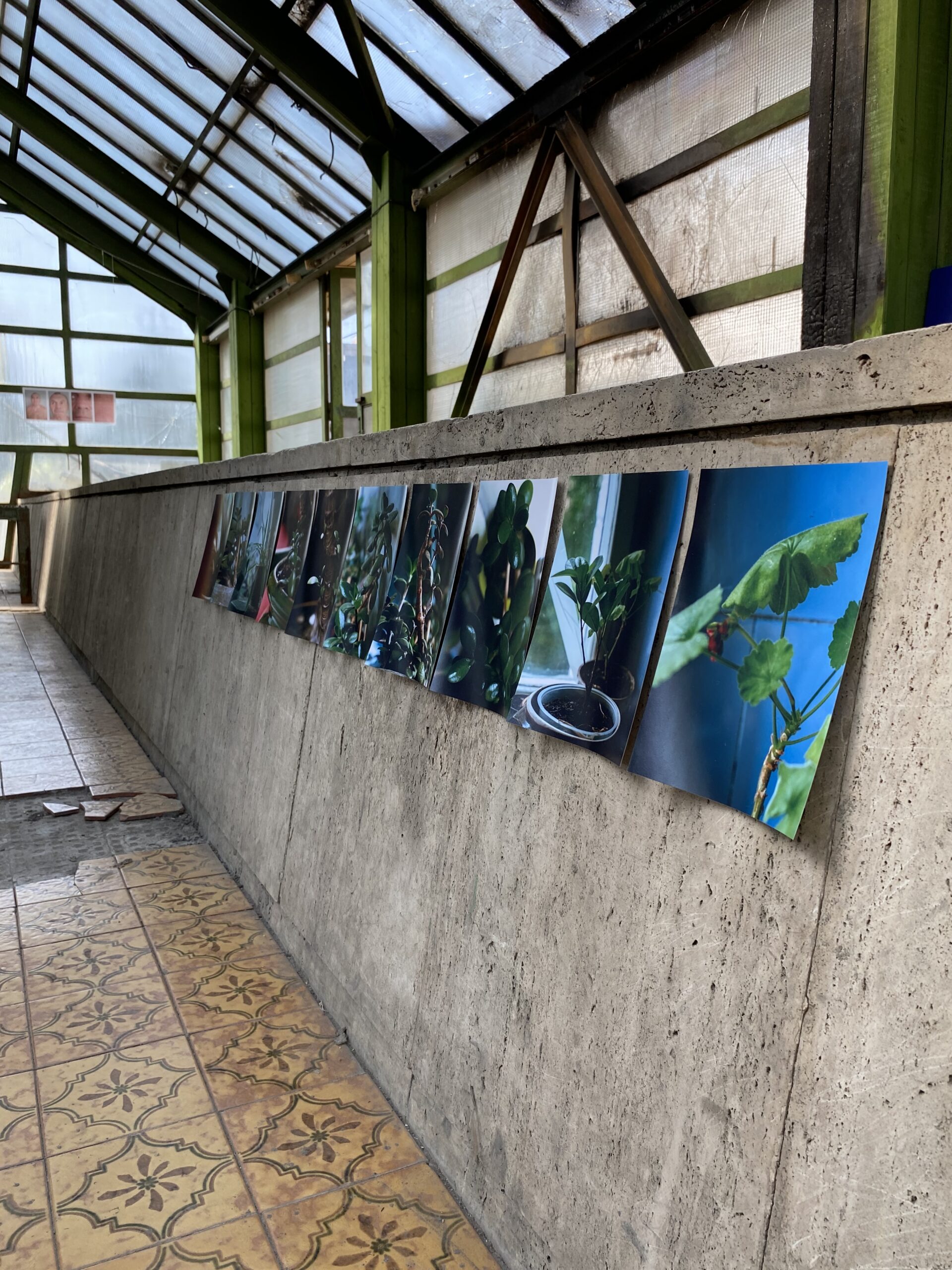
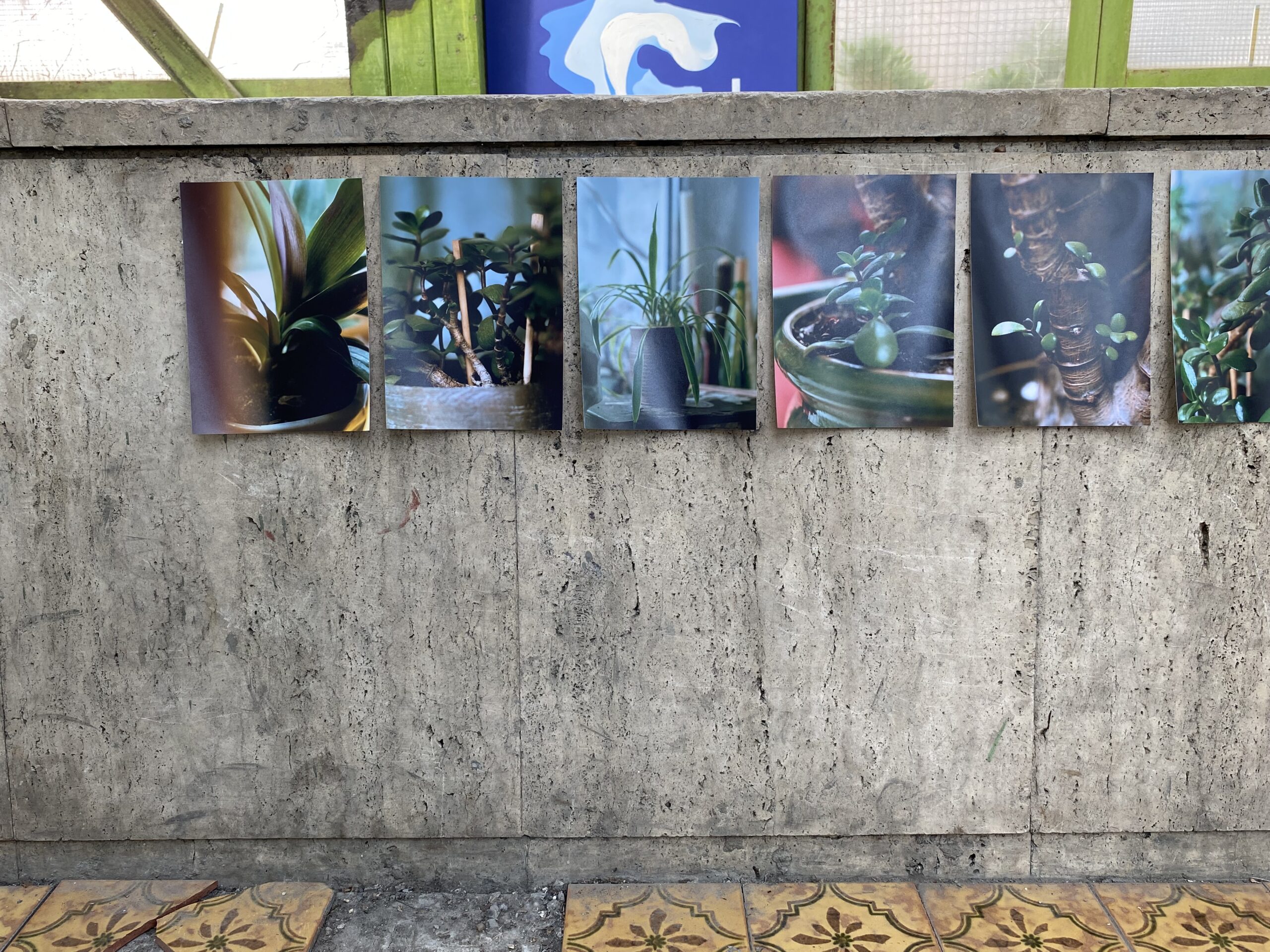
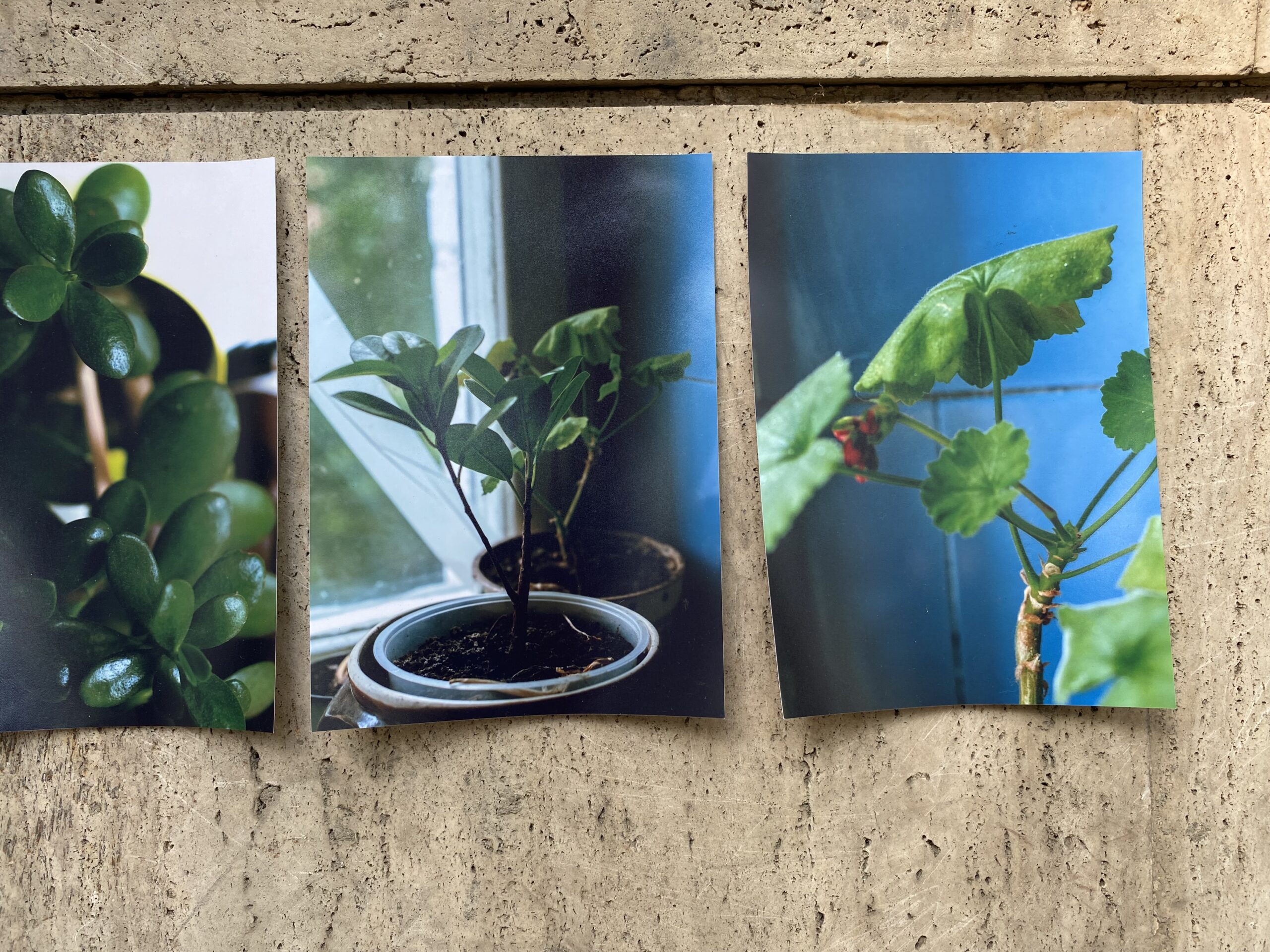
Mykhailo Zubchaninov
In the last month, I often visited my friend and watched how she creates a cozy home. In addition to things that remind her of some events in life, plants are an important part. They traveled with her wherever she lived and created a sense of home for her. Daily care for them gives a sense of peace, admiring how they grow brings joy. Every time she temporarily leaves home, she worries about her plants and cat, without which there would be no feeling of home comfort.
In the project
12 photos
Exhibition documentation – Photo credit Petro Ryaska
Ruslan Tremba
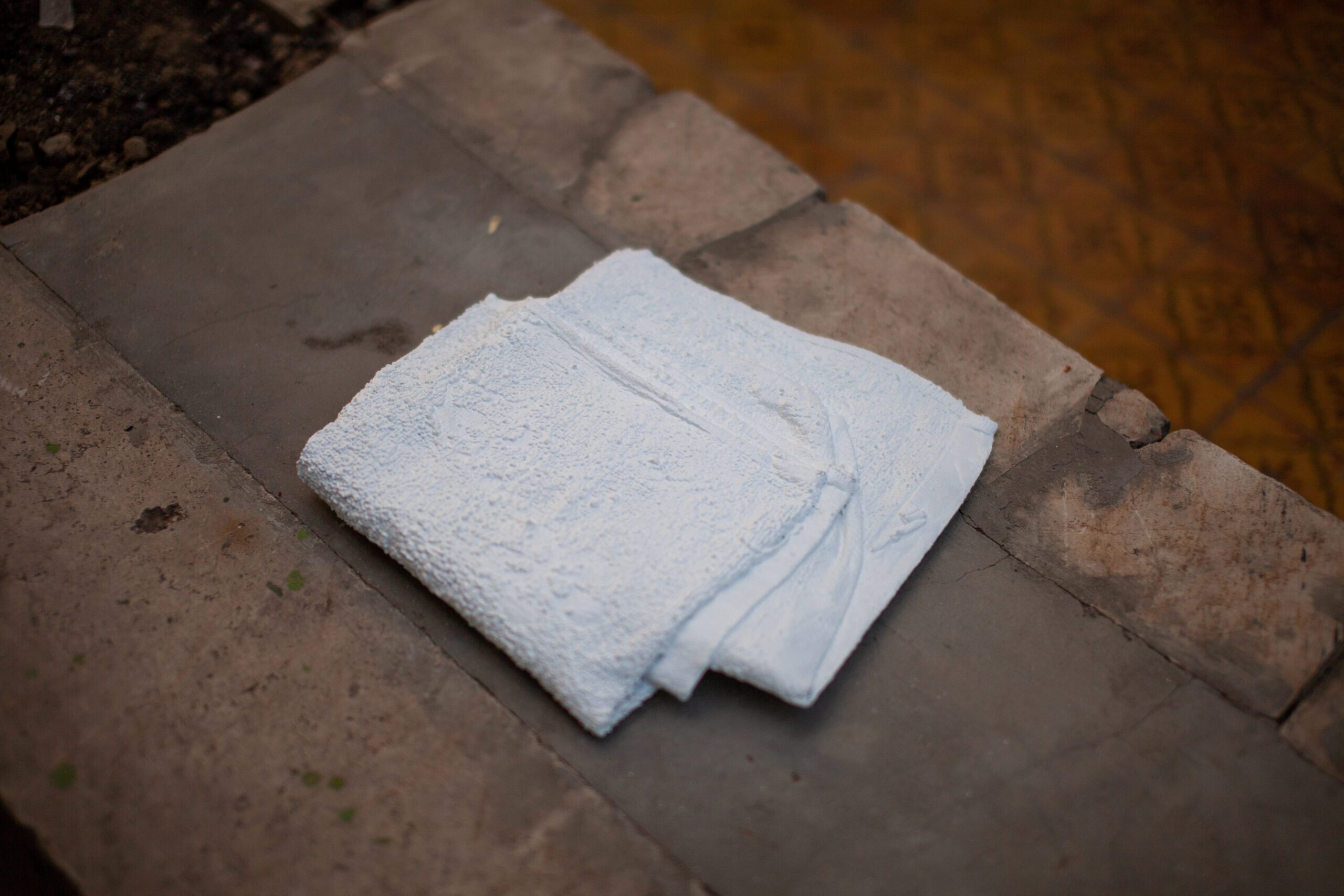
“Clean towel”
Exhibition documentation – Photo credit Mykhailo Melnychenko
Sofia Kozlova
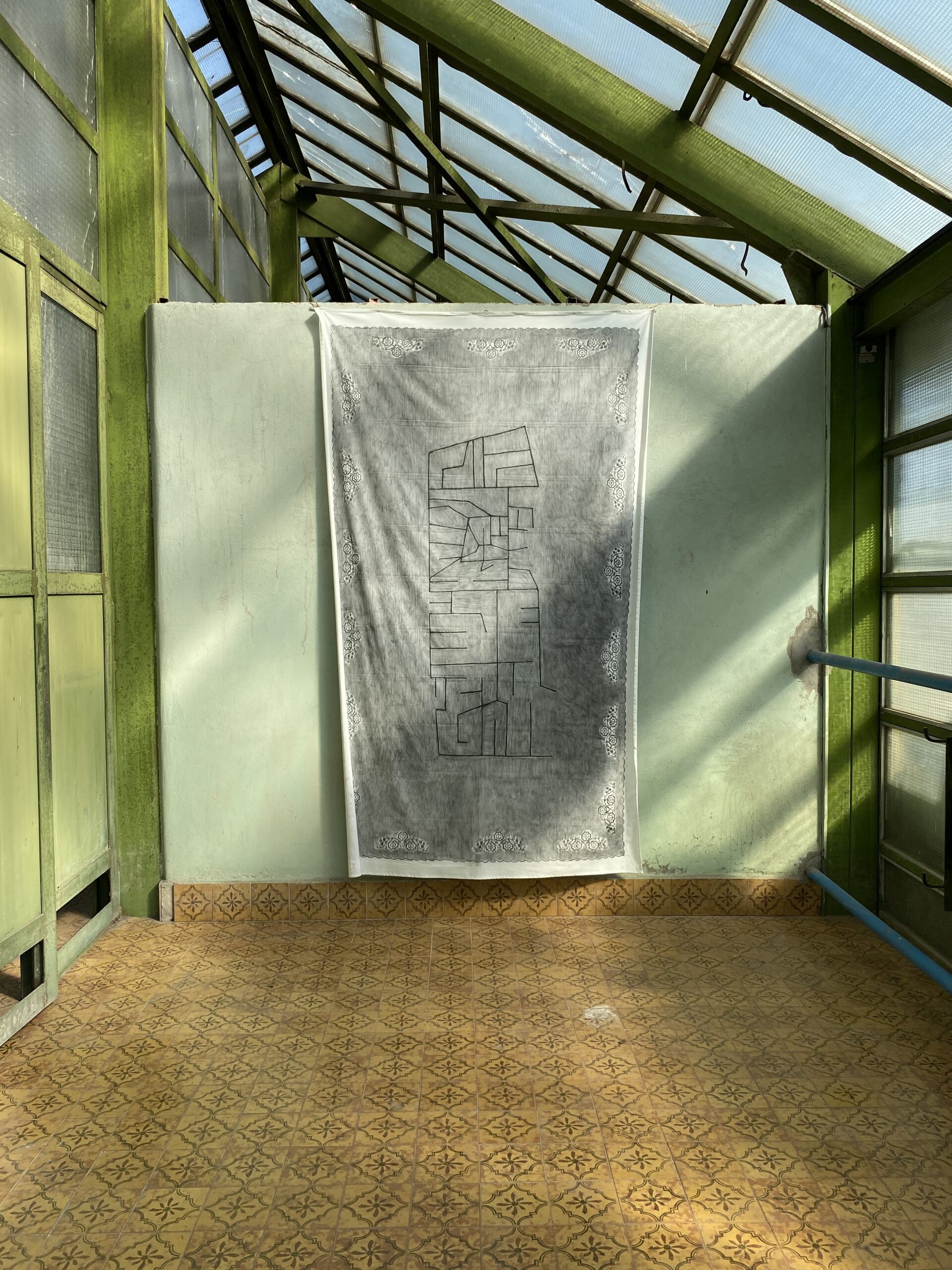
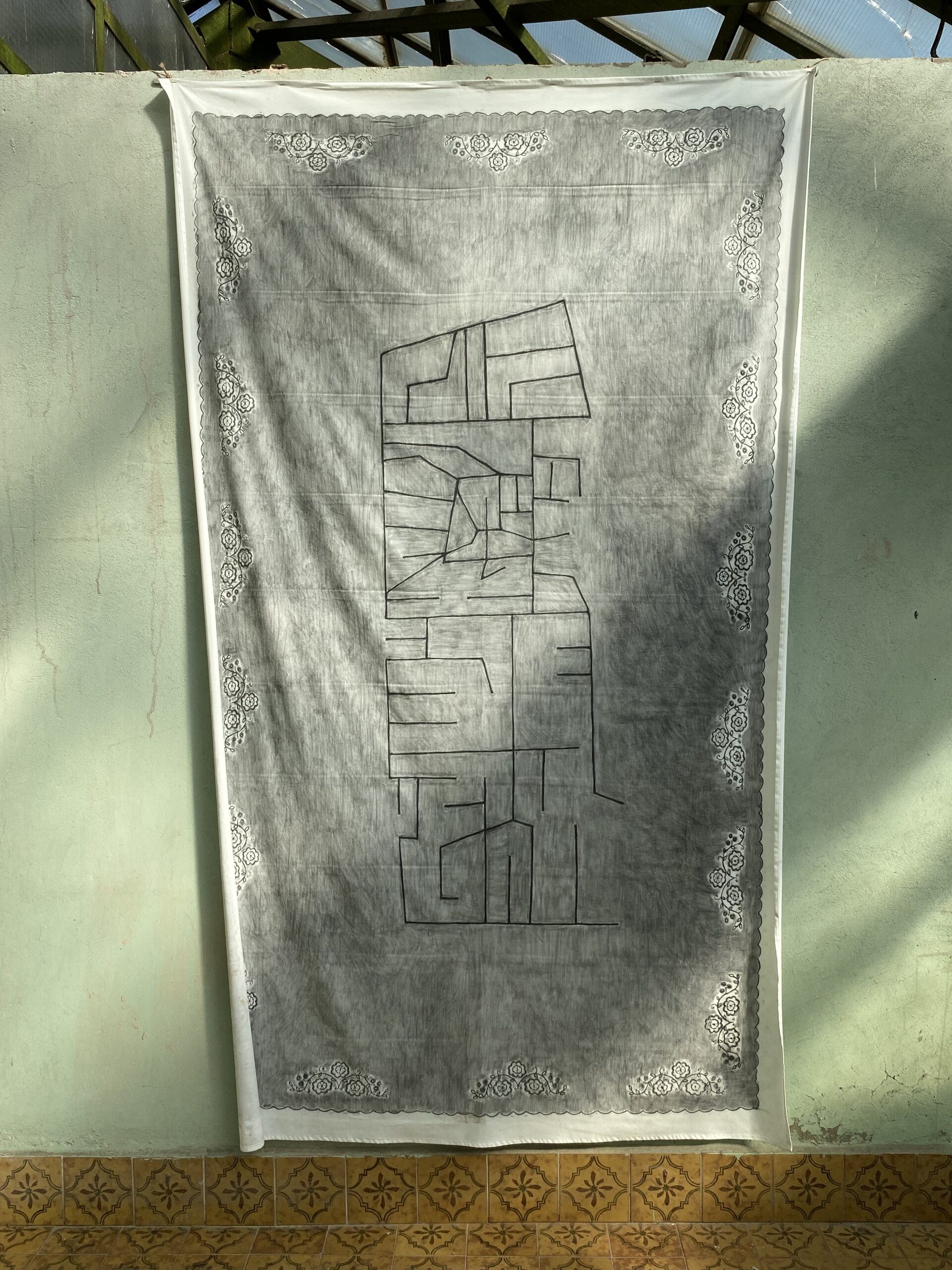
“Cotton House”
Object, 230 cm x 150 cm; fabric, graphite pencil.
Two months ago, a tablecloth was brought to our headquarters for weaving camouflage nets. When, after painting, I sat down to cut it into strips for weaving, I noticed that the edges were decorated with a specific net. My grandmother calls this technique “richelier”. This delicate pattern in white thread was identical to the one she herself had embroidered on the tablecloths. Most of these products already
Exhibition documentation – Photo credit Petro Ryaska
Nastya Zhuk
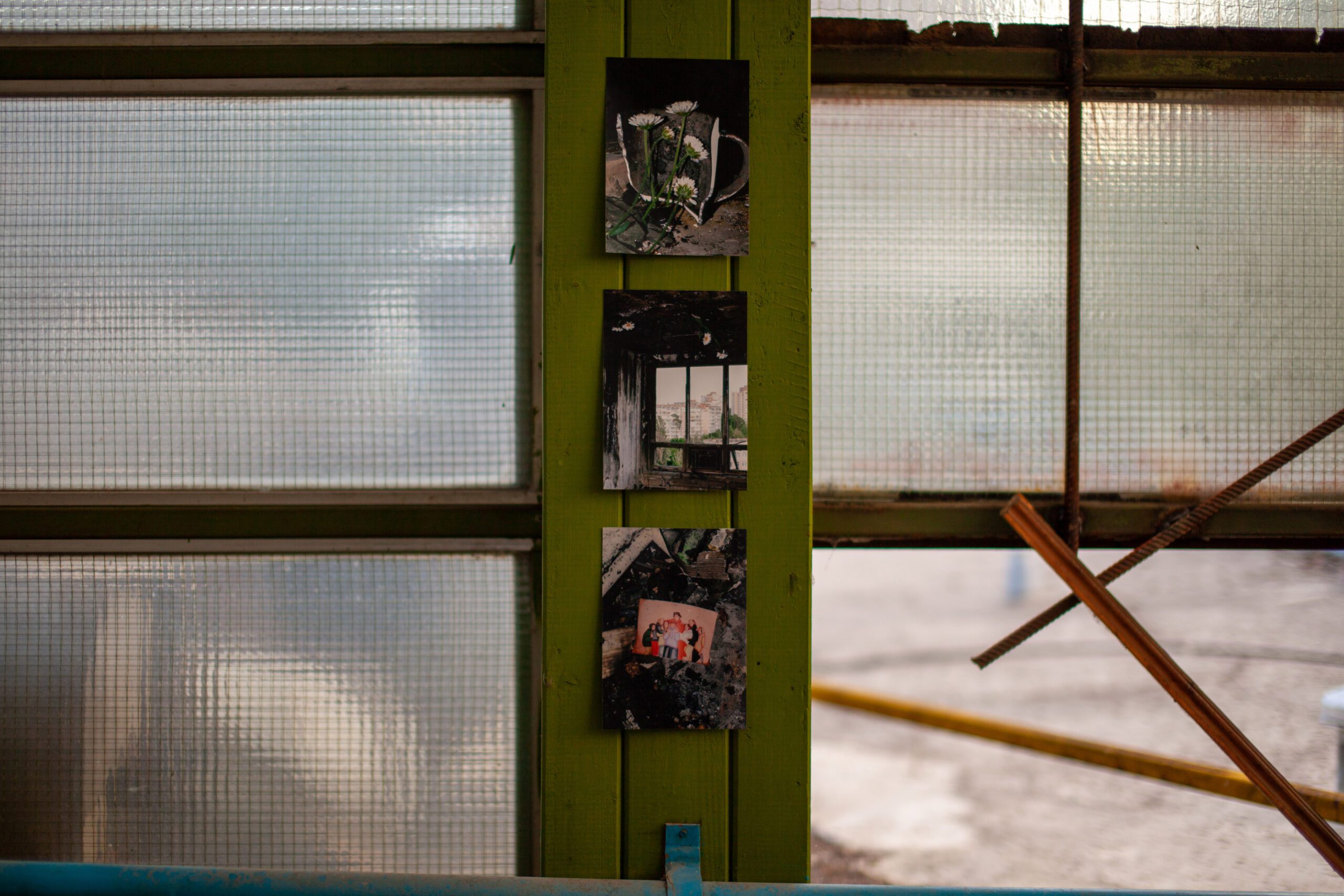
This series was filmed in one of the Kyiv high-rises, which was destroyed by Russia with a missile strike. My friend lived in one of the apartments before the war and our first offline meeting happened right there.
Watching and listening to my friend’s stories about this place, inhaling the ashes of a recently burned down apartment, I decided to convey this atmosphere of anxiety, sadness and uncertainty with the help of photography.
Exhibition documentation – Photo credit Mykhailo Melnychenko
Maria Pavlenko
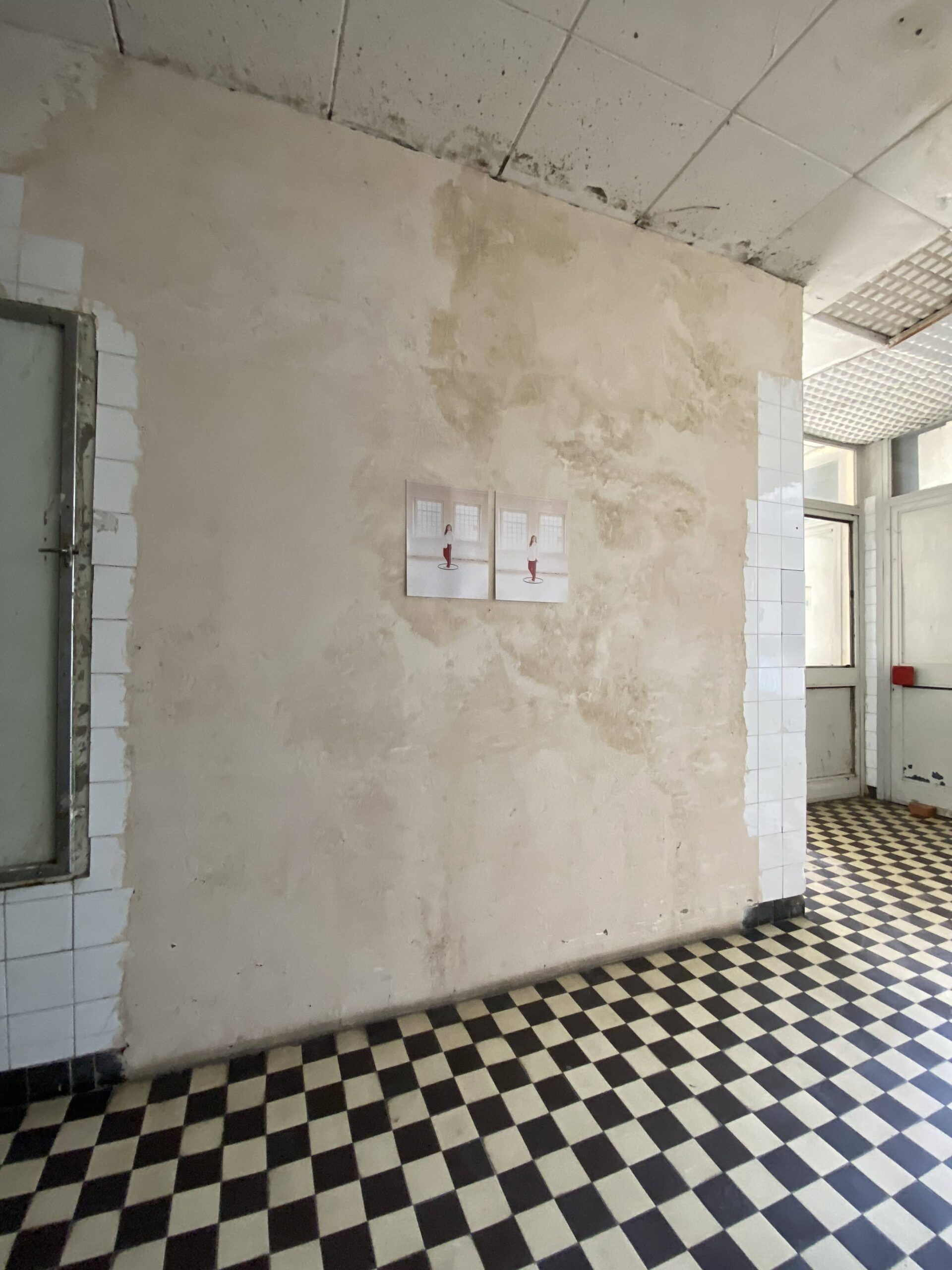
Despite the fact that the concept of “choreography” is mostly used today in relation to dance, I define it more broadly – the organization of movement, and I like this definition the most.
Since 2015, I have been living between Ukraine, Germany and Poland, and over time I began to think that in some European cities I encountered something that, after much thought, I can call “medieval choreography”, which is different from the “industrial choreography” of Kyiv. the city in which I was born and grew up. Only now is the realization coming to what extent the “random” strolling through the streets of Kyiv was actually brought to automatism – during life, “practiced” routes were formed – the legs moved the body by themselves, while the head was busy with daily tasks.
The biggest challenge in Europe for me was medium-sized cities without a subway, cities that have preserved the medieval structure, for example, Wrocław. The nomadic history of Wrocław makes moving around the city even more difficult for me – the border town was at different times both German and Polish or Czech; was a part of empires and conglomerates, as a result of which the city is extremely fragmented, unlike Kyiv, devoid of any “general” plan. I have no experience of long-term residence in Western Ukraine, however, it always seems to me that Wroclaw should be similar to Ivano-Frankivsk or Uzhhorod. Sometimes in Wroclaw, it seems to me that almost every place or situation can be supplemented with a fragment from Taras Prokhaszk’s book, and the city itself resembles the intricate structure of his works, which seem to be different works, but one and the same work at the same time.
I find it surprisingly easier to navigate in larger cities, such as Berlin or Warsaw – each metropolis to some extent reproduces the planning of Le Corbusier – the space in which I grew up, in which my movements are unconscious and easy, as if natural, characteristic of me. COULD THIS BE WHAT WE CALL HOME?
In comparison, one also realizes how important the metro is for moving around Kyiv. This is the backbone of Kyiv, around which the life of the city is built. Paradoxically, I feel calmer when I have the opportunity to go underground. When there is no such possibility in the city, it is like the absence of a degree of freedom.
The three branches of the Kyiv metro are for me something eternal, unchanging, such that they should always exist, in contrast to ground transport, which more often undergoes route changes. Routine metro travel, like any routine movement, creates a sense of security. Coincidentally, now, during a full-scale war, the subway is also a bomb shelter, that is, a place of safety in the physical sense.
Probably the biggest conflict I had in Wroclaw was with distances. In some cases they are awfully small in mine
Mykhailo Zubchaninov.
In the last month, I often visited my friend and watched how she creates a cozy home. In addition to things that remind her of some events in life, plants are an important part. They traveled with her wherever she lived and created a sense of home for her. Daily care for them gives a sense of peace, admiring how they grow brings joy. Every time she temporarily leaves home, she worries about her plants and cat, without which there would be no feeling of home comfort.
Exhibition documentation – Photo credit Petro Ryaska
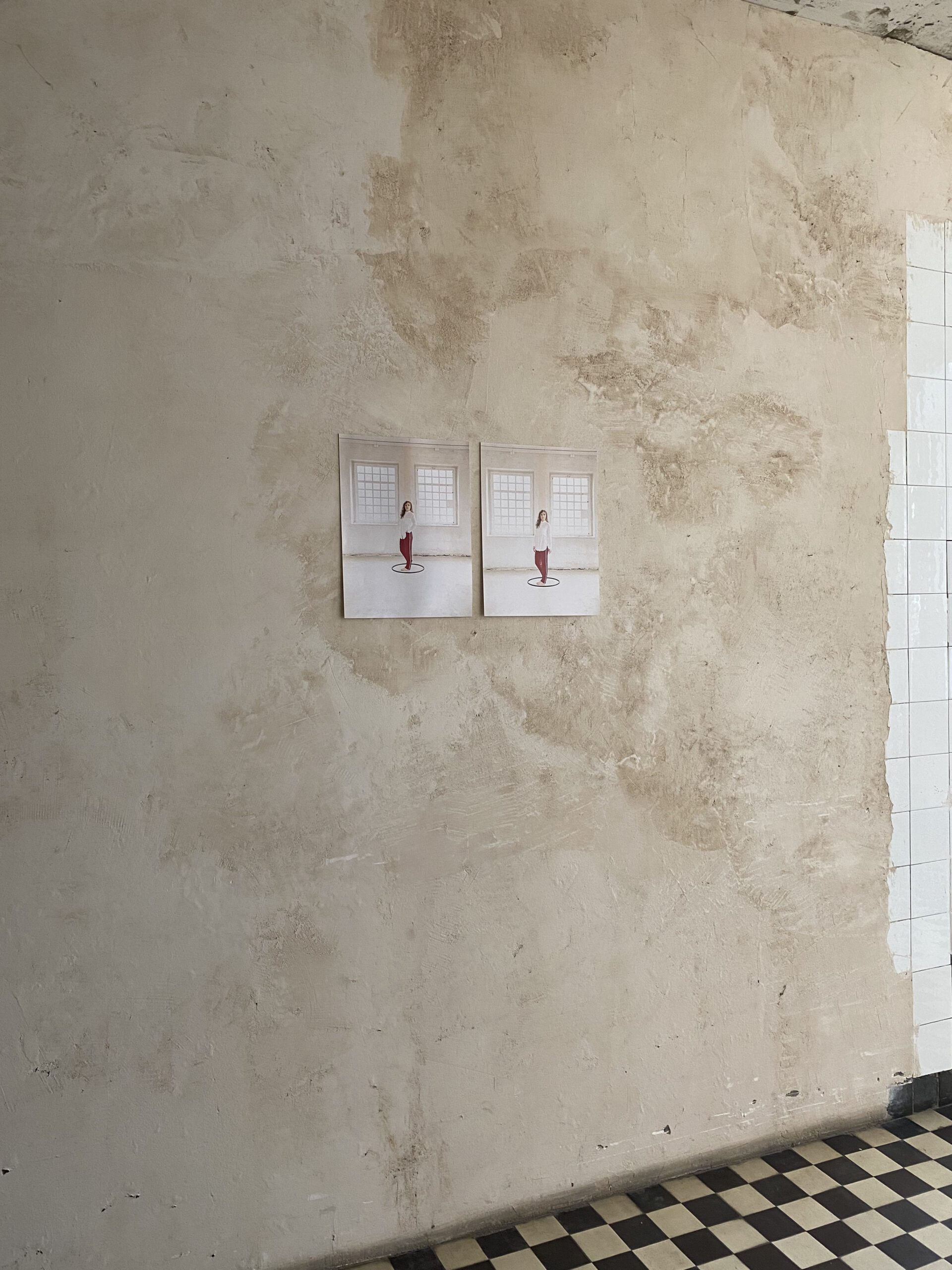
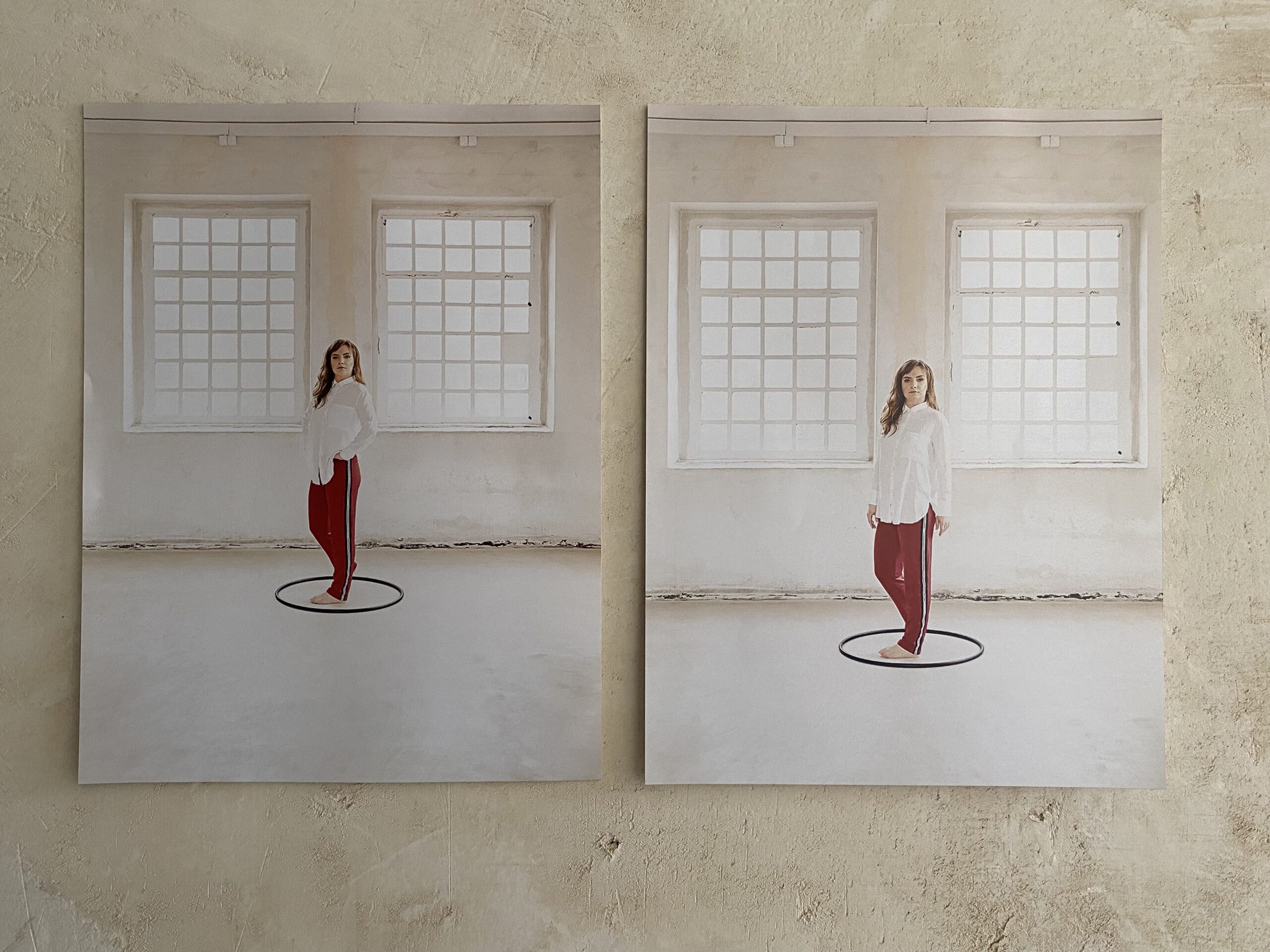
Natalia Bravik
Home is where you are. This is the theme of many of my works. Home is where you feel good, where many little things create your space, the space of your soul.
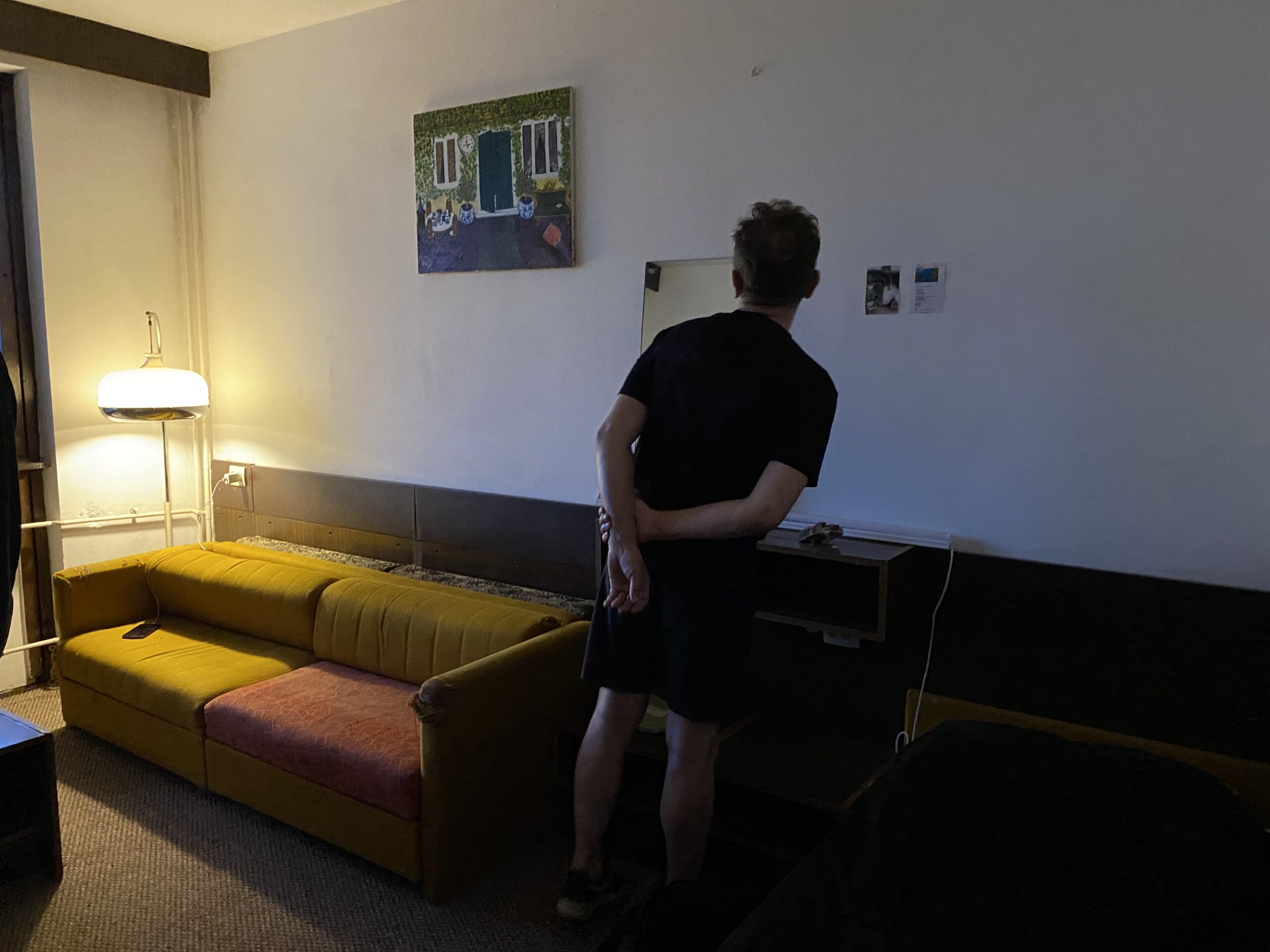
Room 1224
Exhibition documentation – Photo credit Petro Ryaska
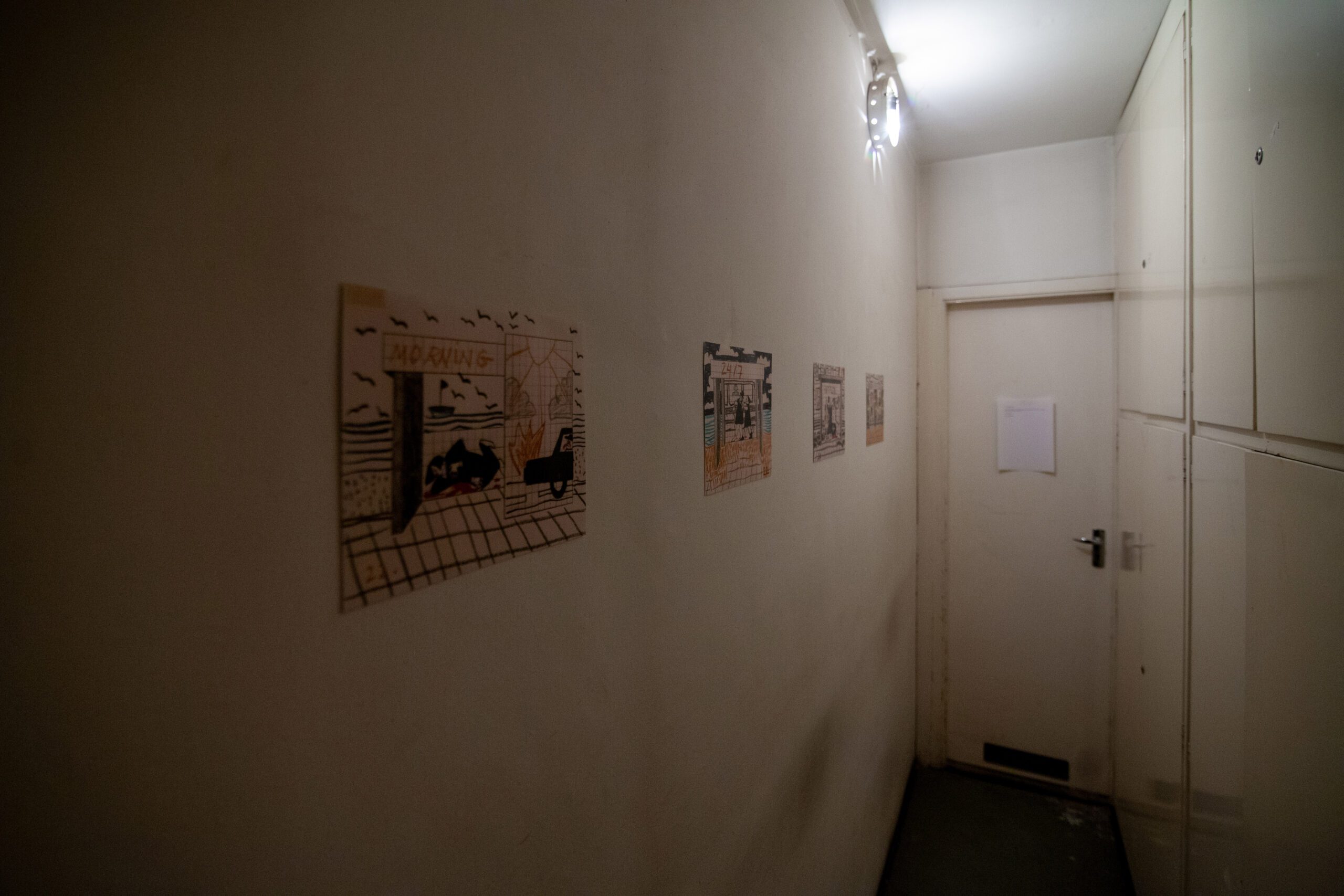
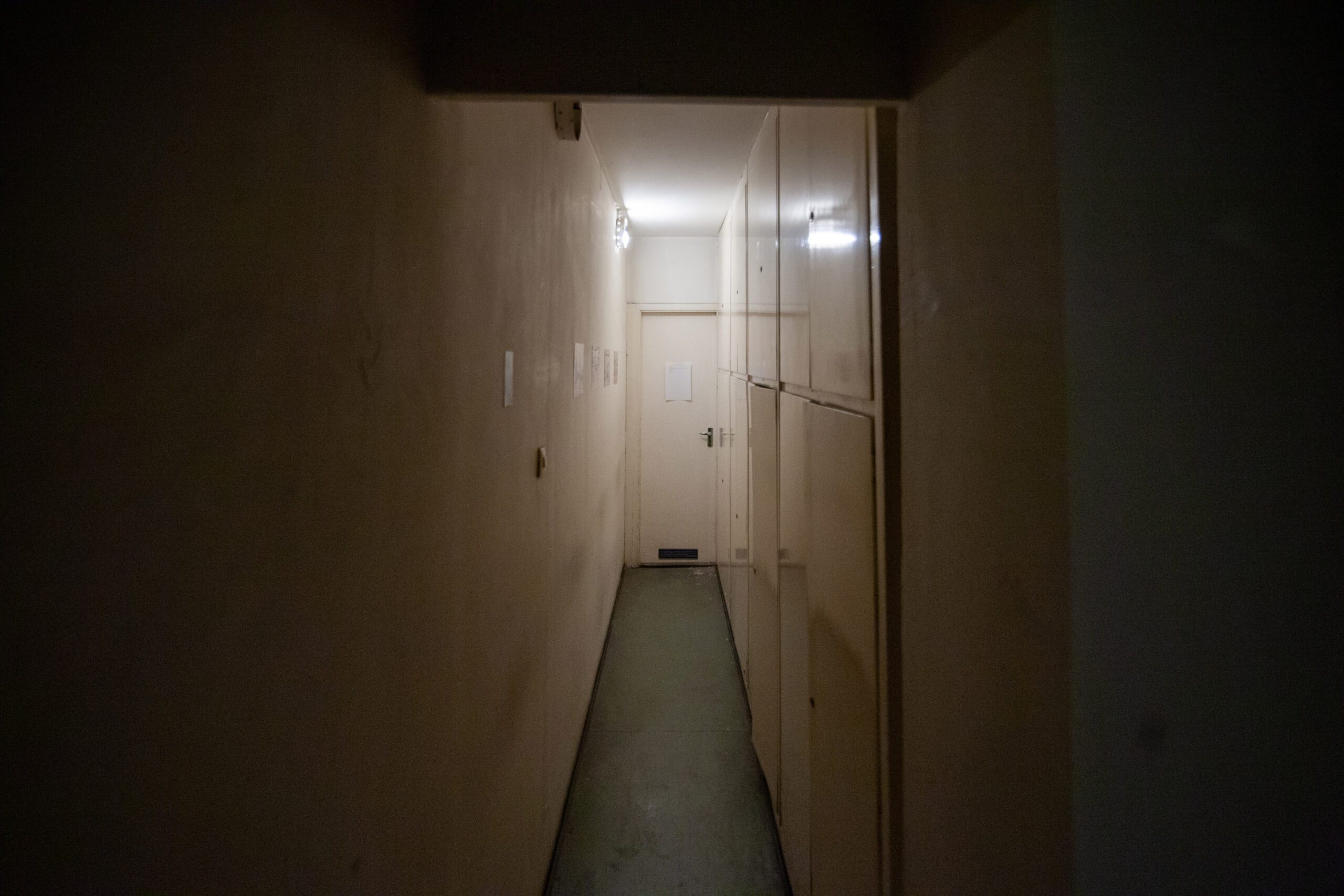
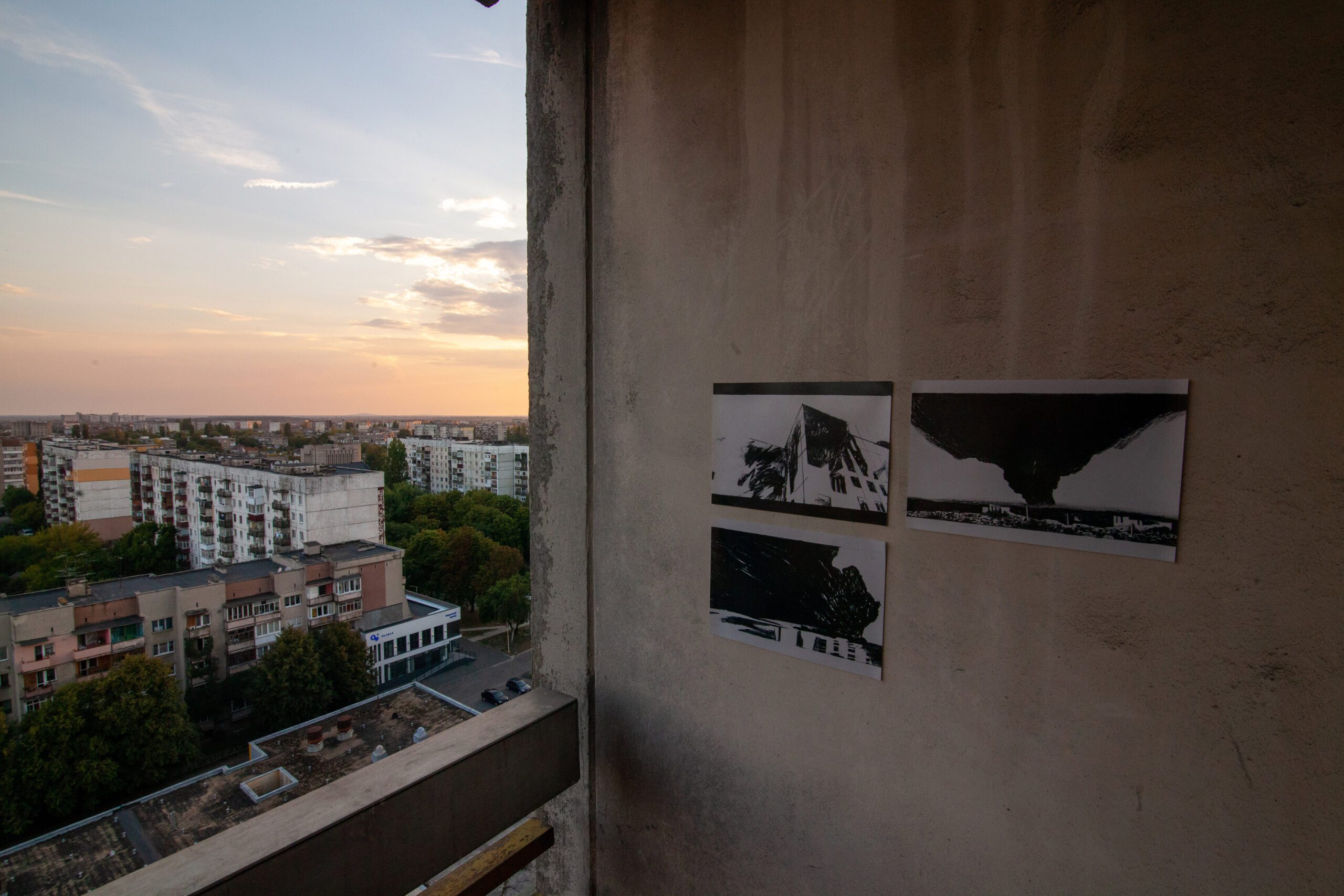
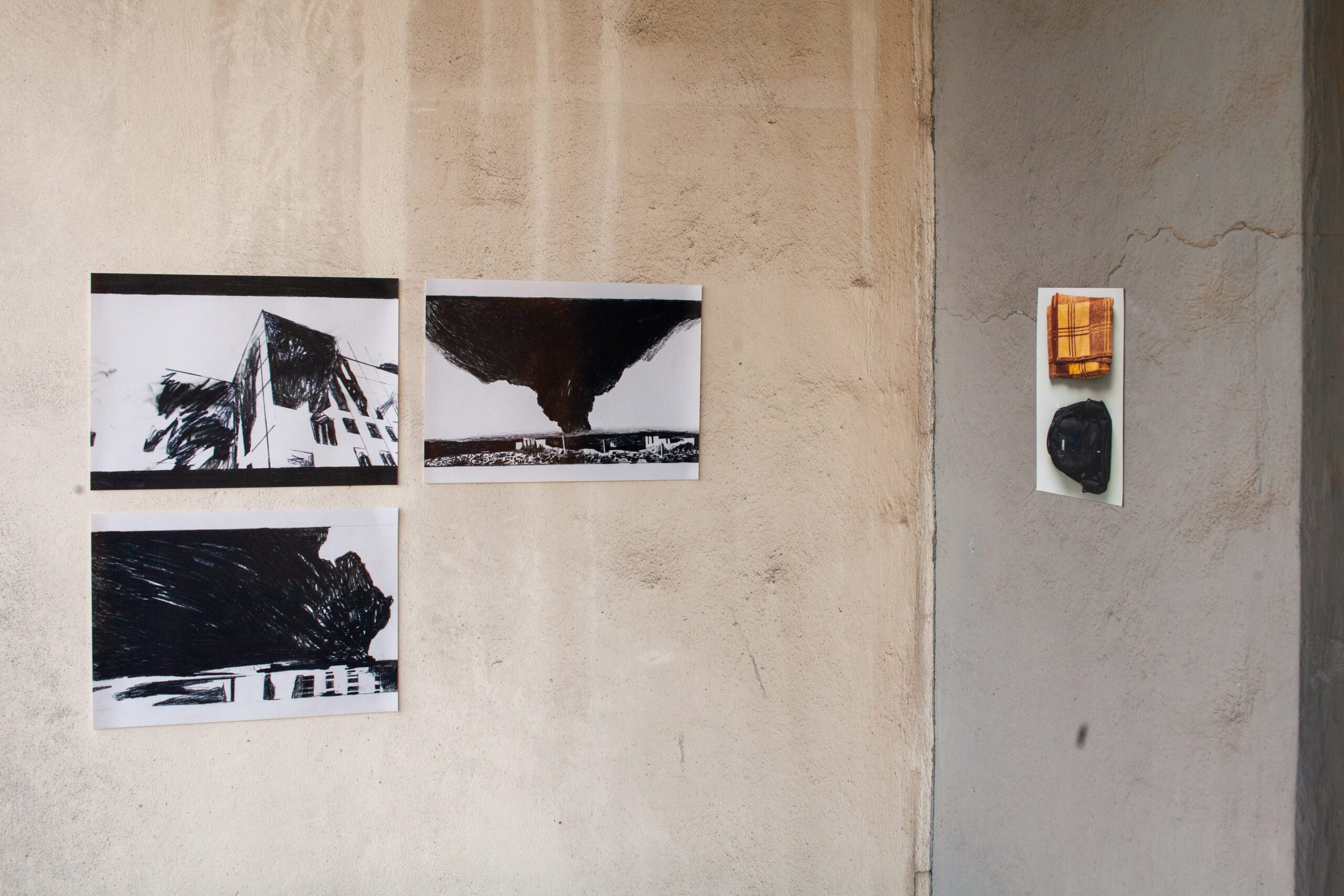
A fragment of a group exhibition in a narrow corridor on the 14th floor of the Intourist-Zakarpattia hotel:
Photo – 3: Yurko Efremov.
“Acoustic terrorism” is an ordered acoustic chaos created from field recordings of Kharkov’s audio spaces.
Photos 4-8:
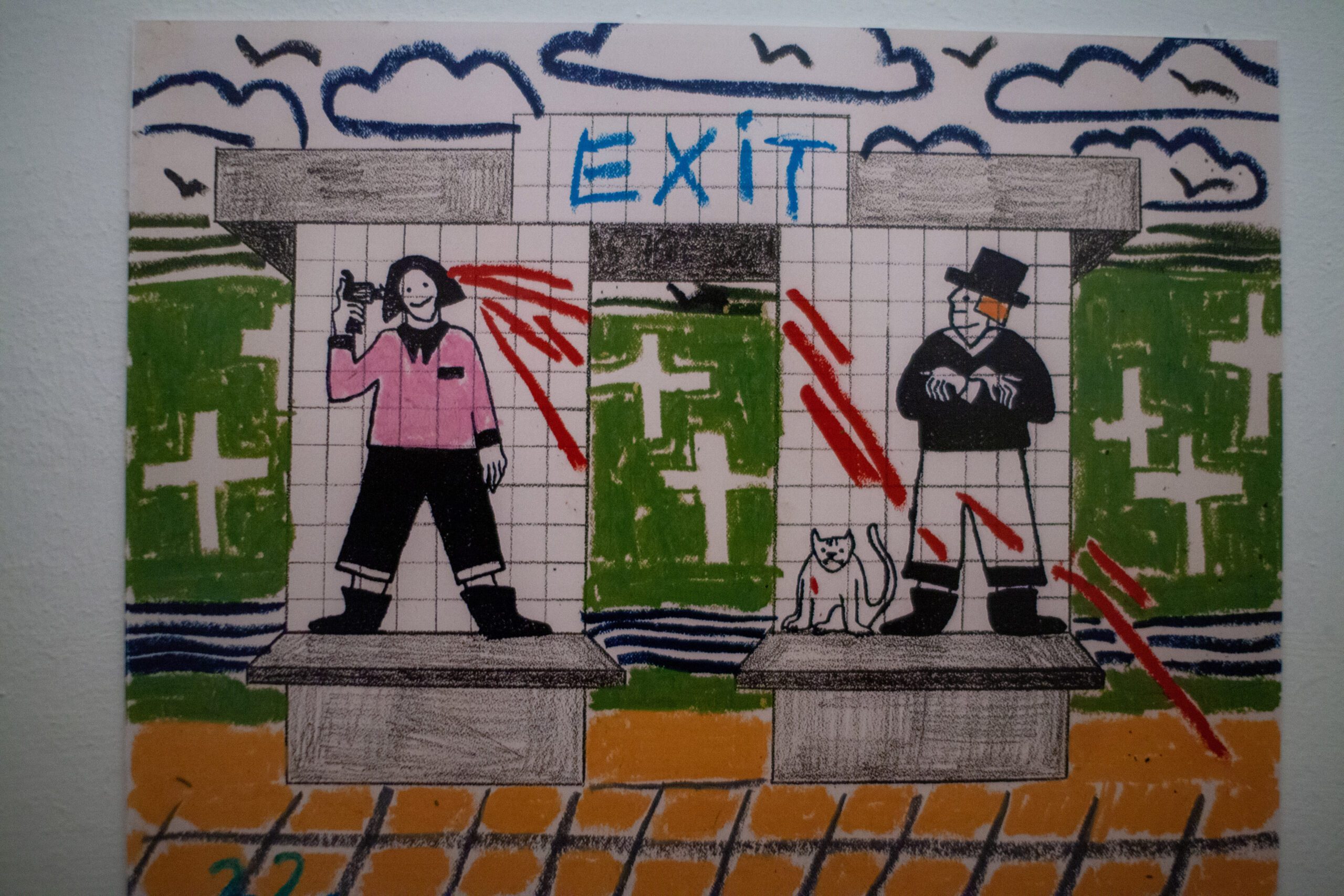
etchingroom1
series “bus station”
Exhibition documentation – Photo credit Mykhailo Melnychenko
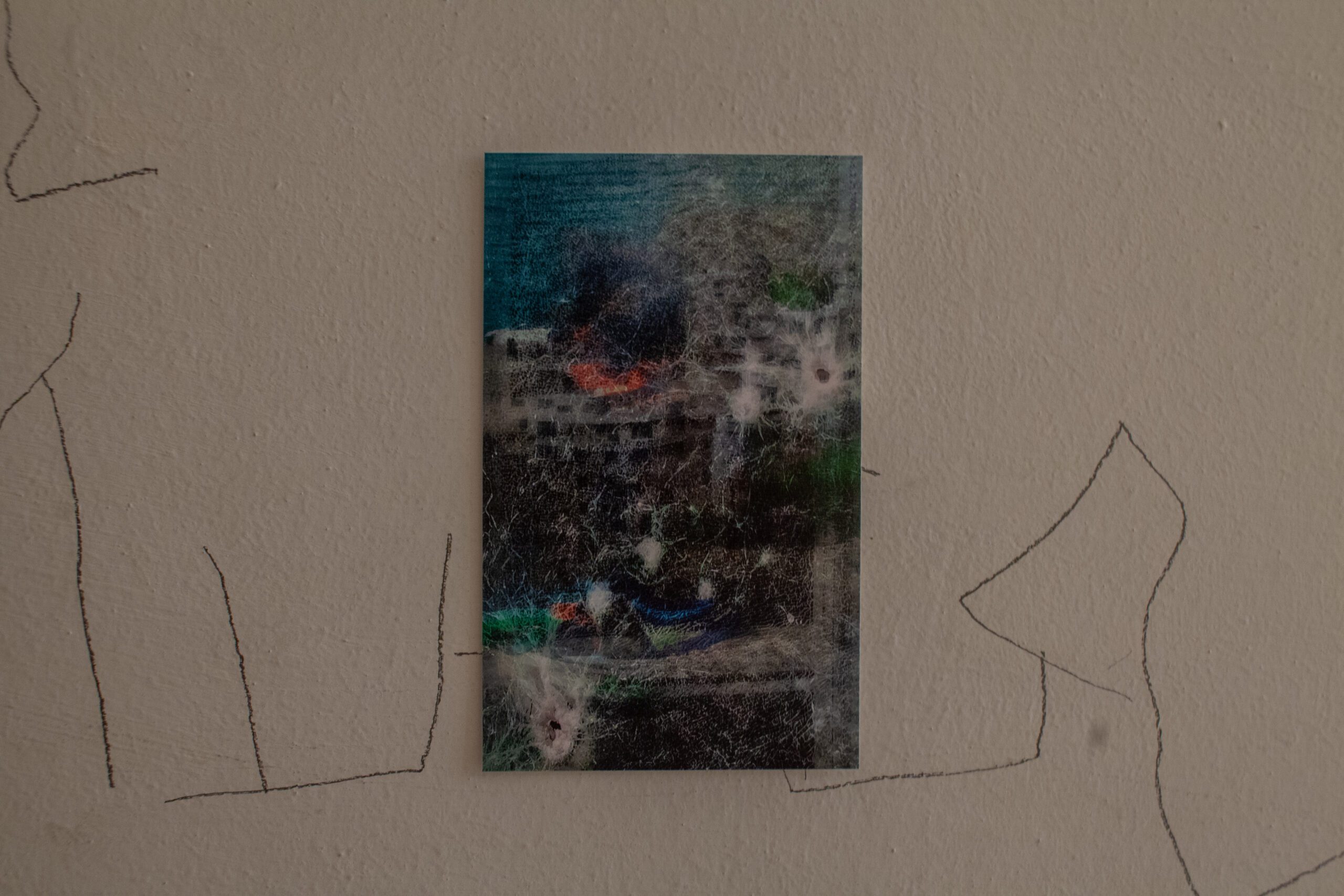
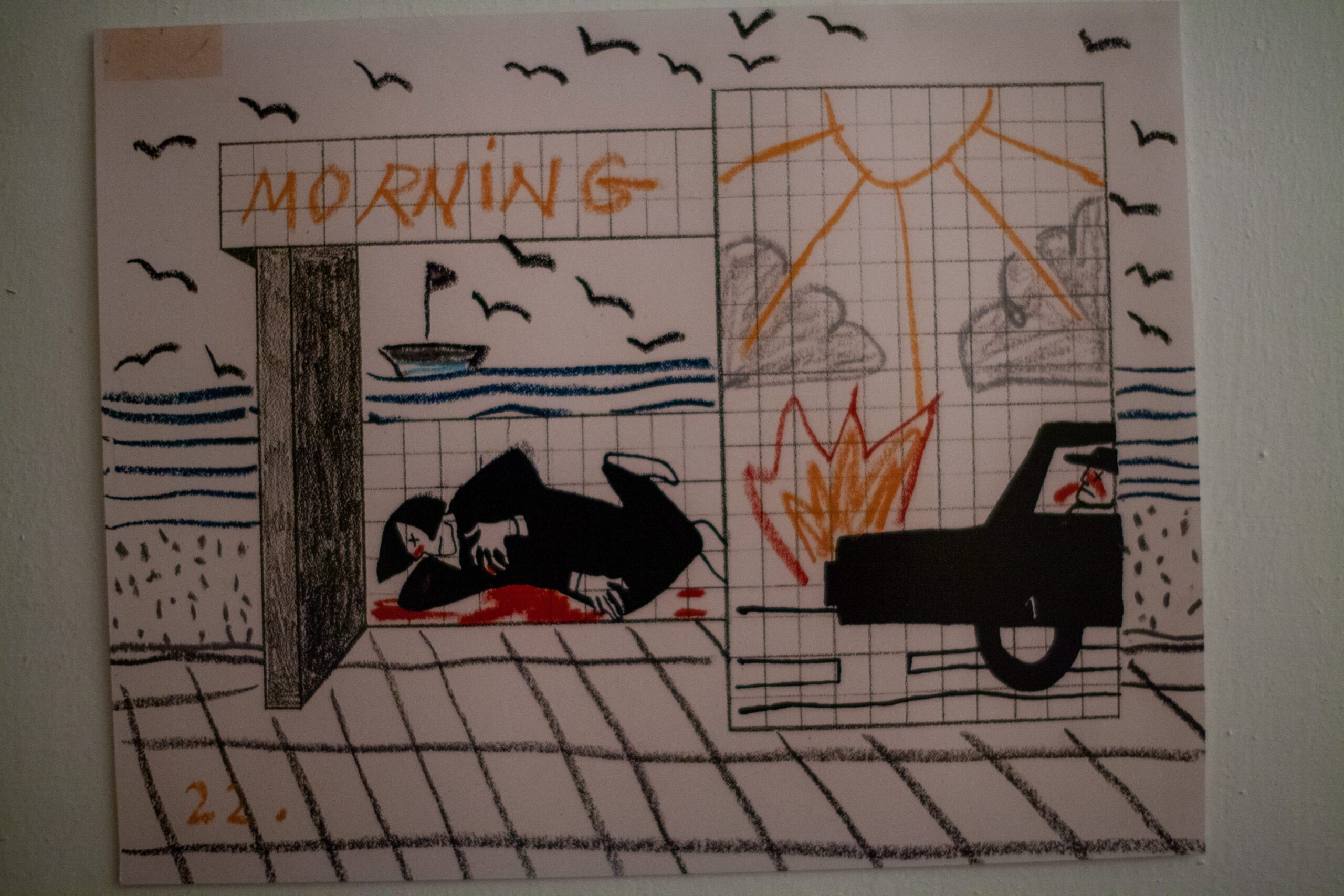
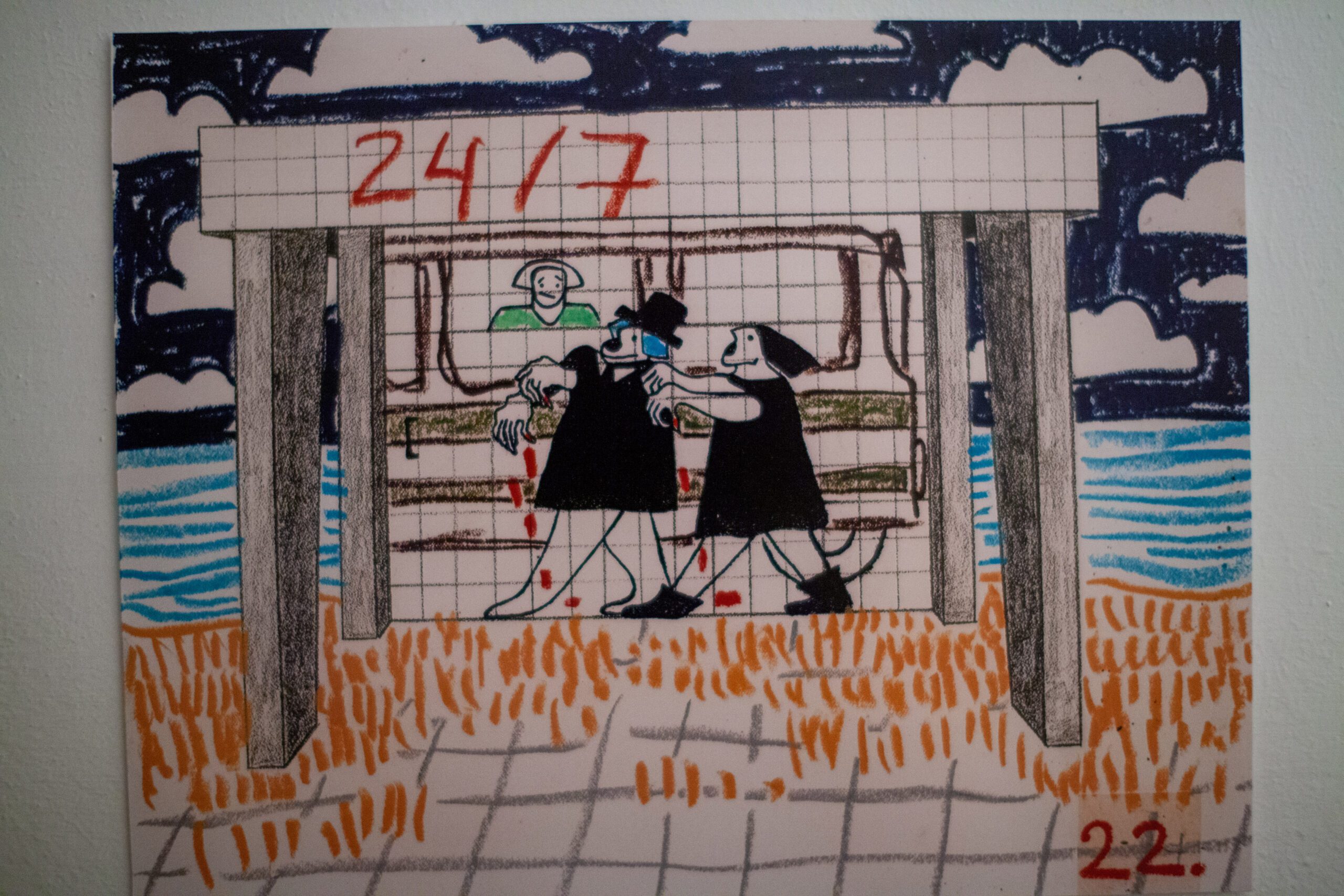
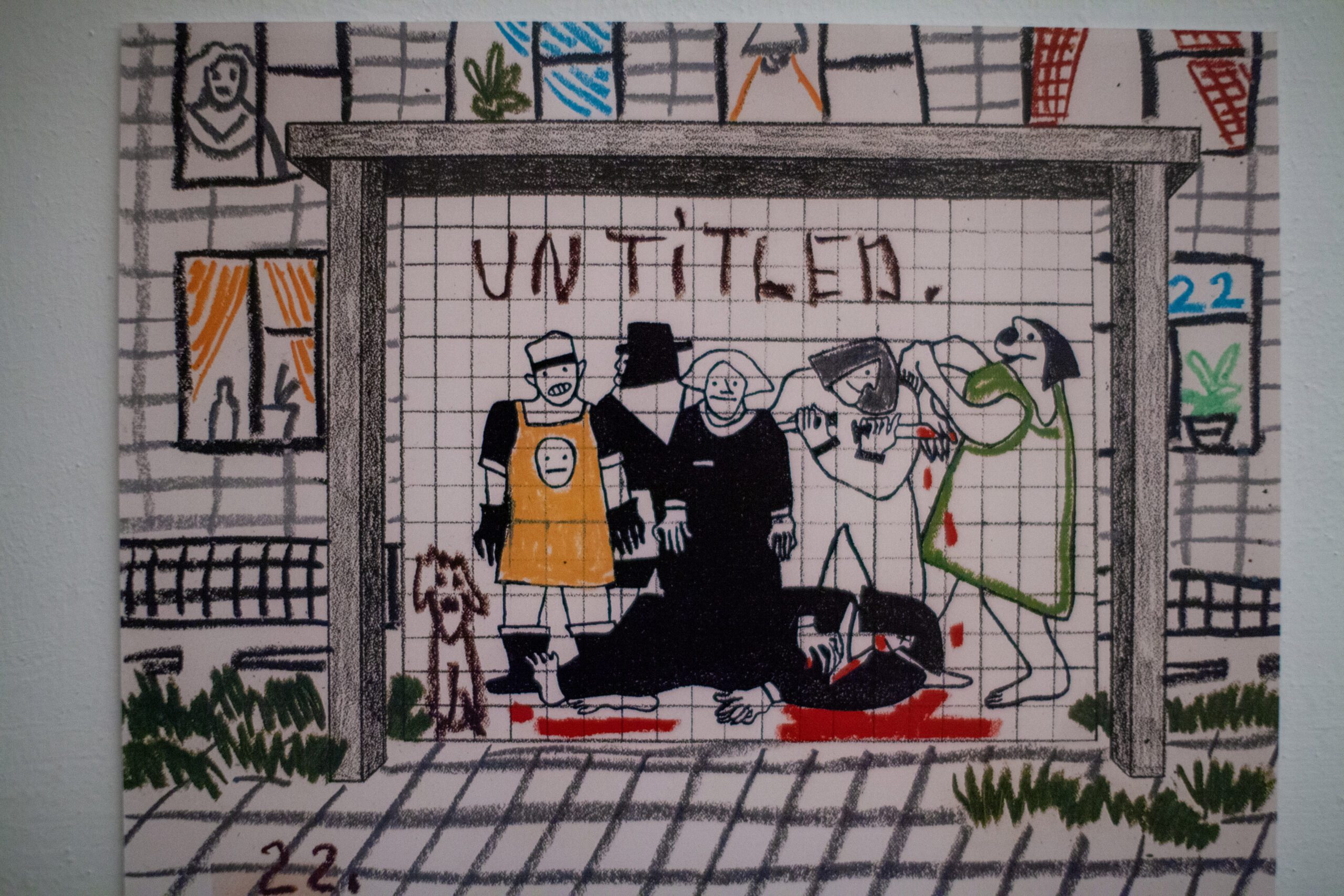
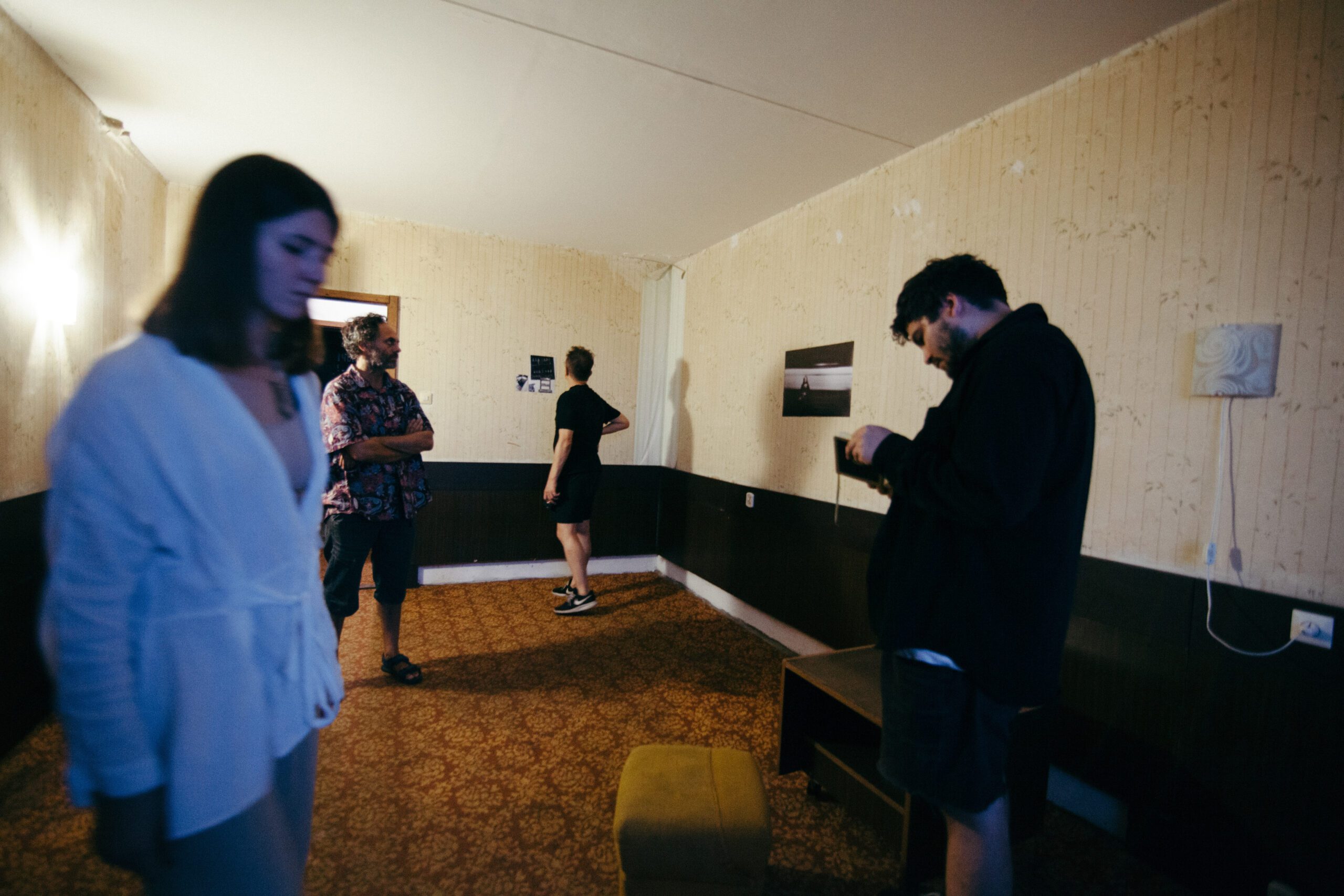
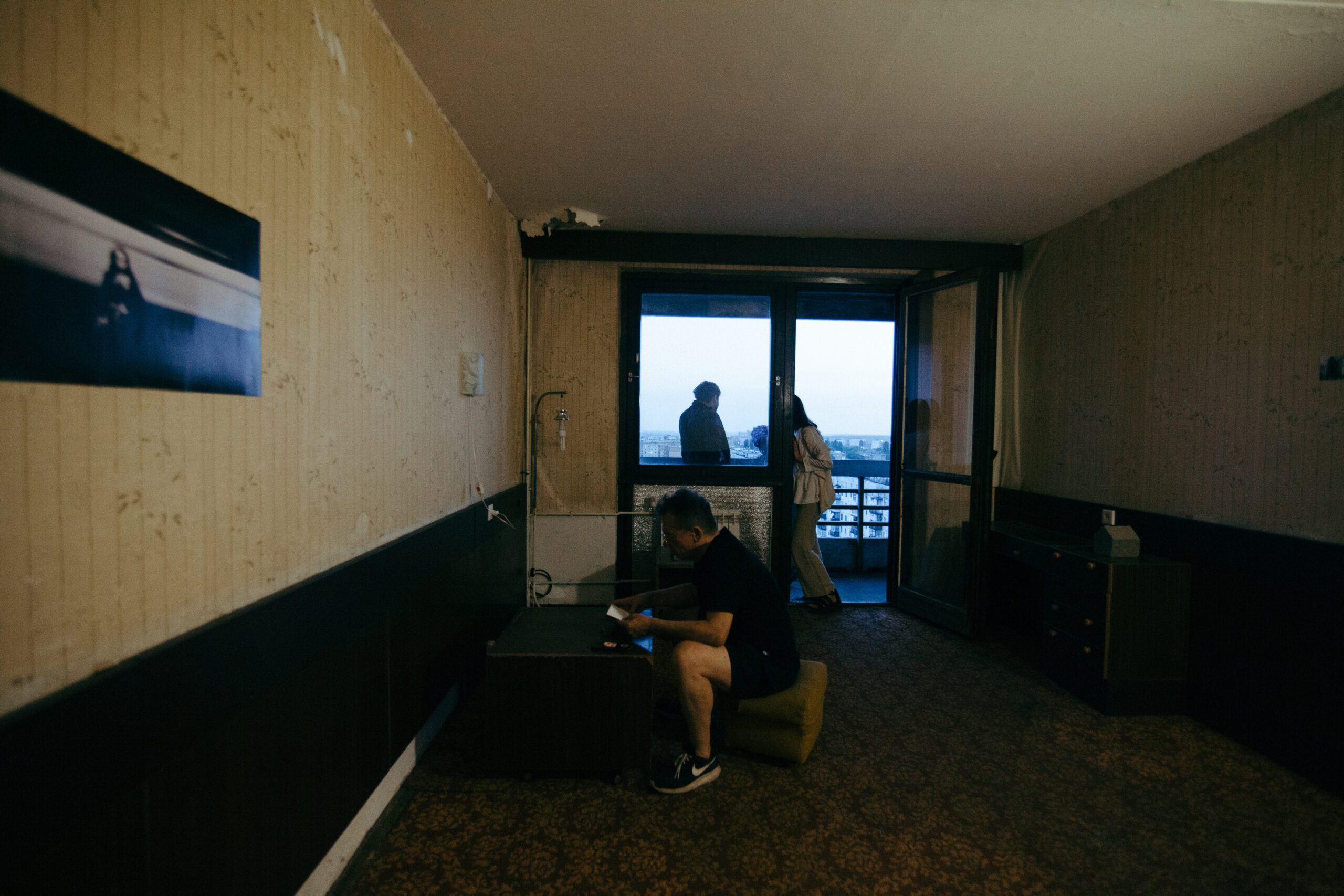
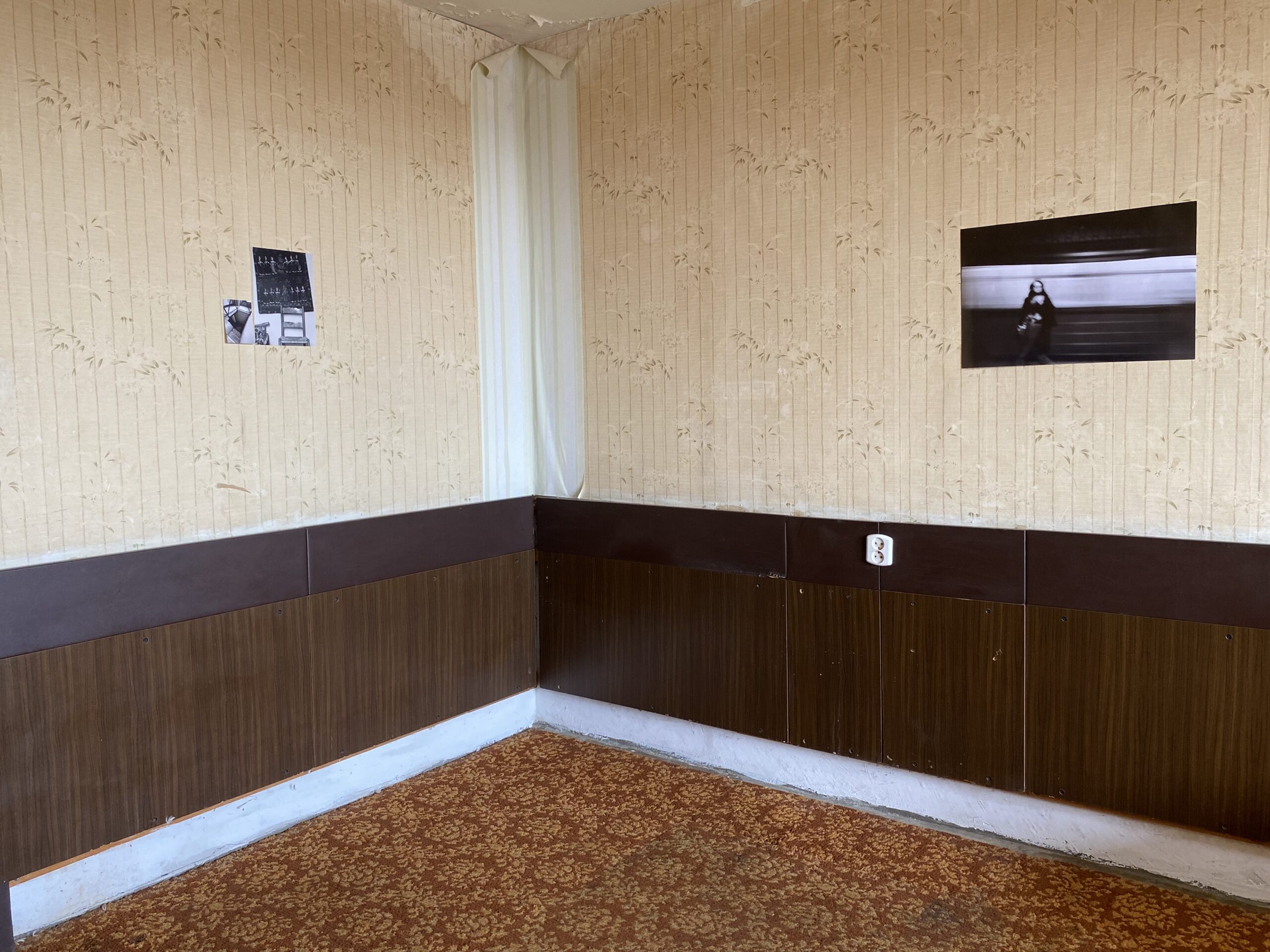
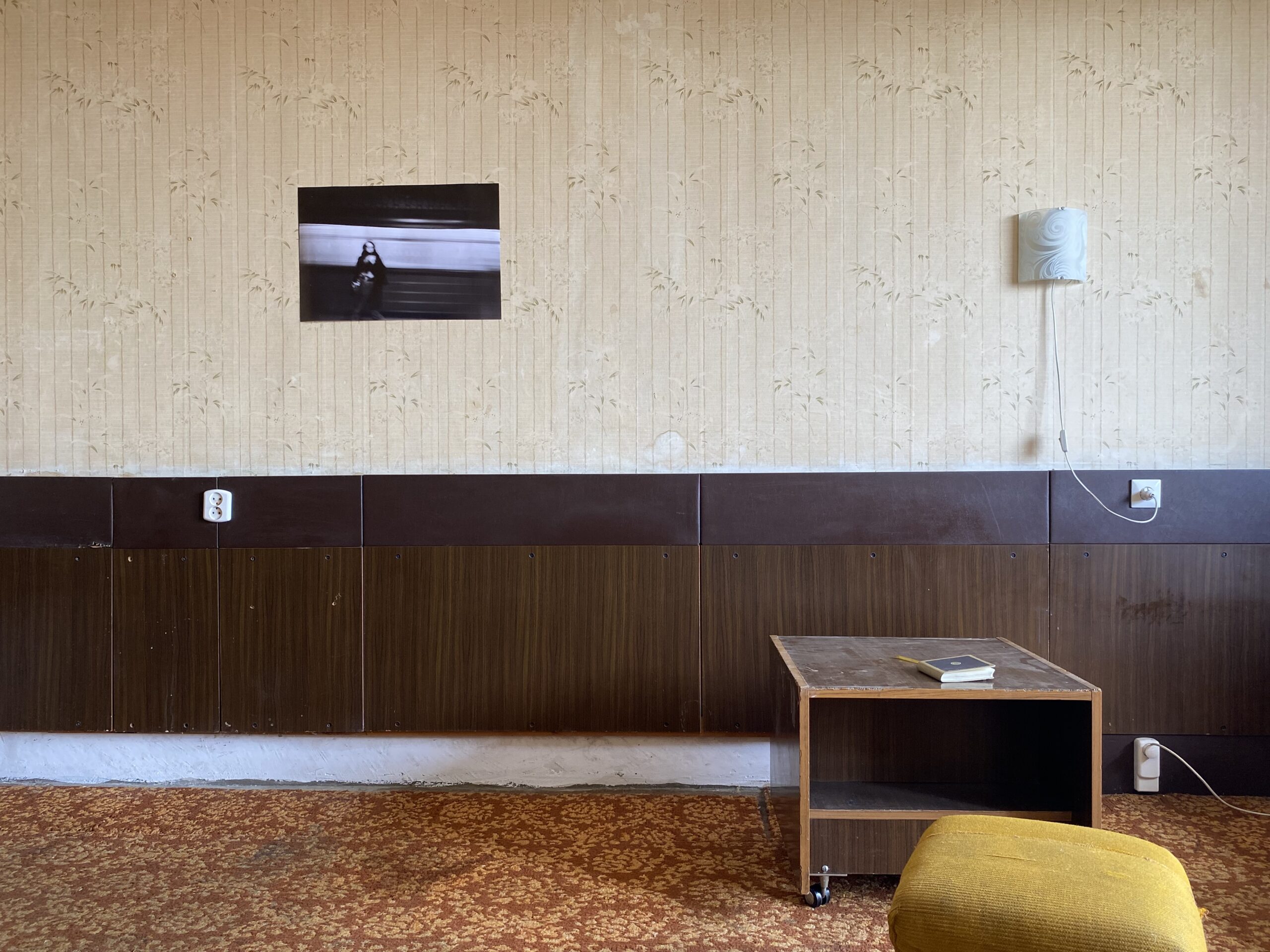
Fragment of the group exhibition “Walking Home”, Room 1416,
Exhibition documentation – Photo credit Mykhailo Melnychenko, Petro Ryaska
Mordyk Olena
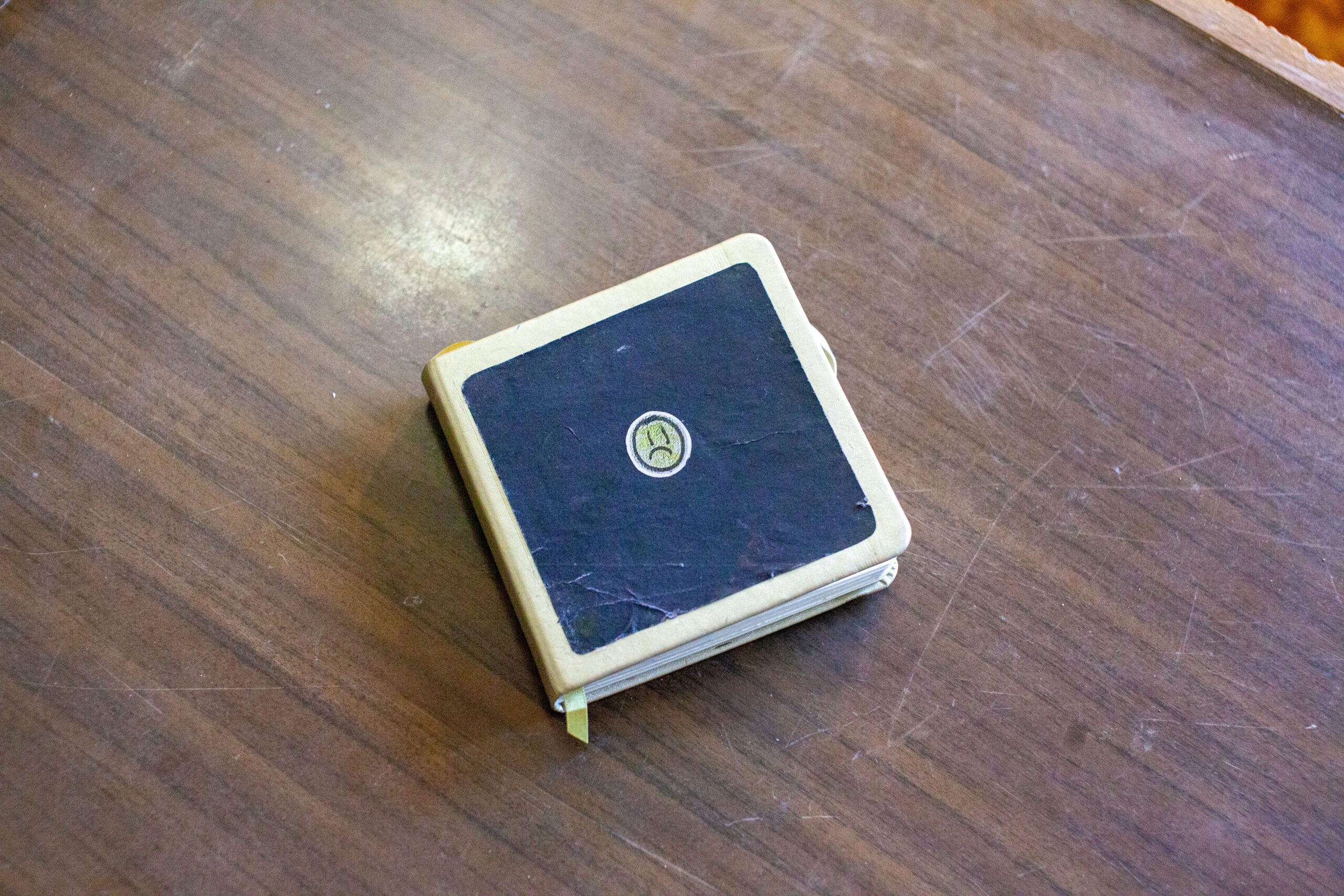
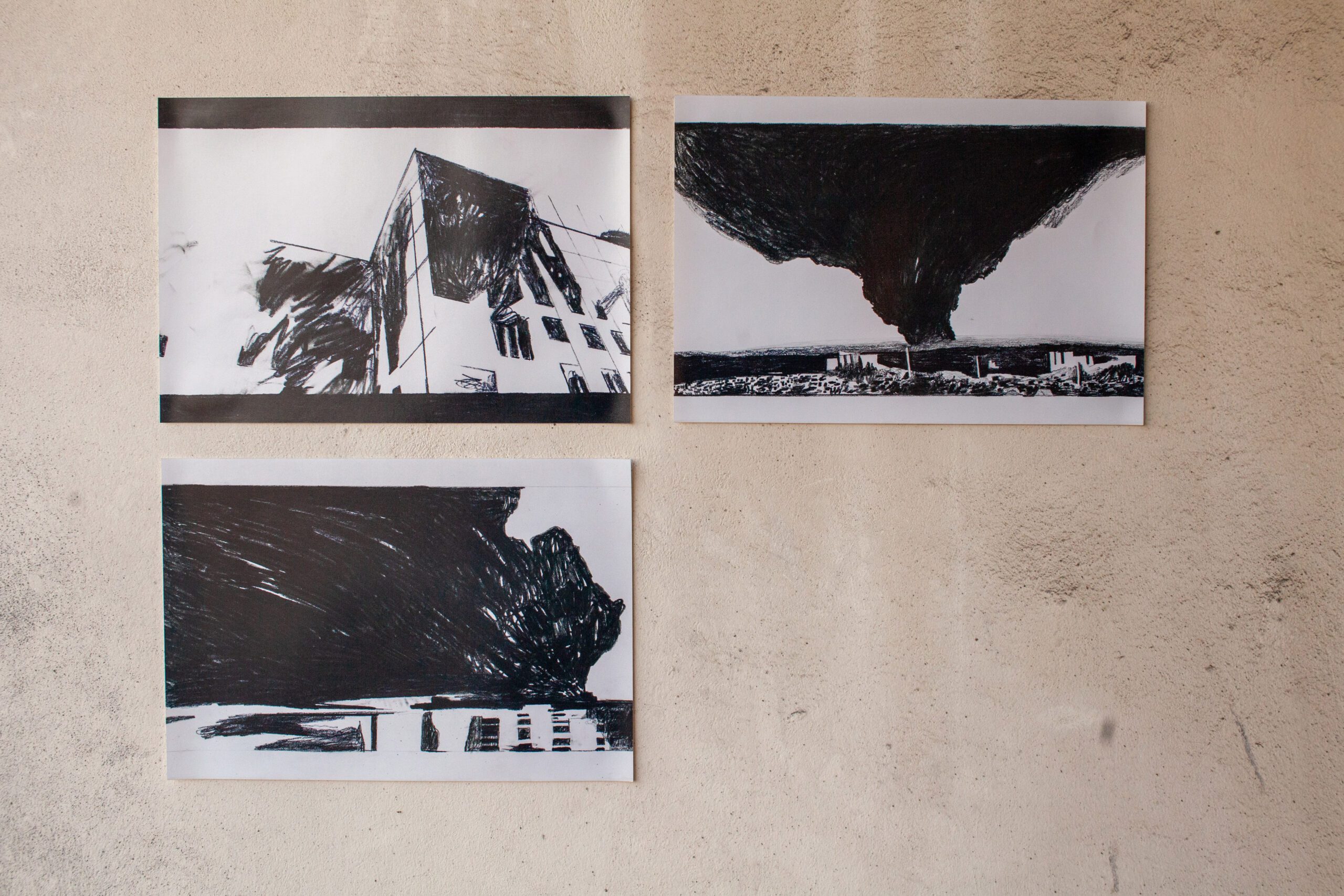
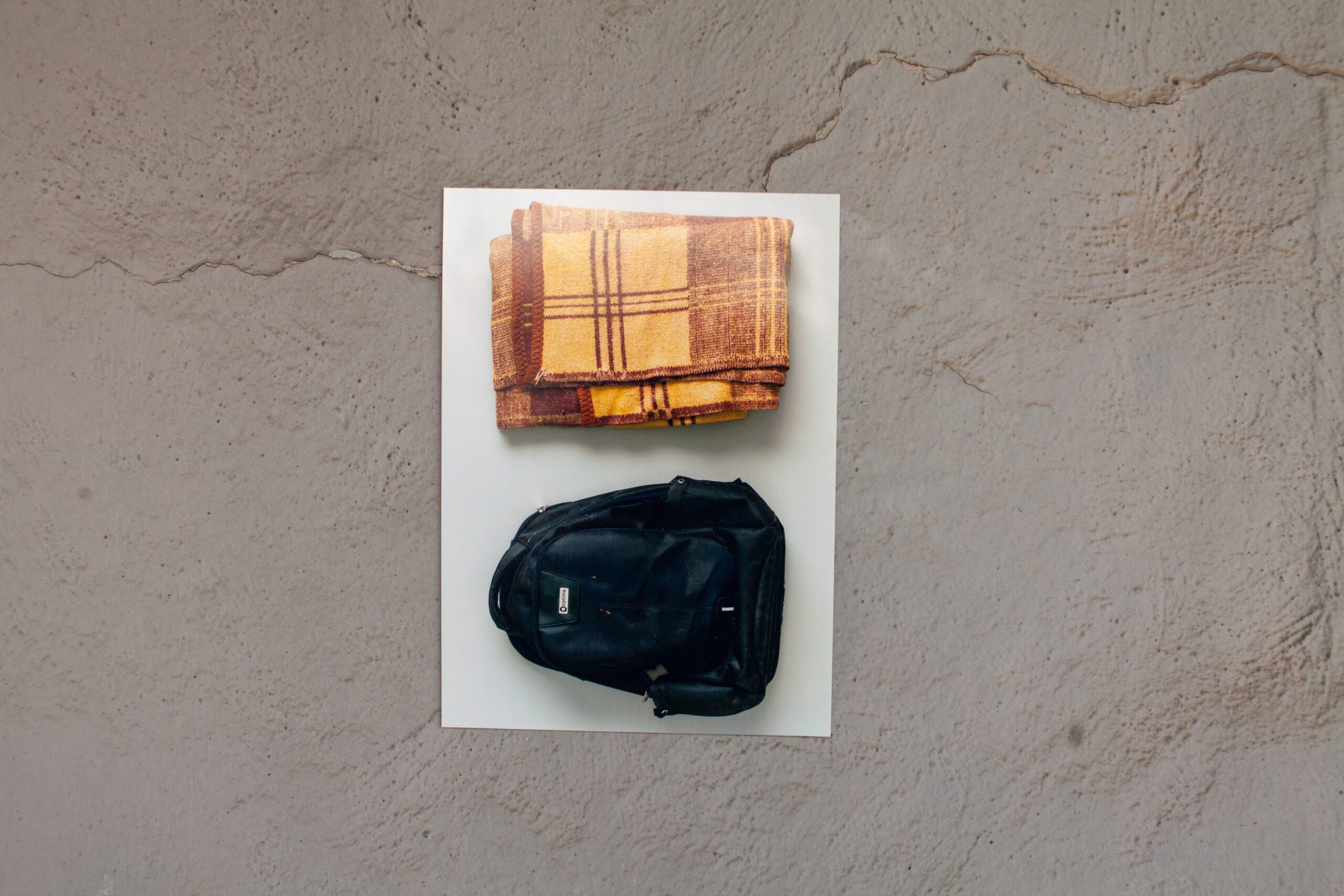
Sketches of things that I took with me to the evacuation, including a carpet, a tambourine, a scanner, a non-working phone with the inscription “news” stuck on it, homemade chess, colored paper to make a chess board (which I never made), my favorite sweater, someone else’s patriotic socks, Shipit’s notebook, the former’s.
Kharkiv’s sketches are preserved moments.
Poems from Kharkiv, partly in Russian
A paper person who went to the evacuation (an unrealized mailart that can be realized)
Room 1416
Exhibition documentation – Photo credit Mykhailo Melnychenko
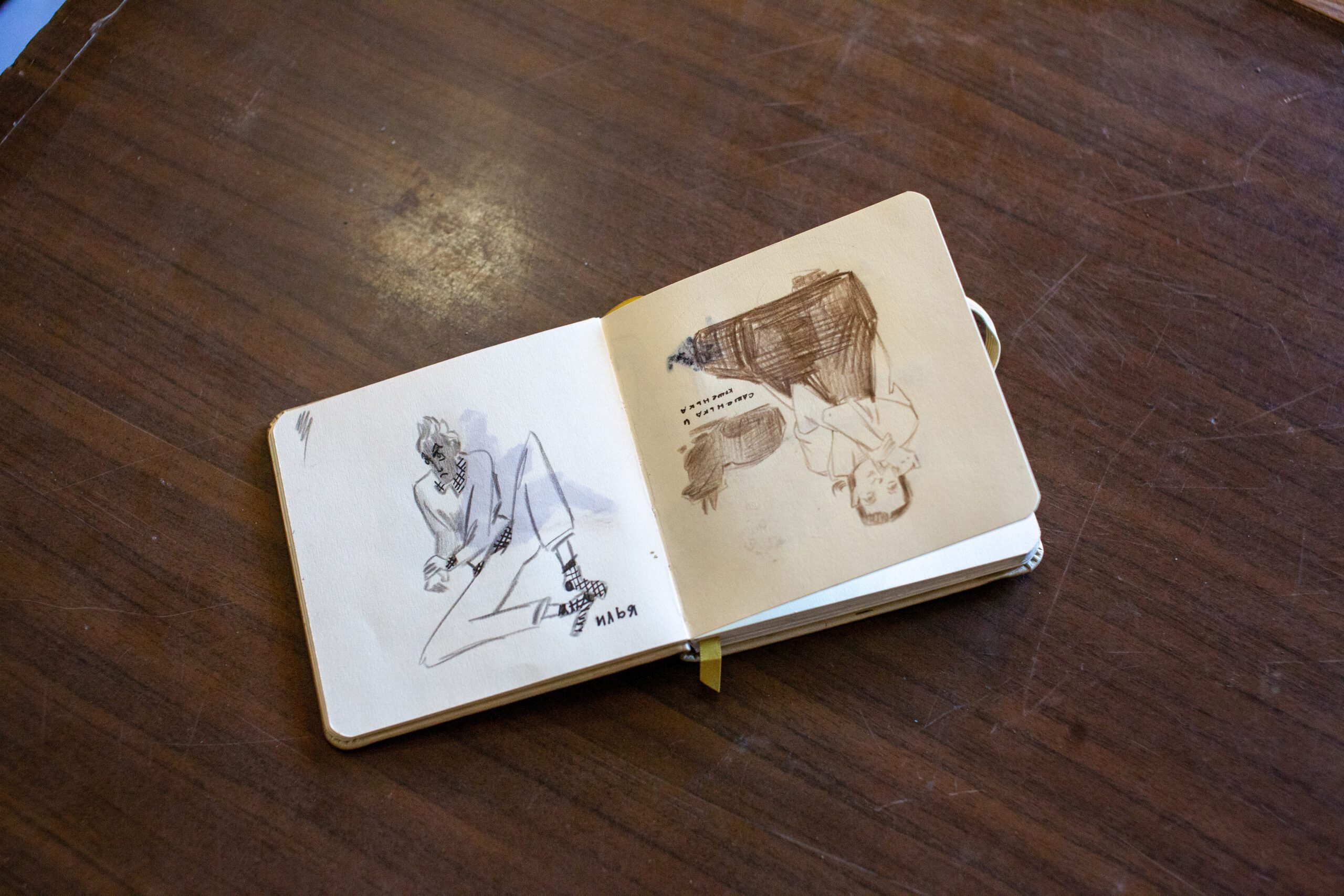
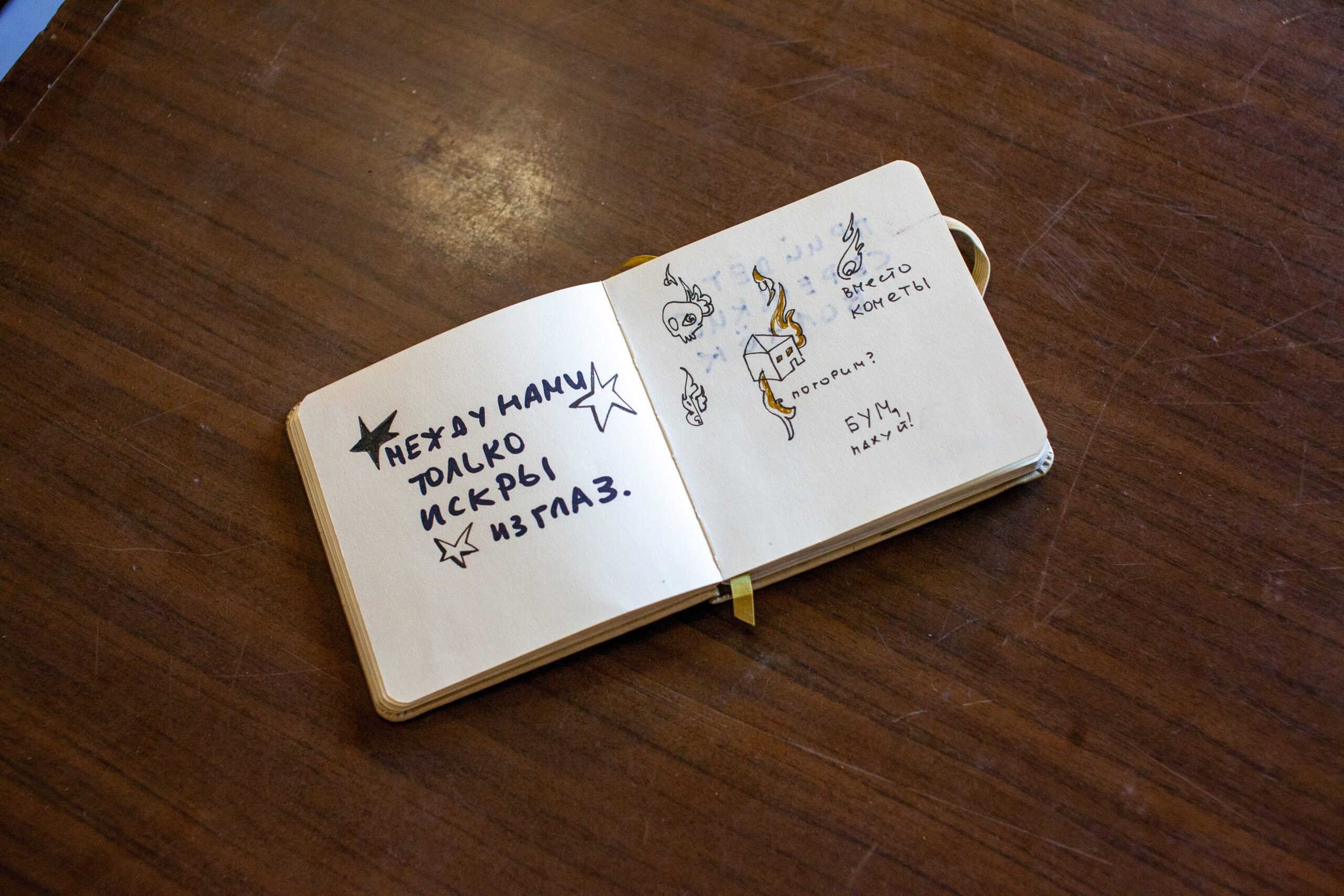
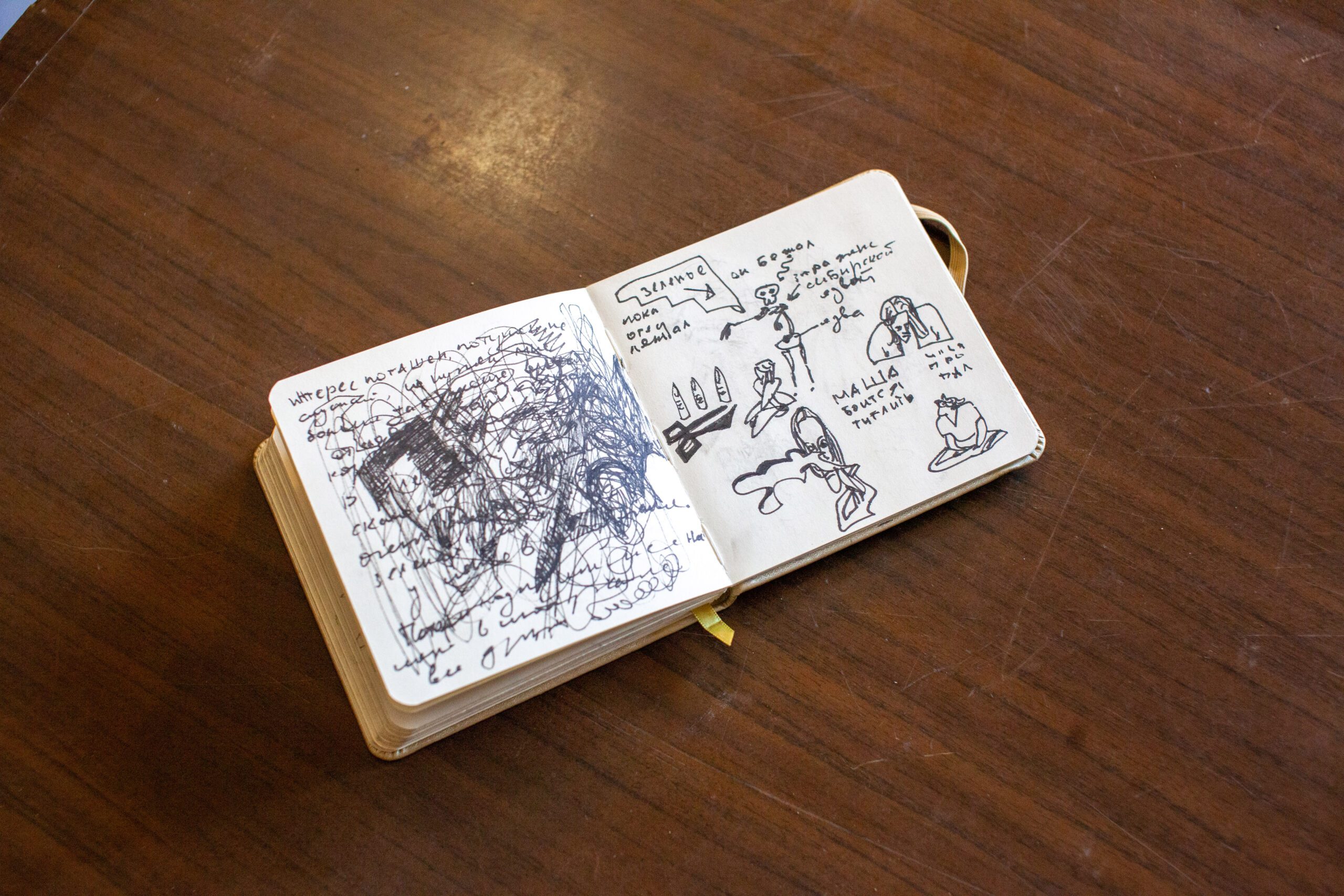
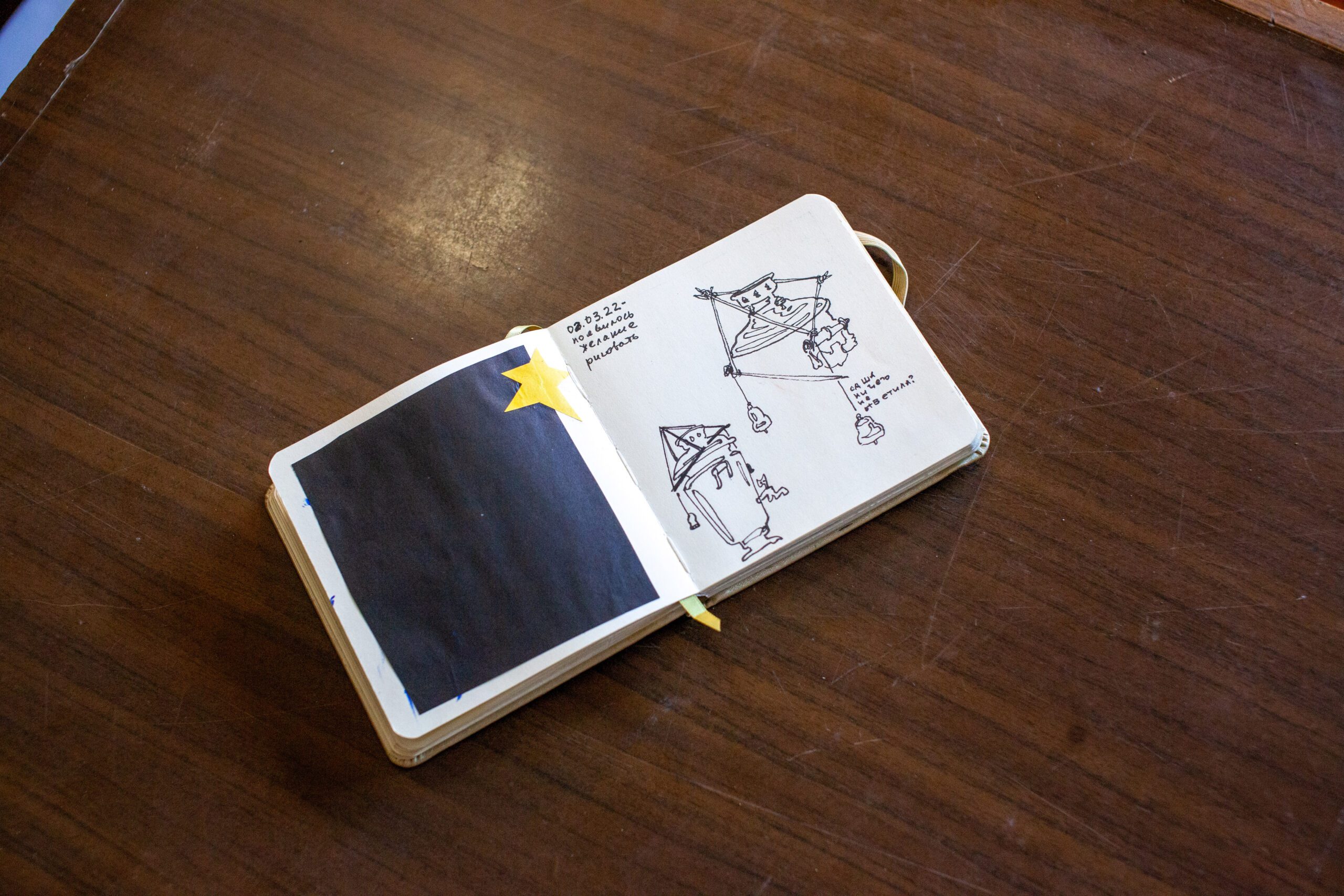
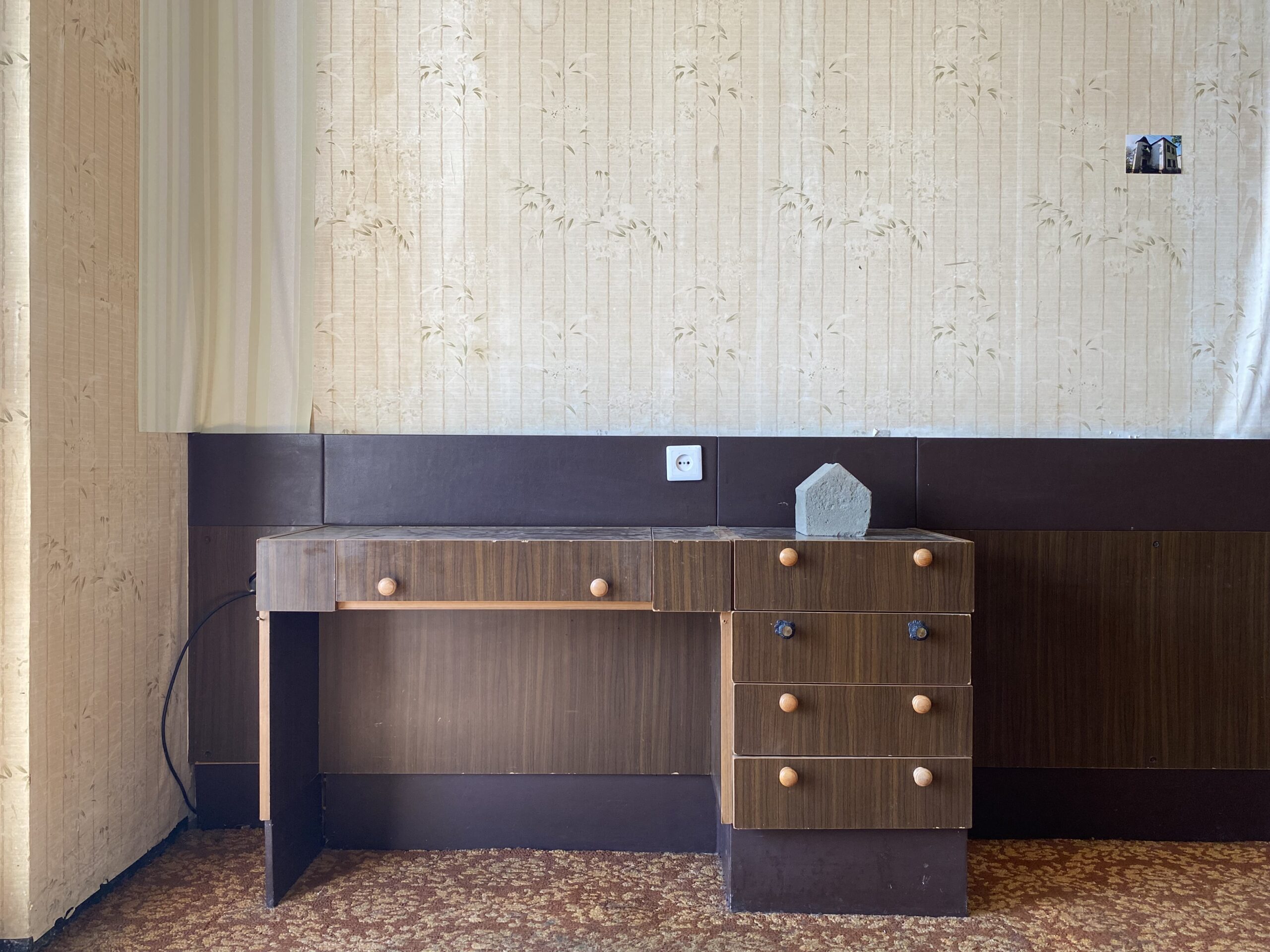
Dasha Molokoedova
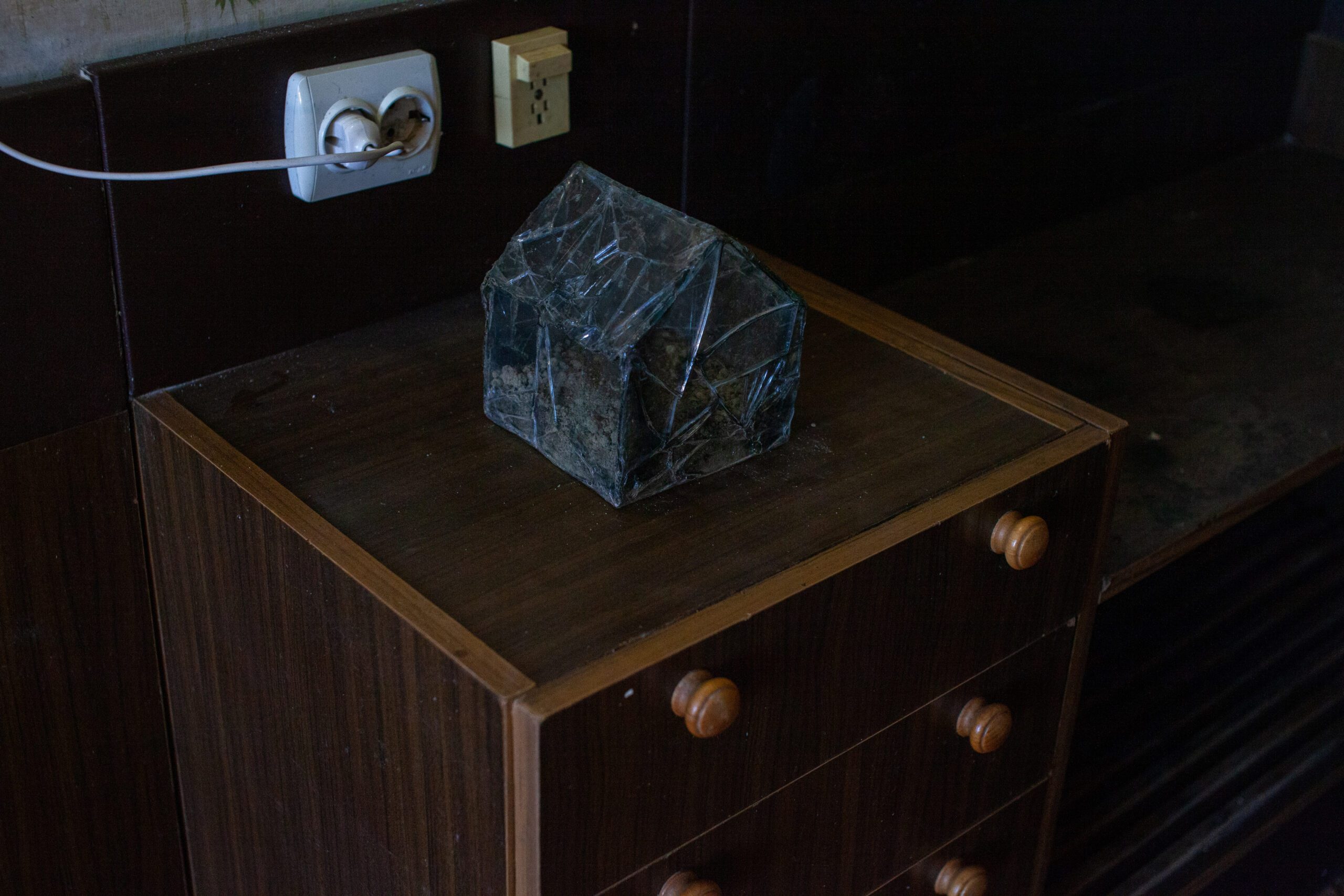
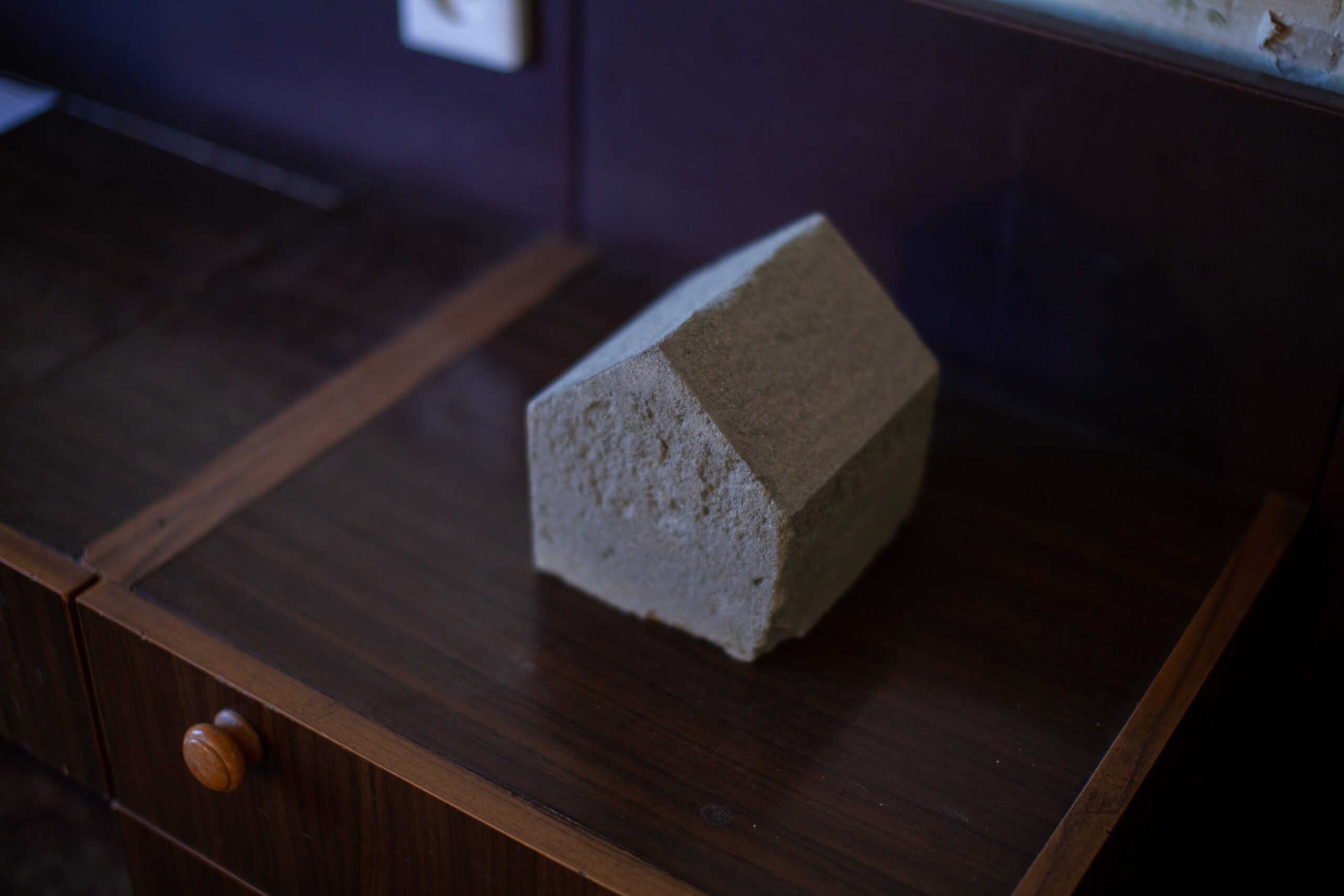
“Glass House”
Object. 15×13 cm
Glass, tape, earth.
“People who live in glass houses should not throw”.
“He who lives in a glass house should not throw stones at others.”
“He who lives in a glass house should not throw stones at others”
Robert Lewis Stevenson “Catriona”.
First publication: 1893
The first, for some, hit.
2022
Ukraine.
Destroyed cities and towns are built by scattered buildings.
Home. House
Word
Is it a feeling?
It was a pity to be born in Donbas and stay only with feeling and sadness.
In your 20s, home can be anywhere. At the age of 40, I would not like it to be like that. At 70 years old…
I don’t know that at 70 years old…
At the age of 70, he had to flee by evacuation train not even from his native Kramatorsk, but from Sloviansk. Because just yesterday, a Russian missile flew into the railway station of the city of Kramatorsk, when there were more than 4,000 people there. Now it’s scary, the station is not working. And here is your son, who volunteered for the Teroboron on February 24, is taking you and your sister, who is a couple of years younger than you… That is, what about at 68 years old?
…
You are going to Lviv by evacuation train from Sloviansk. You are almost alone in the carriage. Because now it’s scary, the station is not working. And what is there? At 70 years old…
It’s happening in your head and heart..
Exhibition documentation – Photo credit Mykhailo Melnychenko
Fragment of the group exhibition “Walking Home”, Documentation of the exhibition – Photo credit Mykhailo Melnychenko
The group exhibition and residence of Dasha Molokoedova became possible thanks to the support of:
European Cultural Foundation
House of Europe