
Group exhibitions, projects; Partnership projects
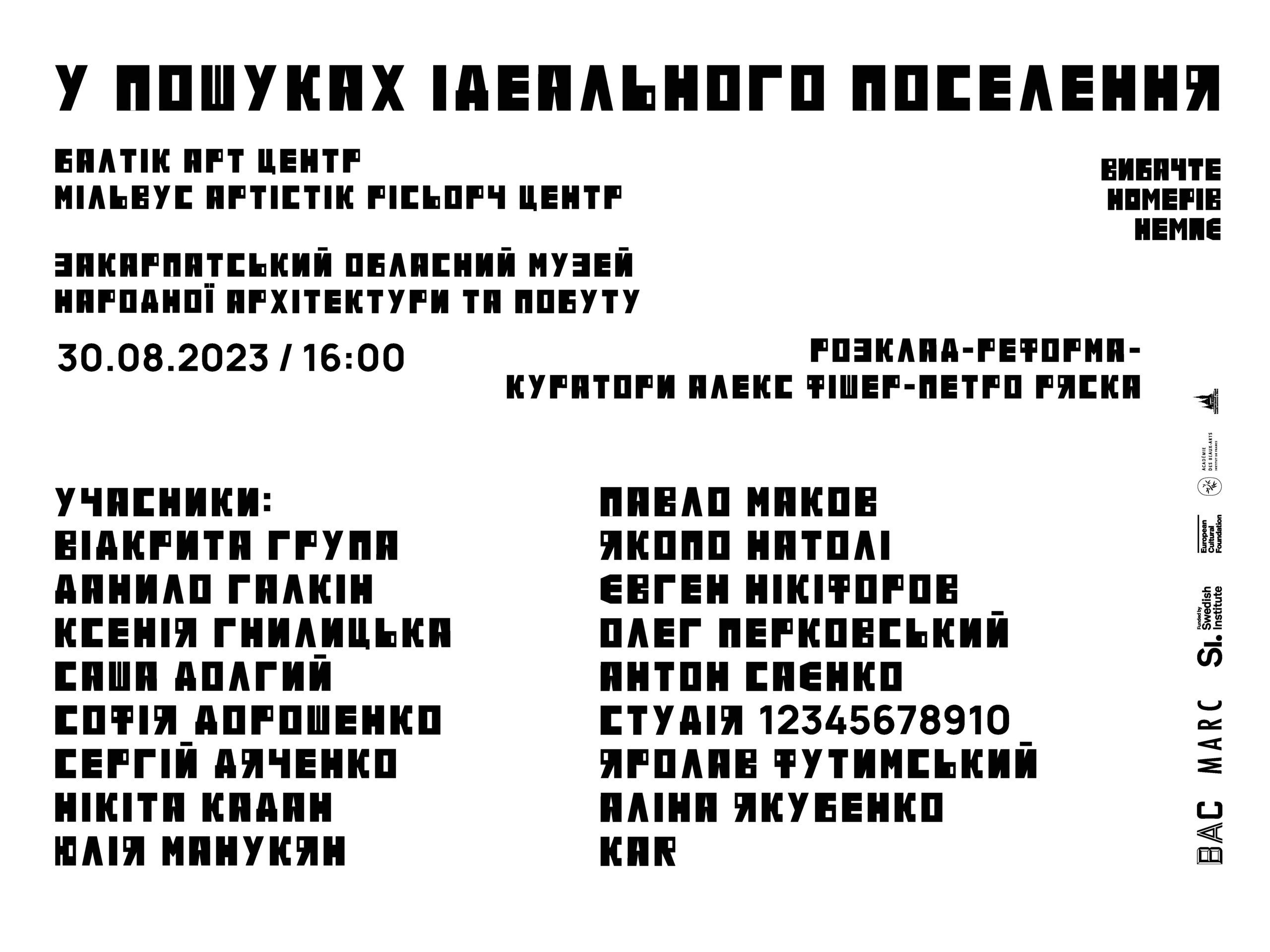
In search of an ideal settlement
Kindling – Reform –
Residence Sorry No Rooms Available together with Baltic Art Center and Milvus Artistic Research Center.
Curators Alex Fisher – Petro Ryaska
Transcarpathian Regional People’s Museum of Architecture and Life, Uzhgorod
August 30 – September 10, 2023
Participants:
Open Group, Danylo Halkin, Kseniya Hnylytska, Sofiya Doroshenko, Sasha Dolhyi, Serhiy Dyachenko, Nikita Kadan, Yulia Manukyan, Pavlo Makov, Jakopo Natoli, Yevhen Nikiforov, Oleg Perkovskyi, Anton Sayenko, Studio 12345678910, Yaroslav Futymskyi, Alina Yakubenko, KAR
In the just ideological work of Plato “The State” in the tenth book:
“Art and the perfect state are considered. Things in the world that art imitates are imitations of things themselves, so the artist is a creator of ghosts far from reality. An imitator artist does not know the true properties of objects, in his work he relies on the contradictory perception of the soul; art has no criteria of true and false. Art deals with the ignoble, helping it to overcome the intelligent. Therefore, in a perfect state, poetry should be only in the form of hymns to the gods and praise to virtuous people.” (from Wikipedia)
An artistic historical journey in search of a perfect and utopian town and village settlement. Perhaps similar to the worlds of Dante’s journey Divine Comedy, utopia is hell, an ideal settlement is paradise, and purgatory is a city with an unclear definition. From the history: Ideal Miletus, Plato’s ideal city, Piero della Francesca’s ideal city, Leonardo’s ideal city, utopian ideas about building an ideal city of the 18th century, the Garden City of the 20th century, Le Corbusier…, the capital of Brazil, utopian experimental demonstration villages of the USSR, the Soviet model of industrialization and urbanization, etc.
An attempt to review settlement patterns from the general to the detailed, both historically and socially and culturally. A critical contemplation of history from the perspective of the reality of the russian-Ukrainian war with the relevance of (re-)building the cities of Ukraine, drawing attention to the restorative immunity of the trauma of war in the world experience of wars.
The exhibition demonstrates a range of methods for engaging with urban-type built environments, recognising that each city is a) unique and b) always changing, as well as c) that different circumstances give rise to different approaches. Featured works focus on ‘small’ details and ‘large’ visions, looking from above, below, in-, and outside their chosen settings and subjects. Drawing on Sorry No Rooms Available’s network of collaborators from across Ukraine and the international community, the exhibition includes projects that address Uzhhorod as well as those related to phenomena in other locales, such as Dnipro and the semi-fictional Svetlograd. Some of the projects are archival and others are new and/or are being presented for the first time. In situating distinct works in correspondence with one another, the show purports to spark critical discussions about authorship and agency in the city.
The exhibition is staged at the Museum of Architecture and Life in Uzhhorod, an institution that was founded during the Soviet period, which includes a collection of architectural models and aims to portray different ways of being in Zakarpattia, and in Ukraine more generally. This will be the second exhibition that Sorry No Rooms Available realizes at the Museum. The exhibition thus represents a continuation of the residency center’s ambition to nurture relationships with other artistic and cultural institutions in Uzhhorod.
About a partnership between Sorry No Rooms Available (SNRA), Baltic Art Center (BAC, Visby, Sweden), Milvus Artistic Research Center (MARC, Knislinge, Sweden), and soma.majsternia (Lviv, Ukraine). The project furthers collaboration between SNRA, BAC, and MARC, which has been ongoing since 2020, and expands to include soma.majsternia, who bring their own expertise in performative practices. Together, the group will work on Kindling (from the English term for ‘fire starters’), a research project and dialogue between small and medium-size arts platforms operating in regional and rural areas.
Kindling proceeds on the conviction that residencies proverbially ‘light a fire’ in the communities they are situated in through their support of socially engaged artistic practices. The project takes the form of residencies with associated public programming. Each Kindling partner designs their own conceptual frame, customizing the project for their respective organization.
The “Kindling – Reform -” project became possible thanks to the support of:
The Swedish Institute
The beaux-arts Academy in Paris
European Cultural Foundation
Baltic Art Center
Milvus Artistic Research Center
Sincere thanks to The Naked Room gallery for providing the works of Kseniya Hnylytska and Pavlo Makov for the group exhibition
Photo credit Mykhaylo Melnychenko
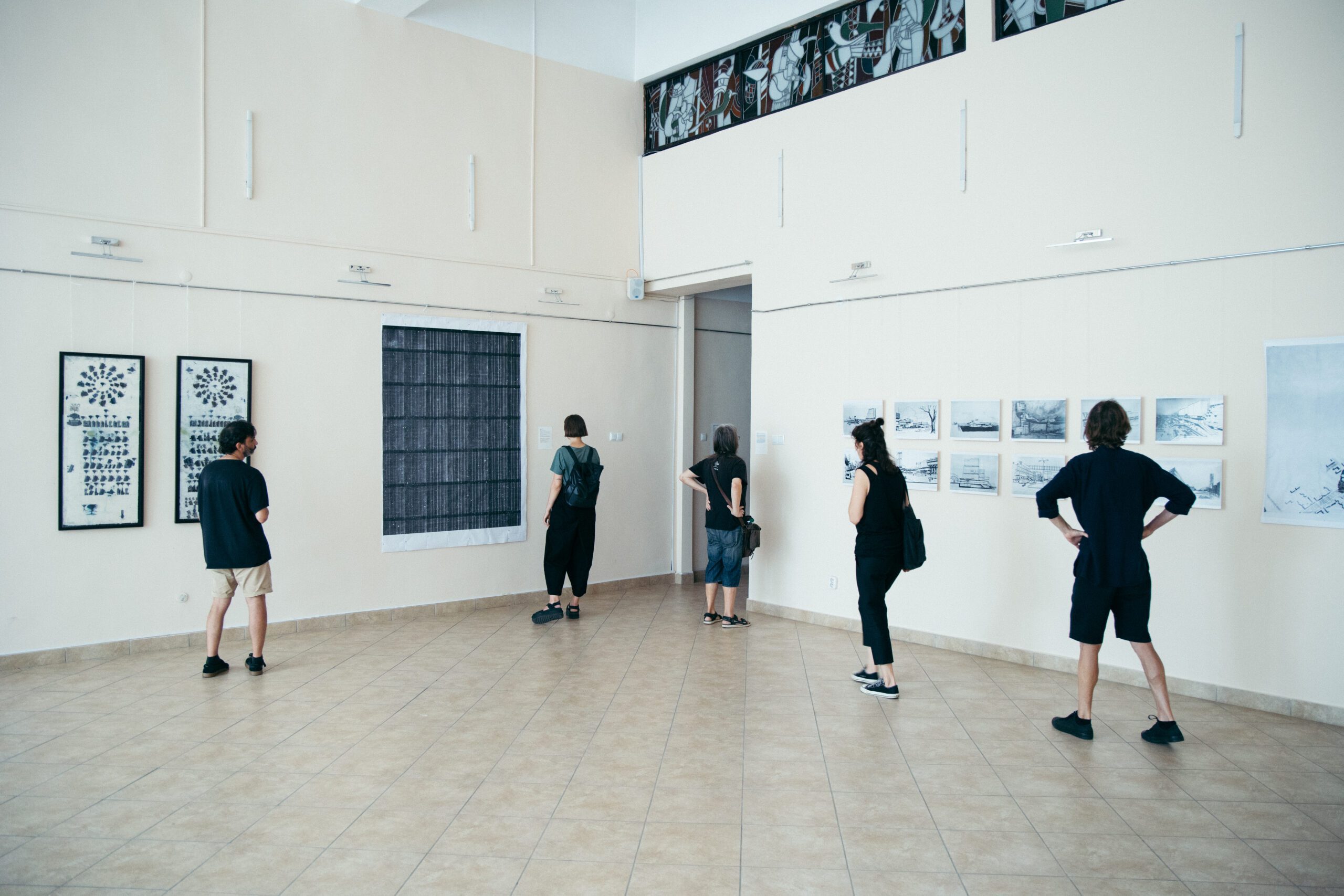
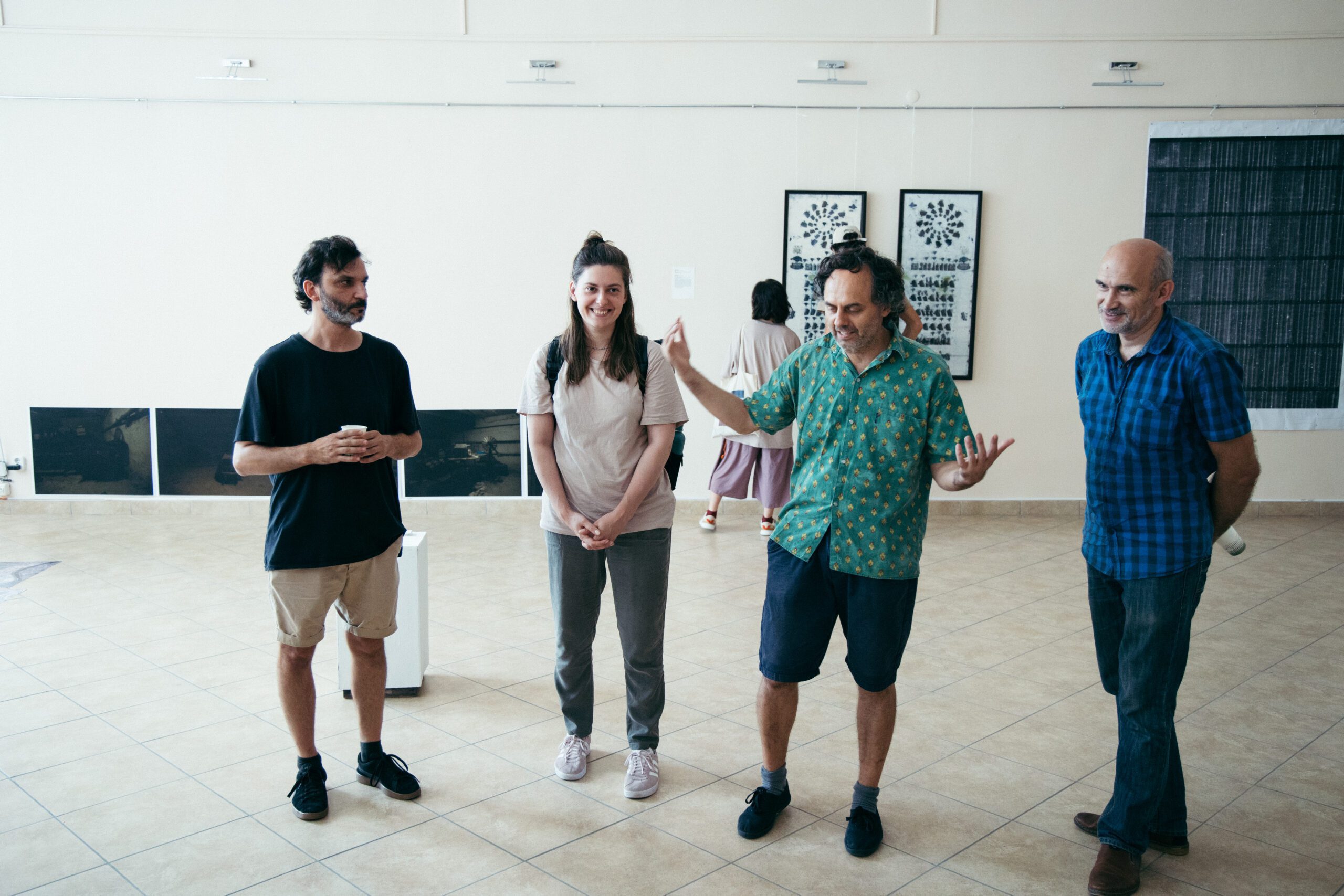
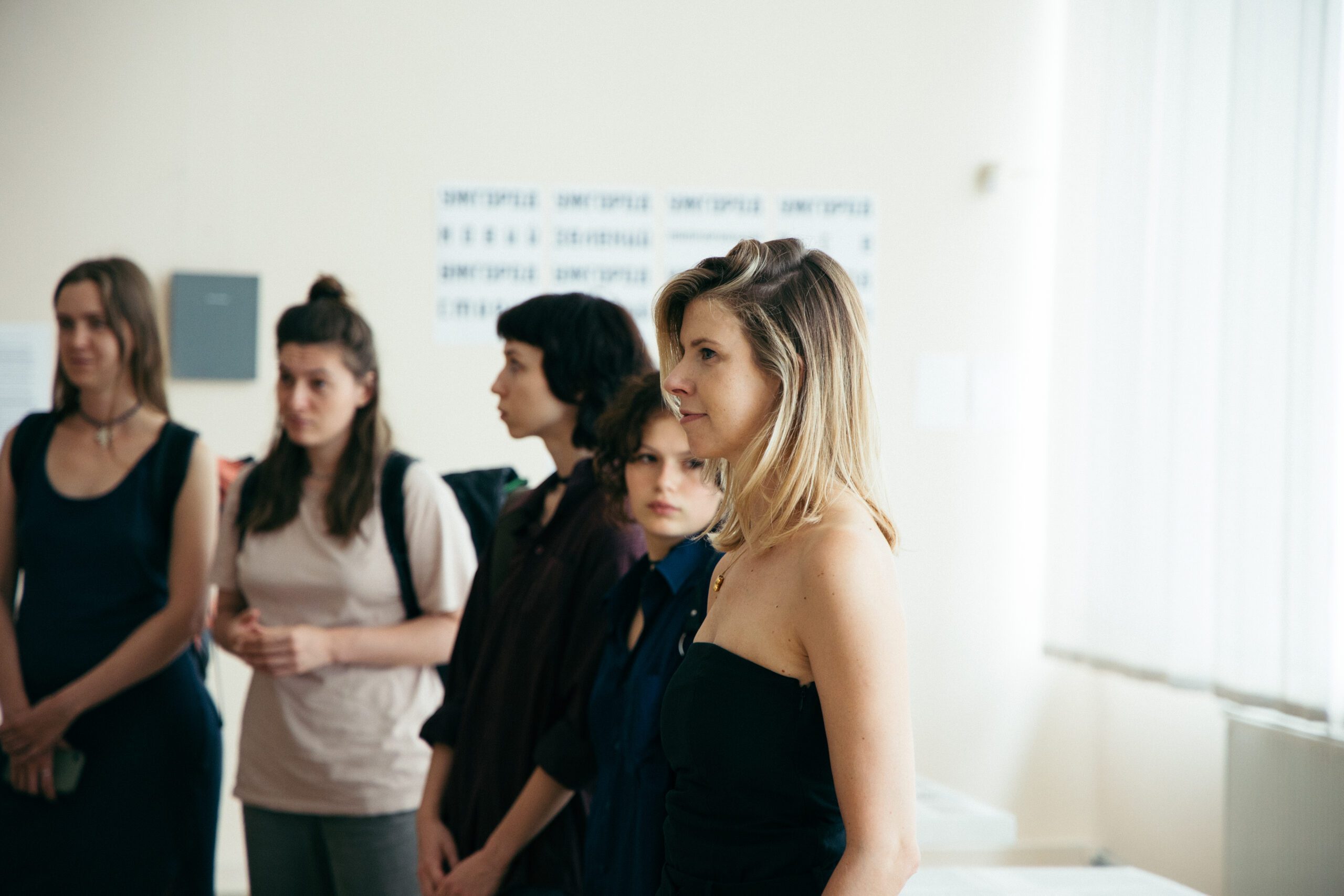
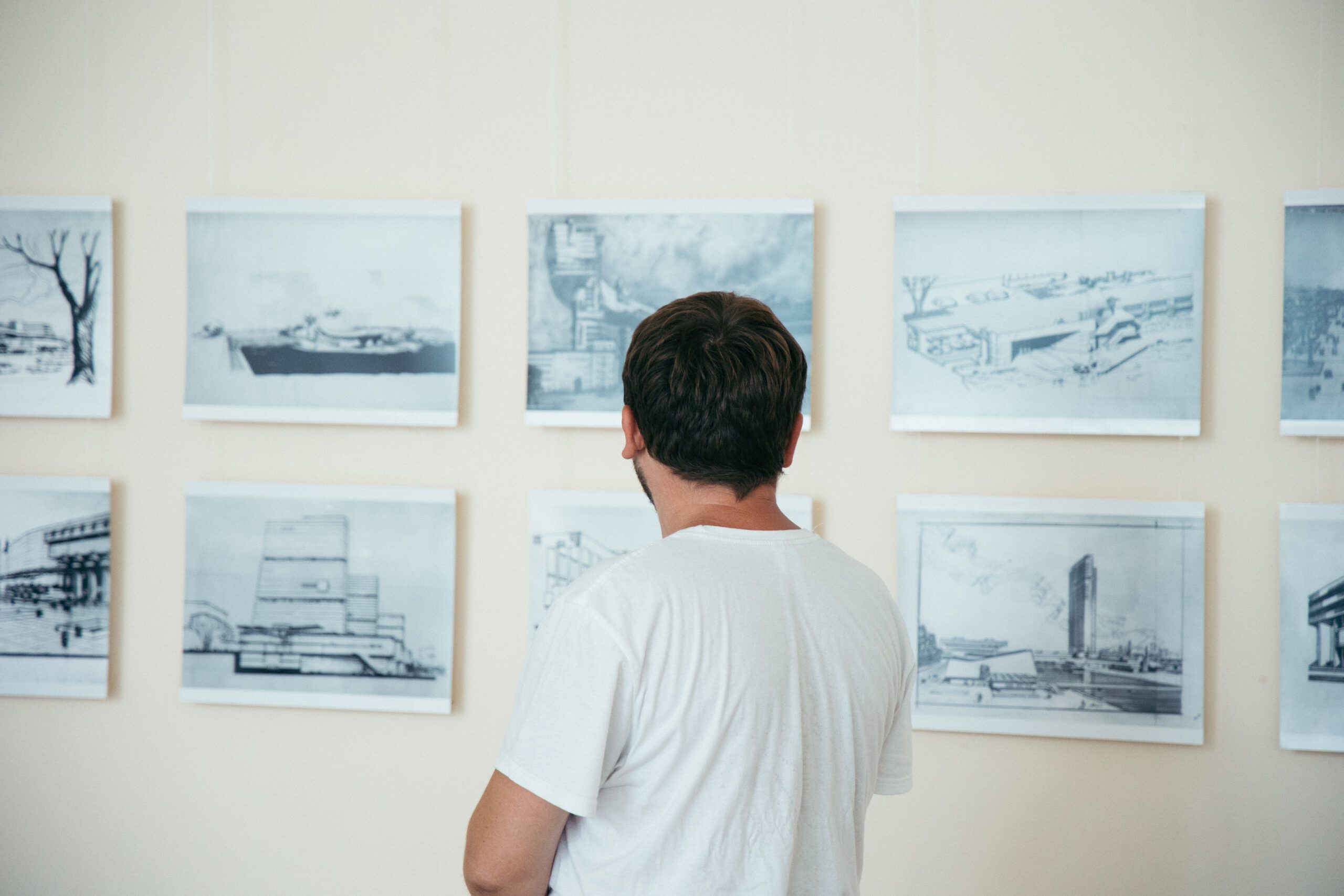
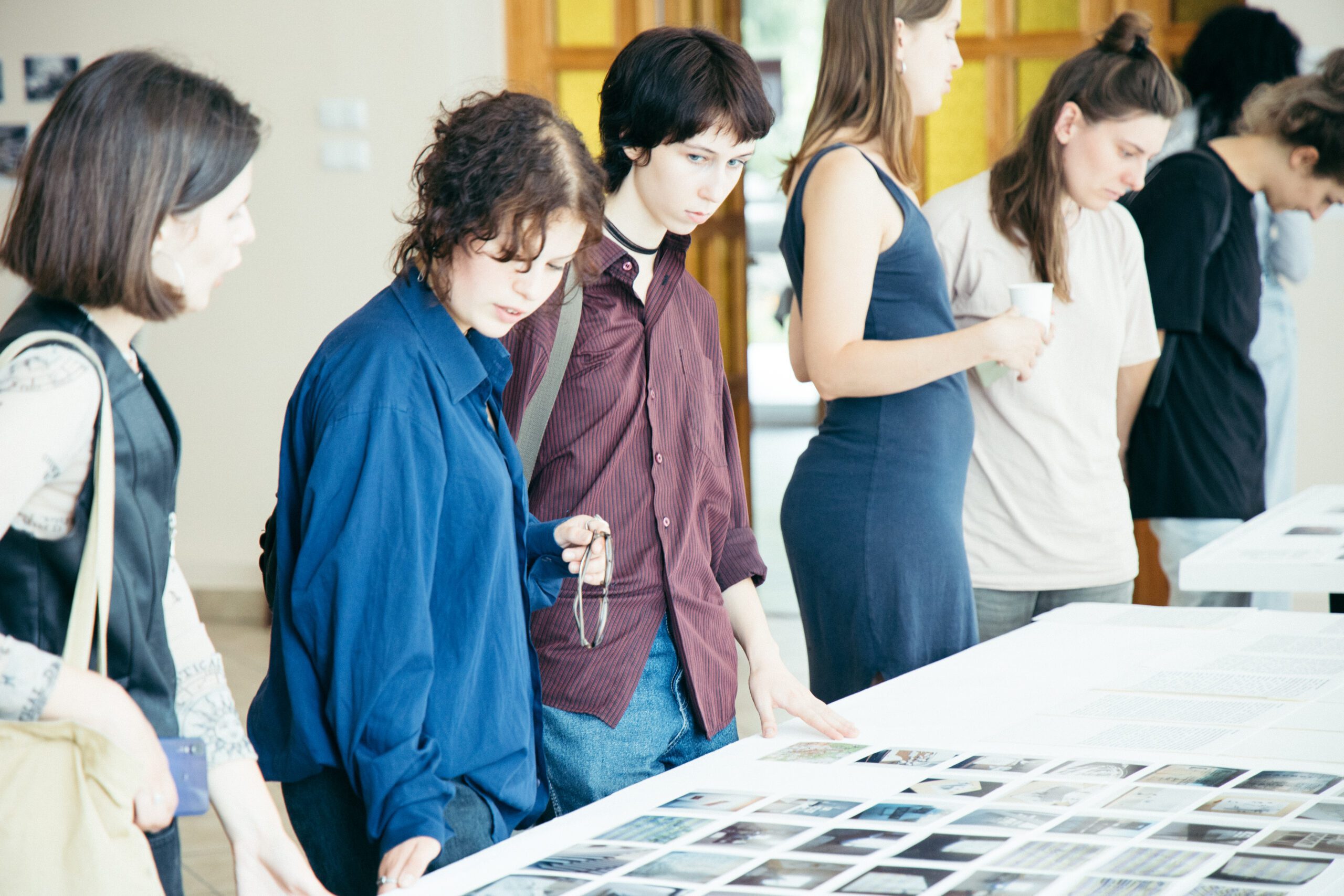

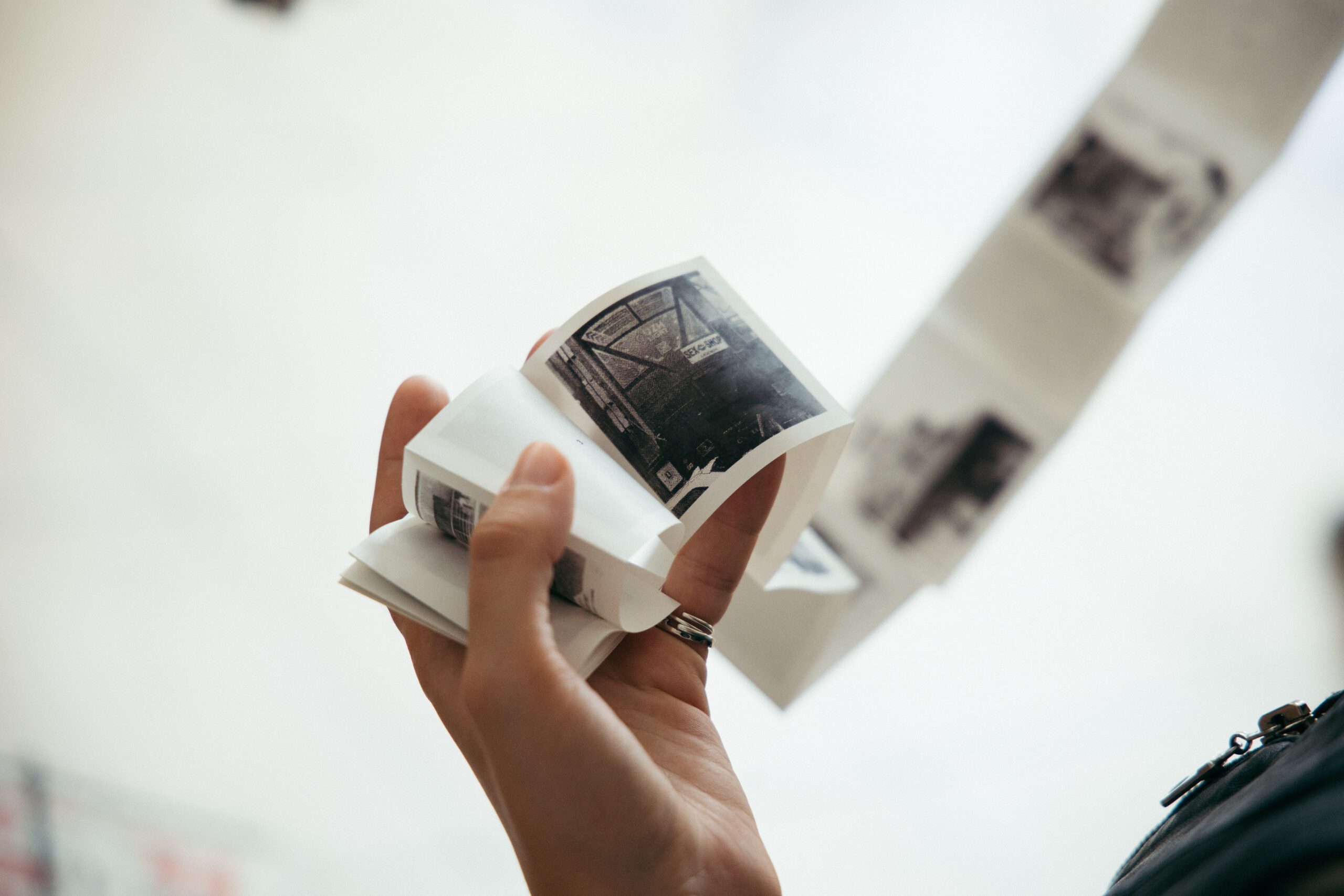
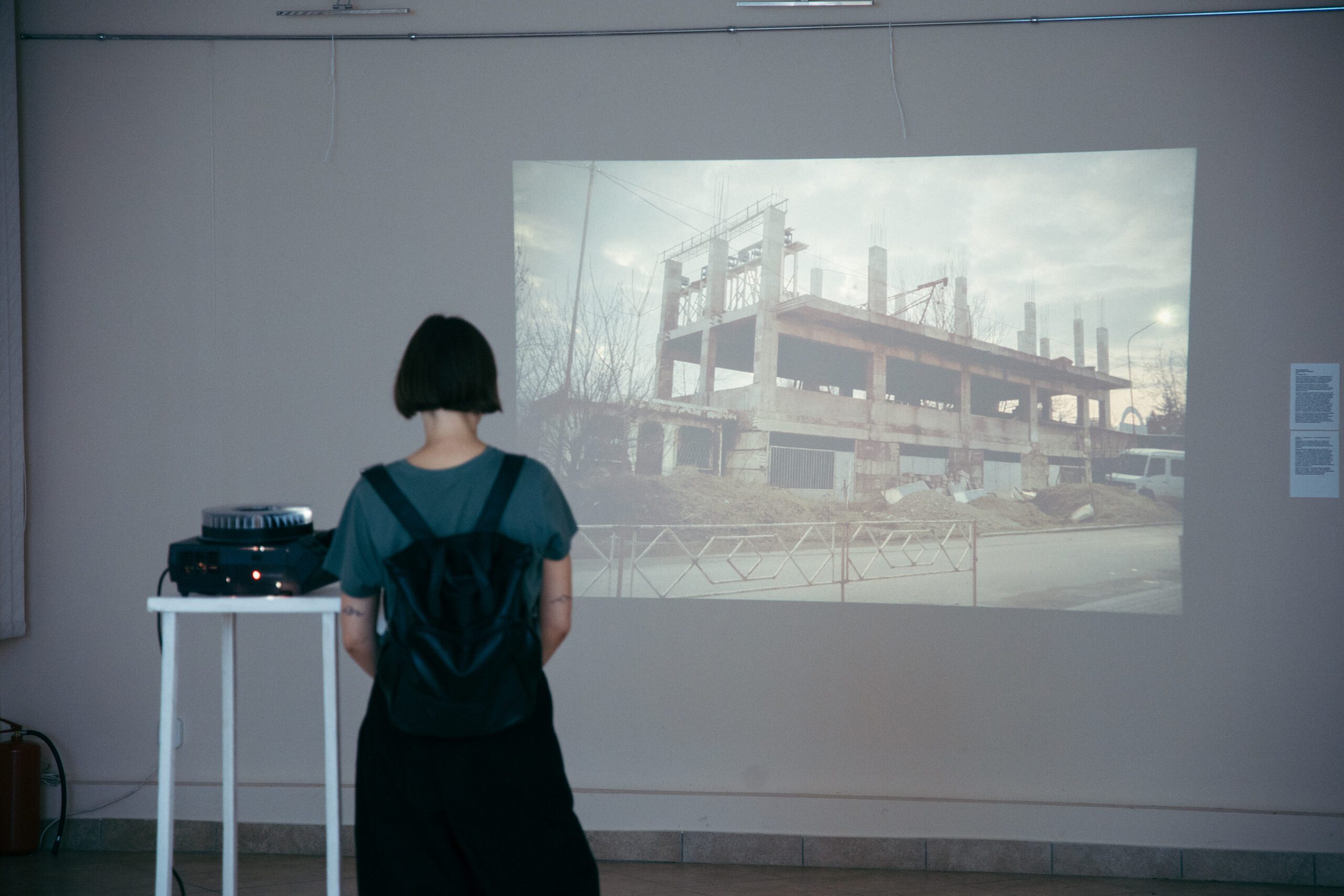
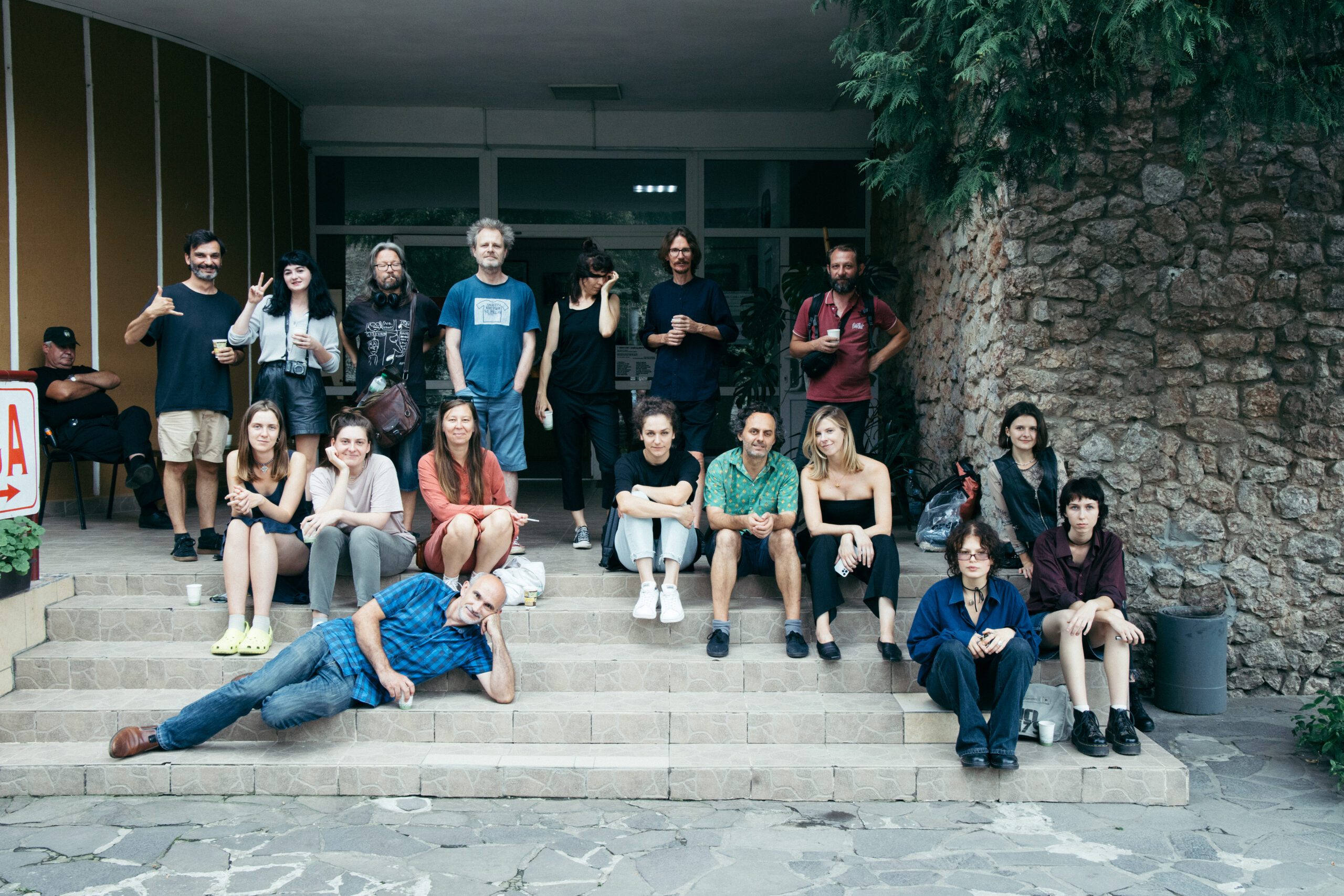
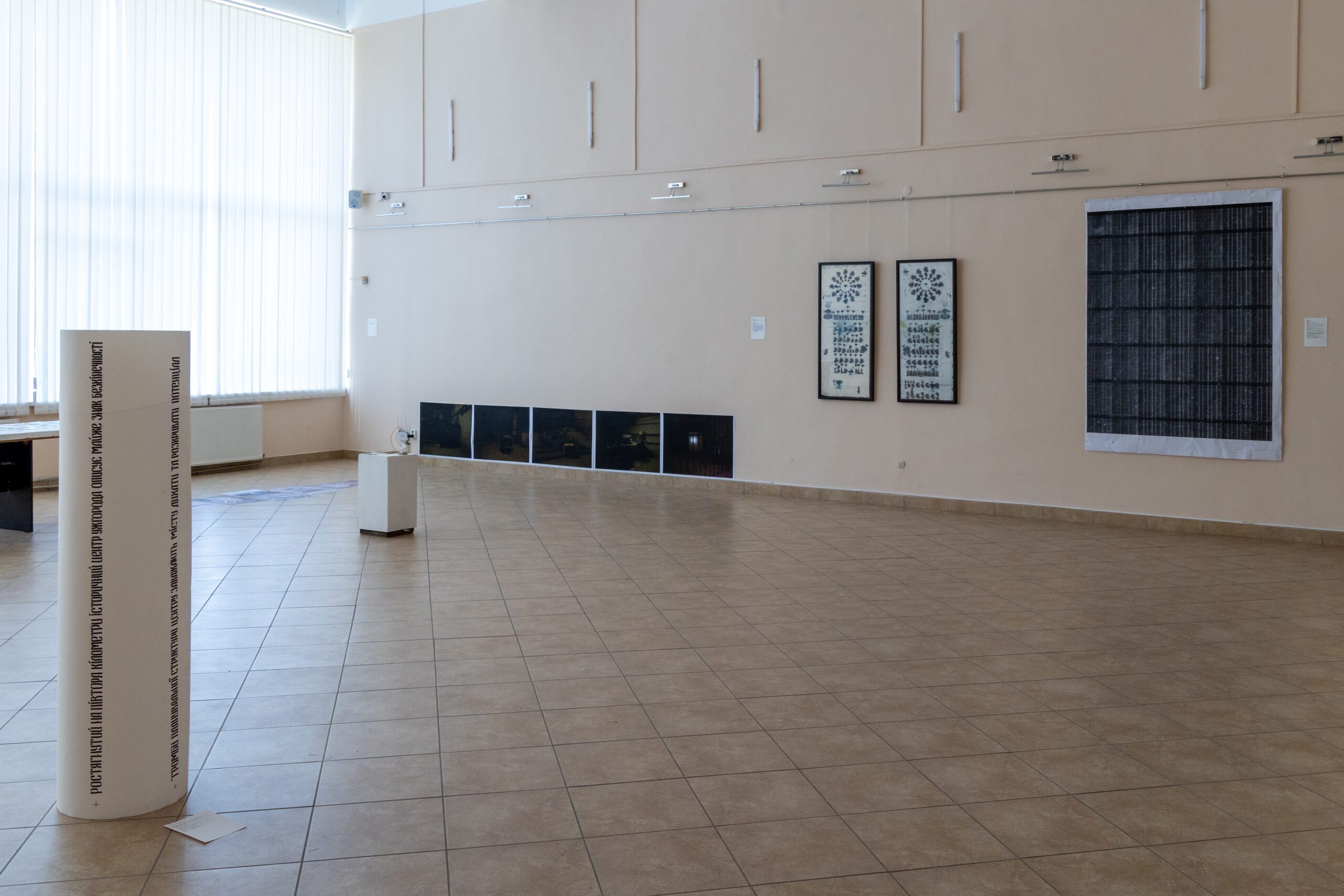
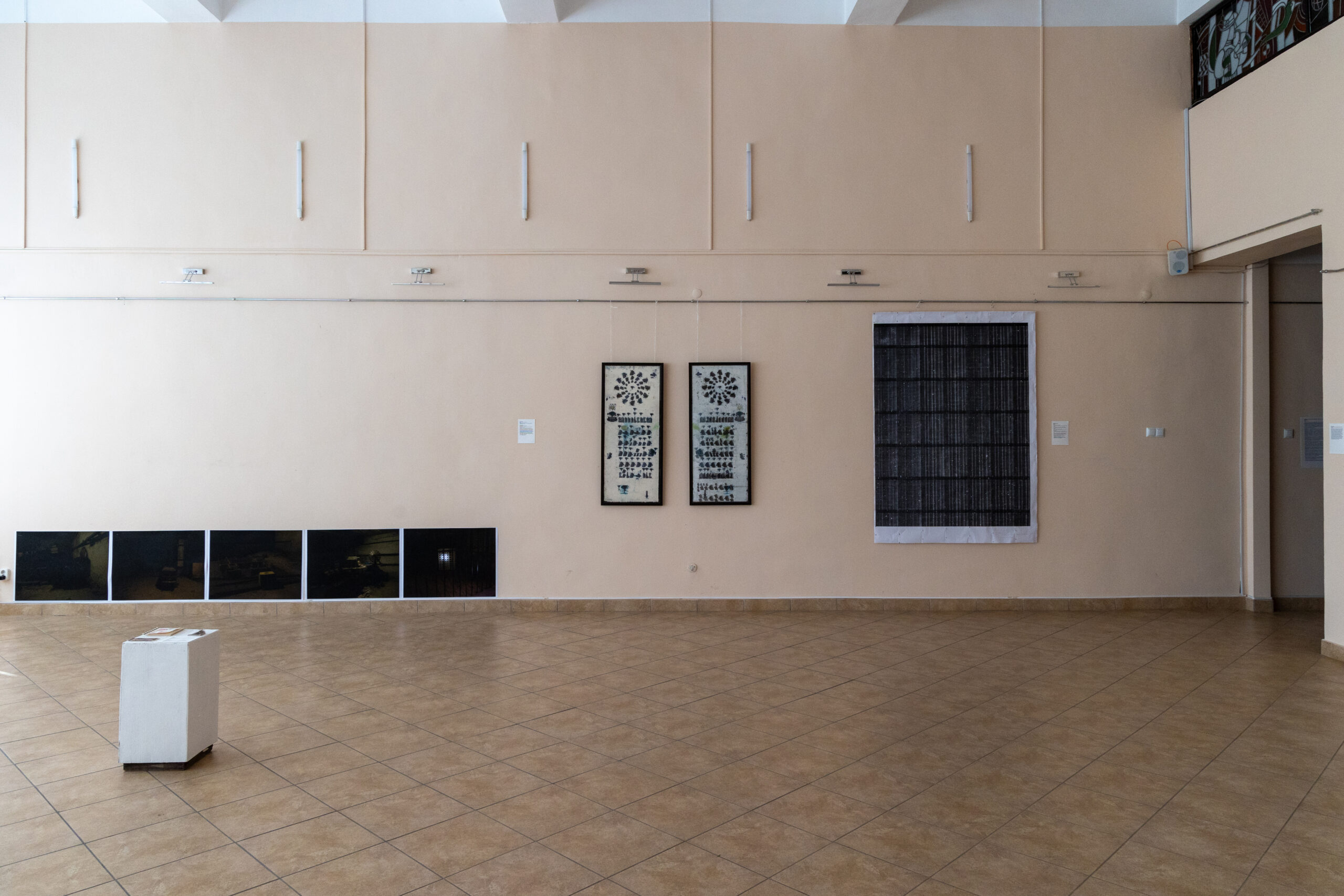
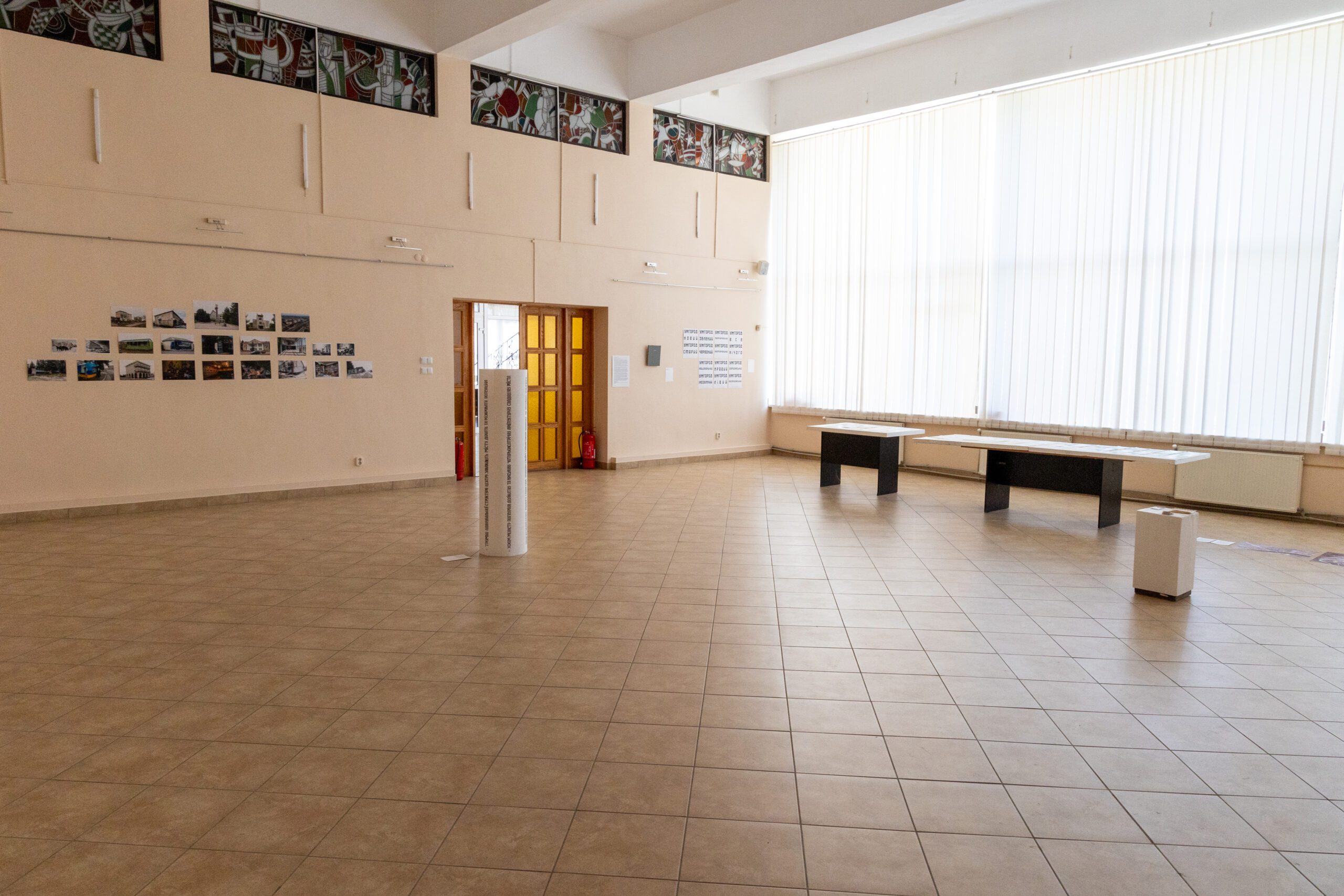
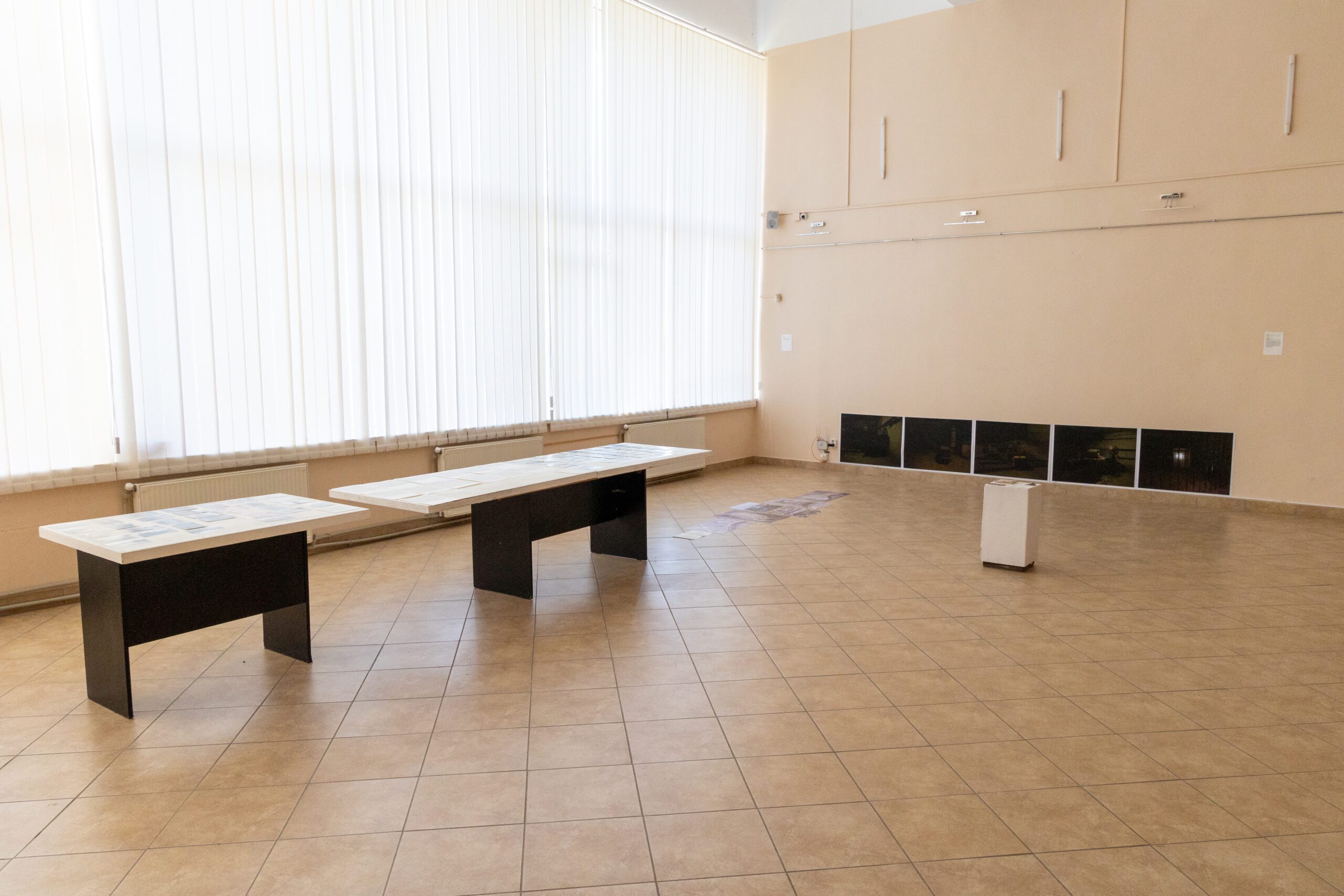
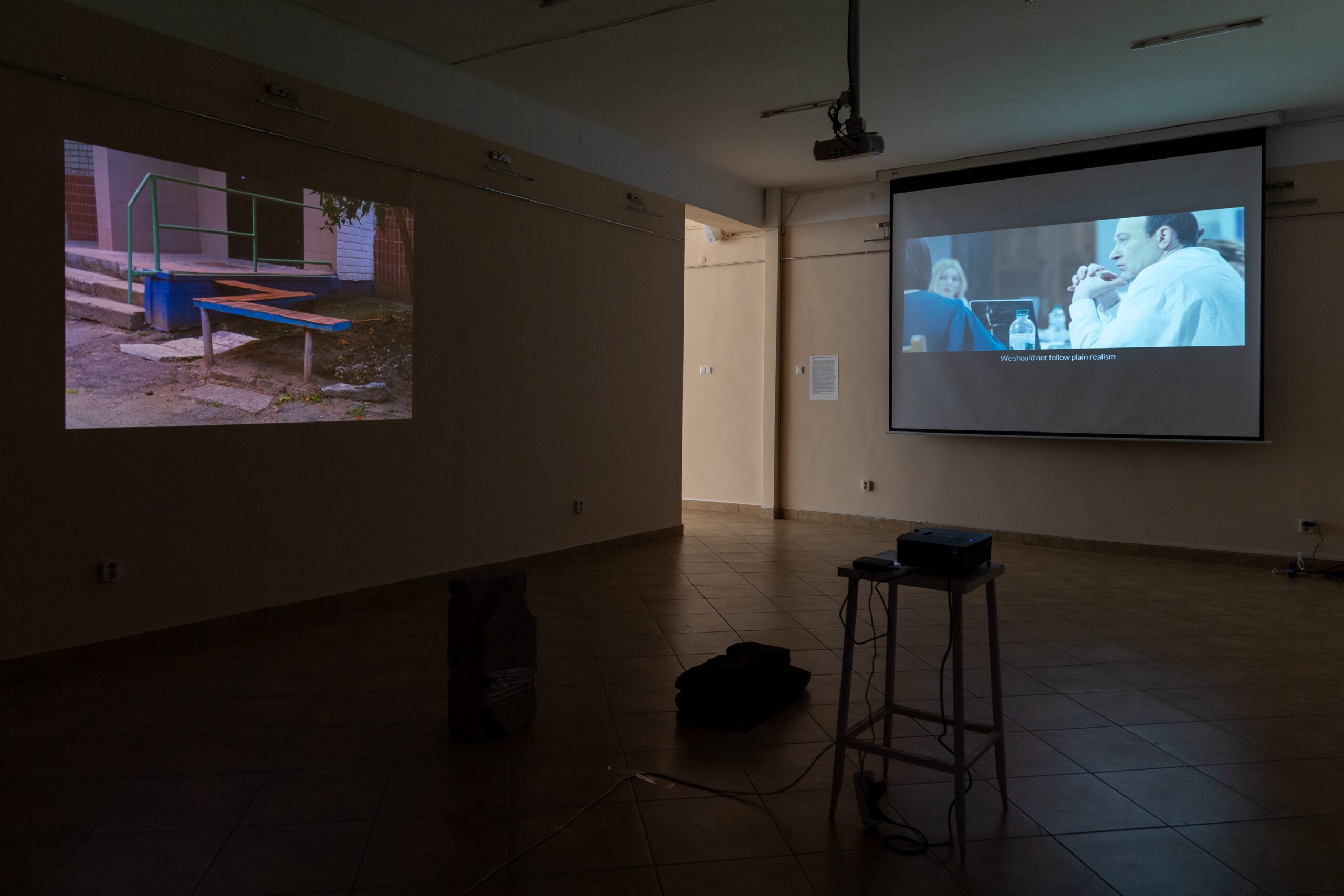
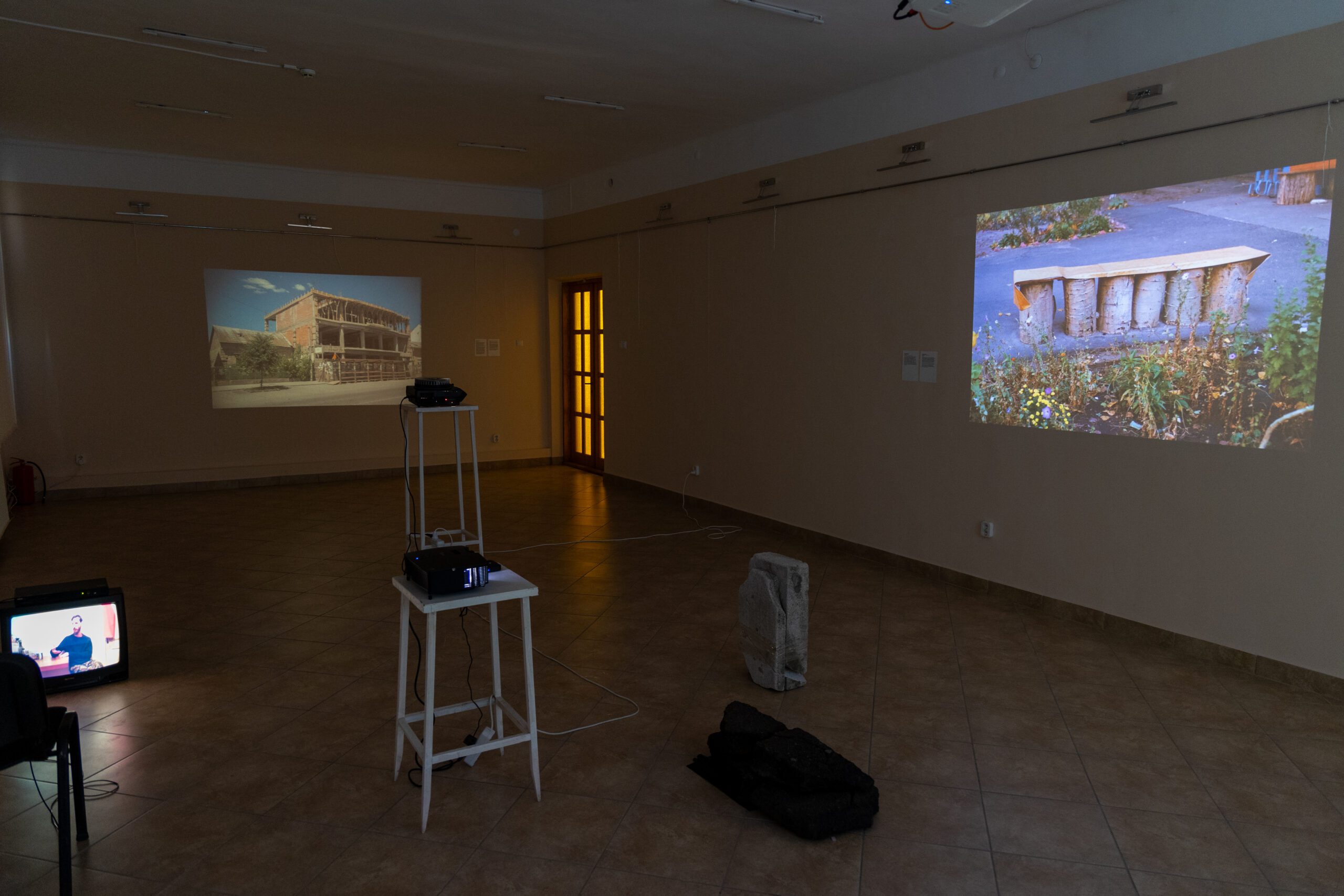
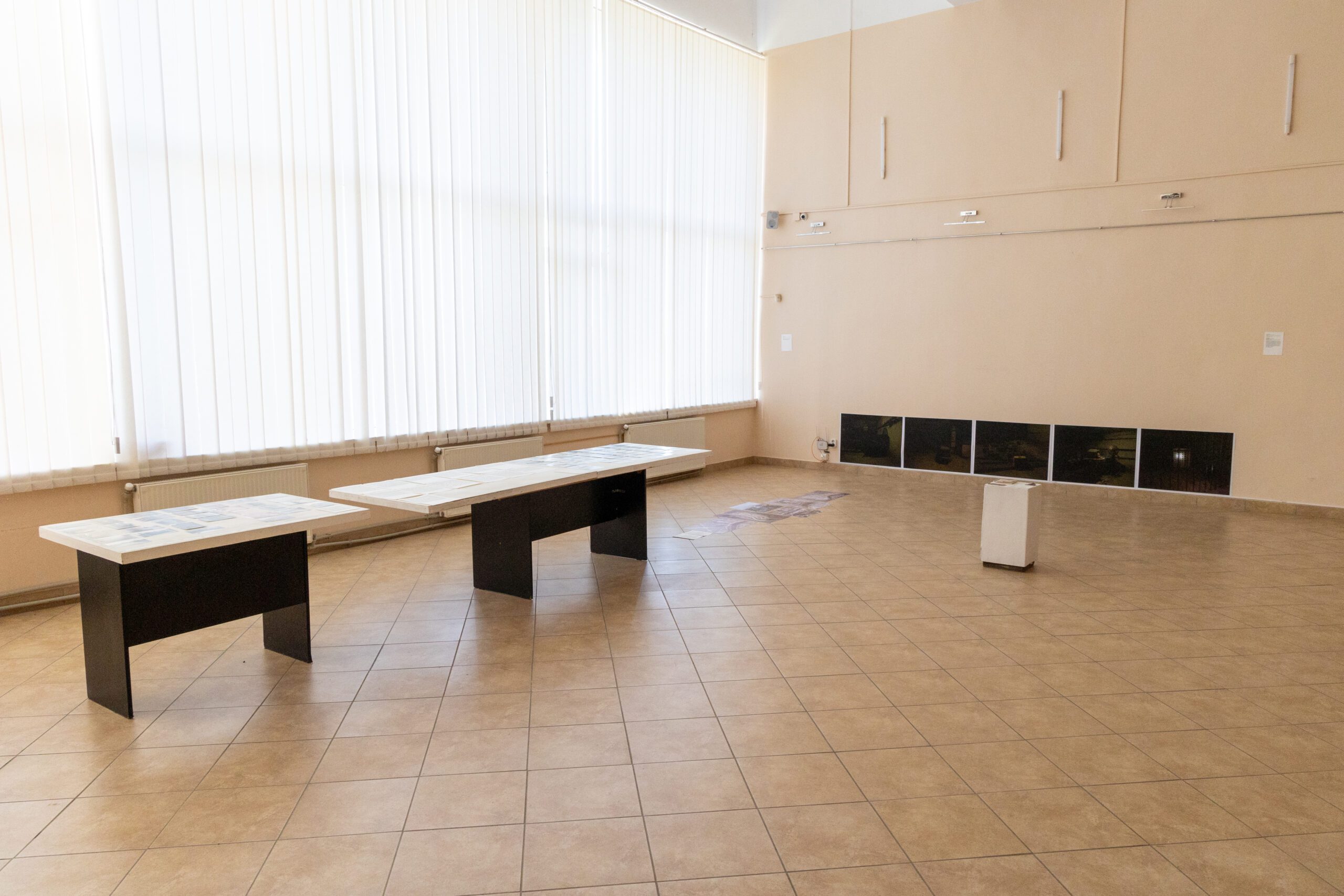
General photos from the exposition
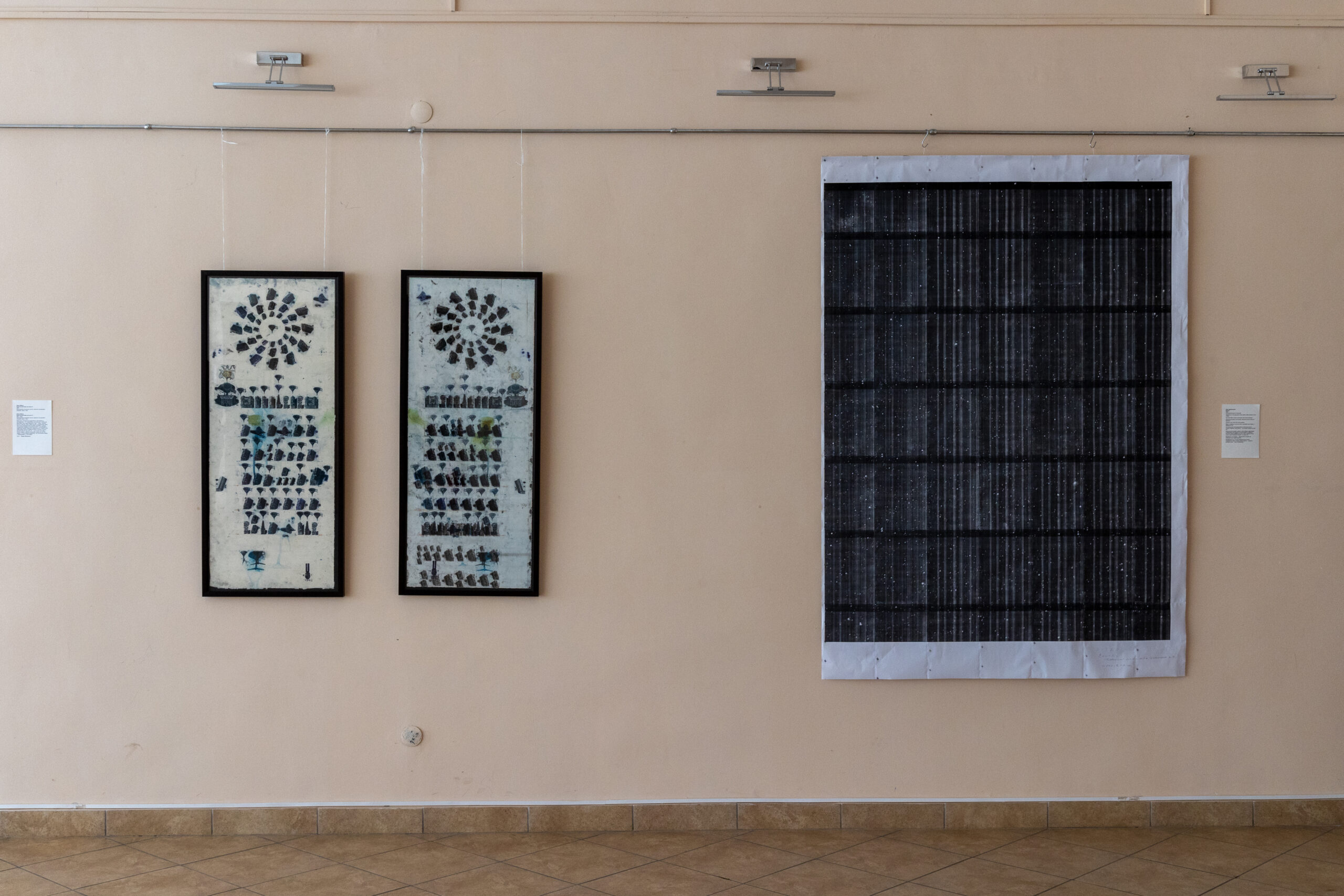
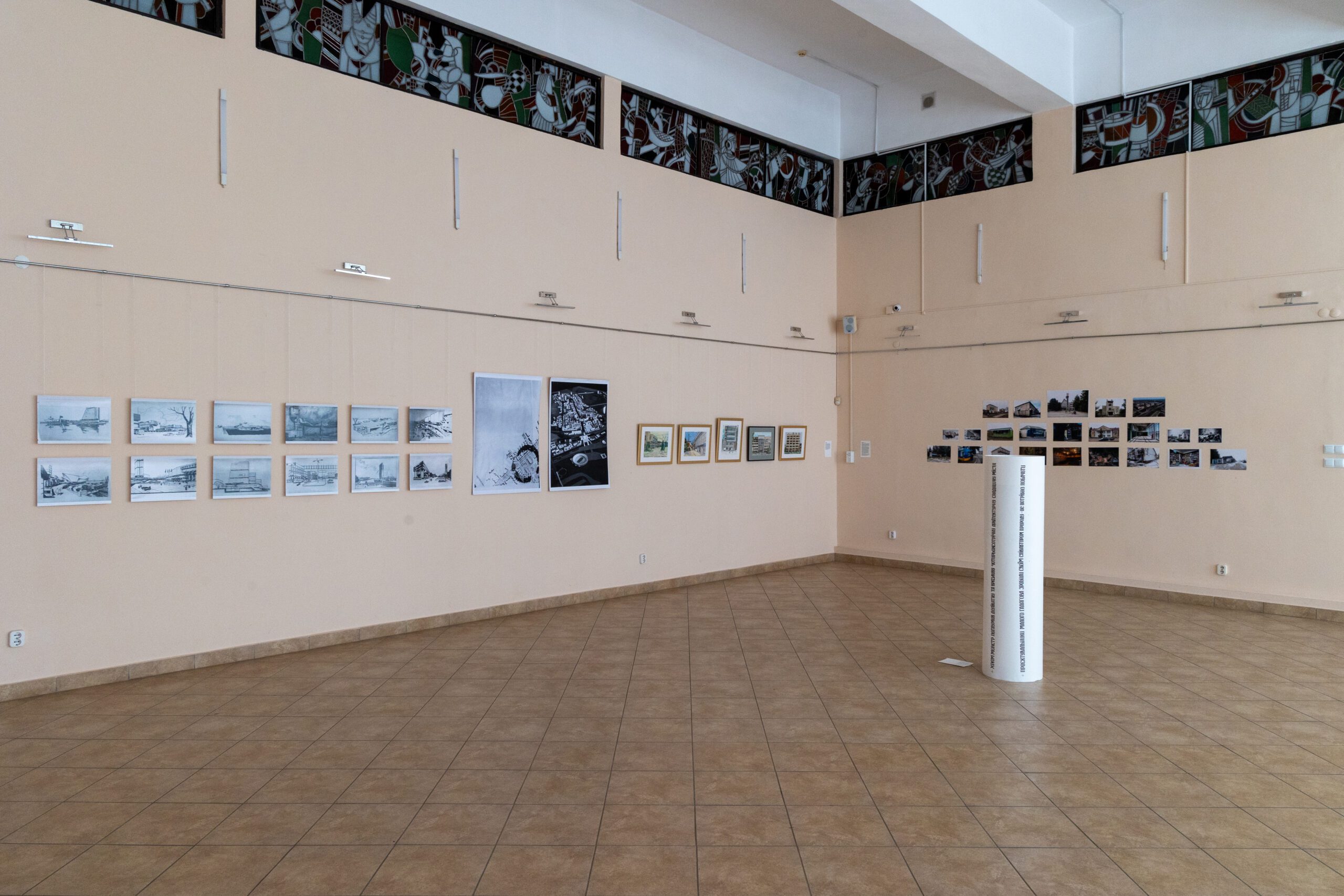
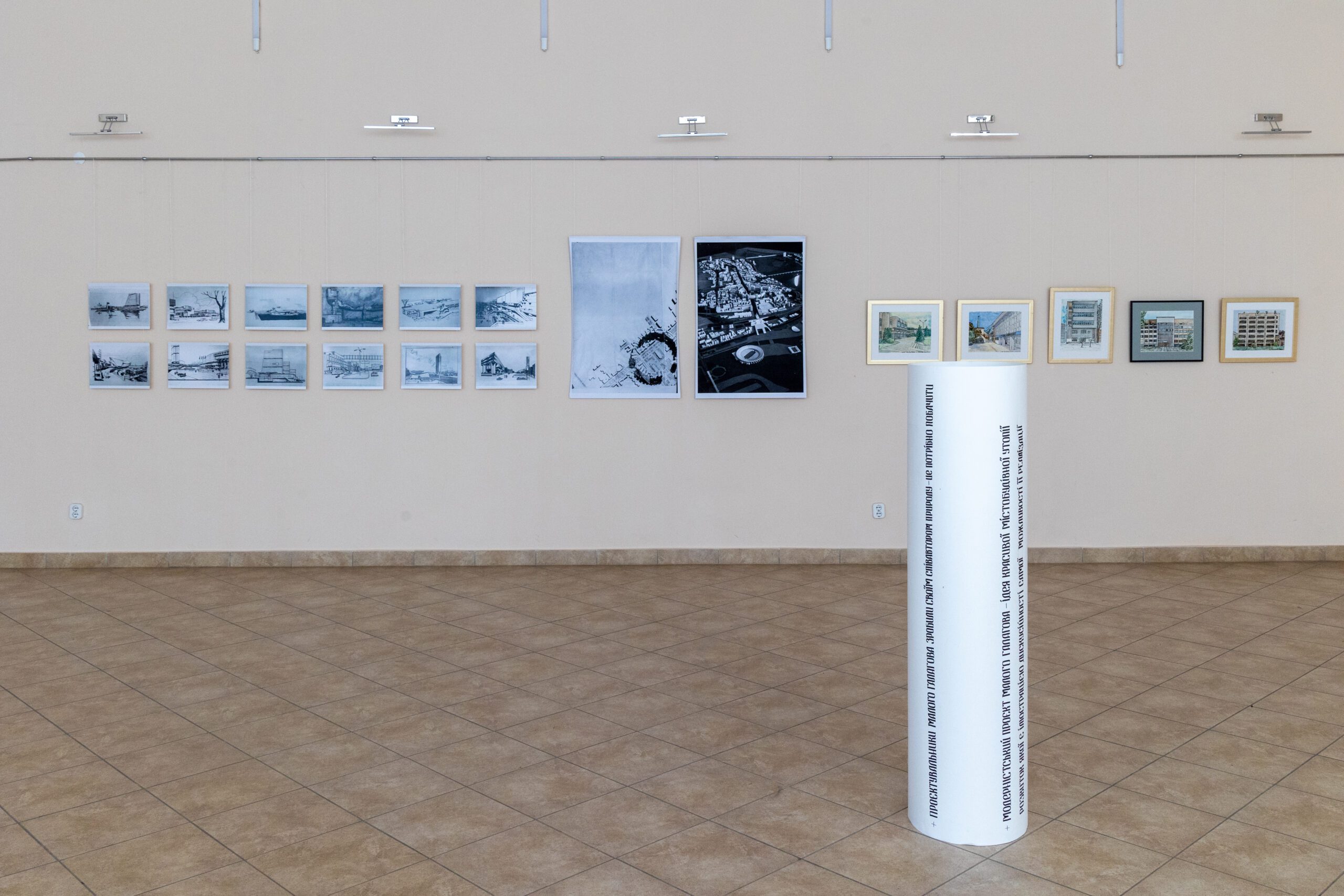
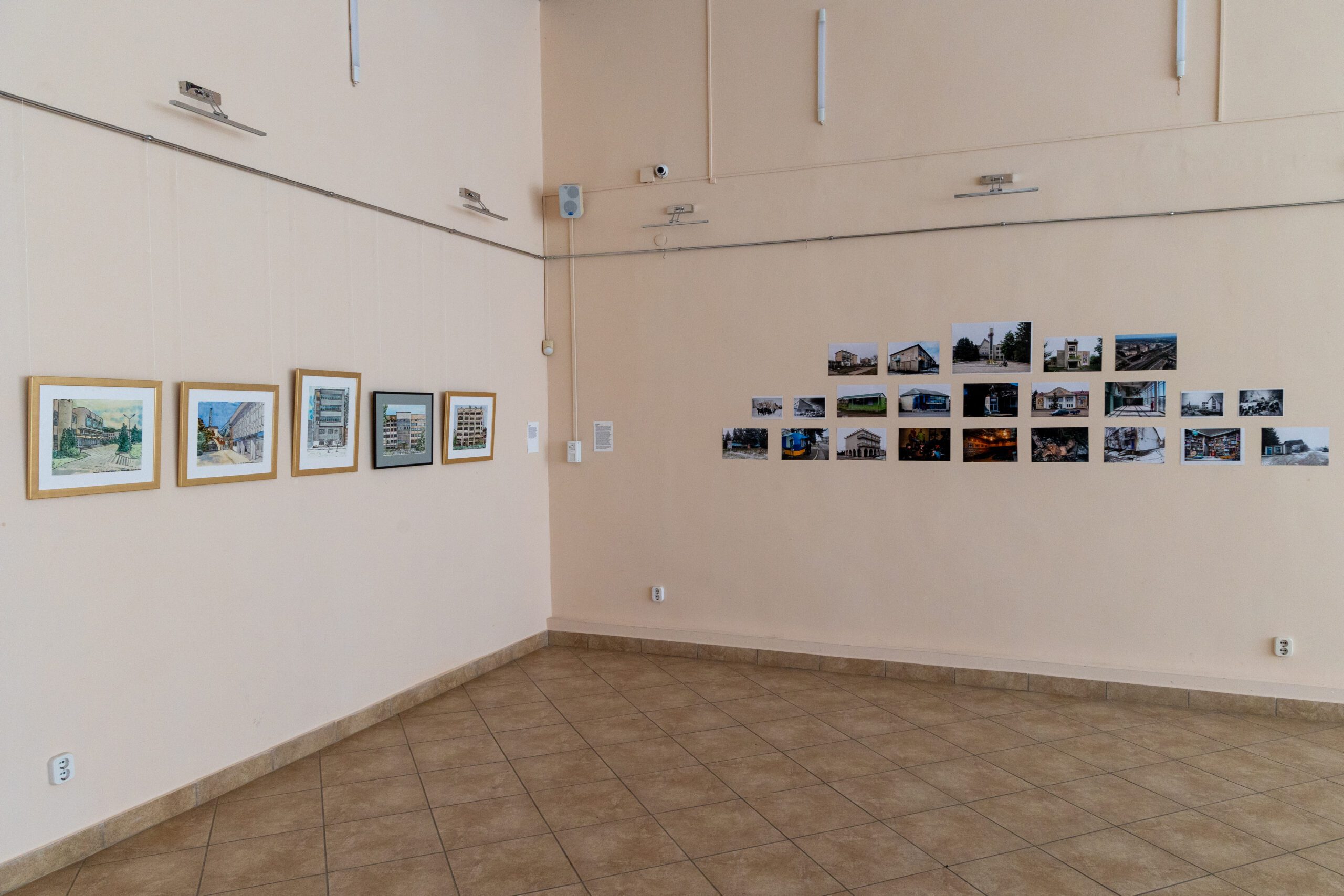
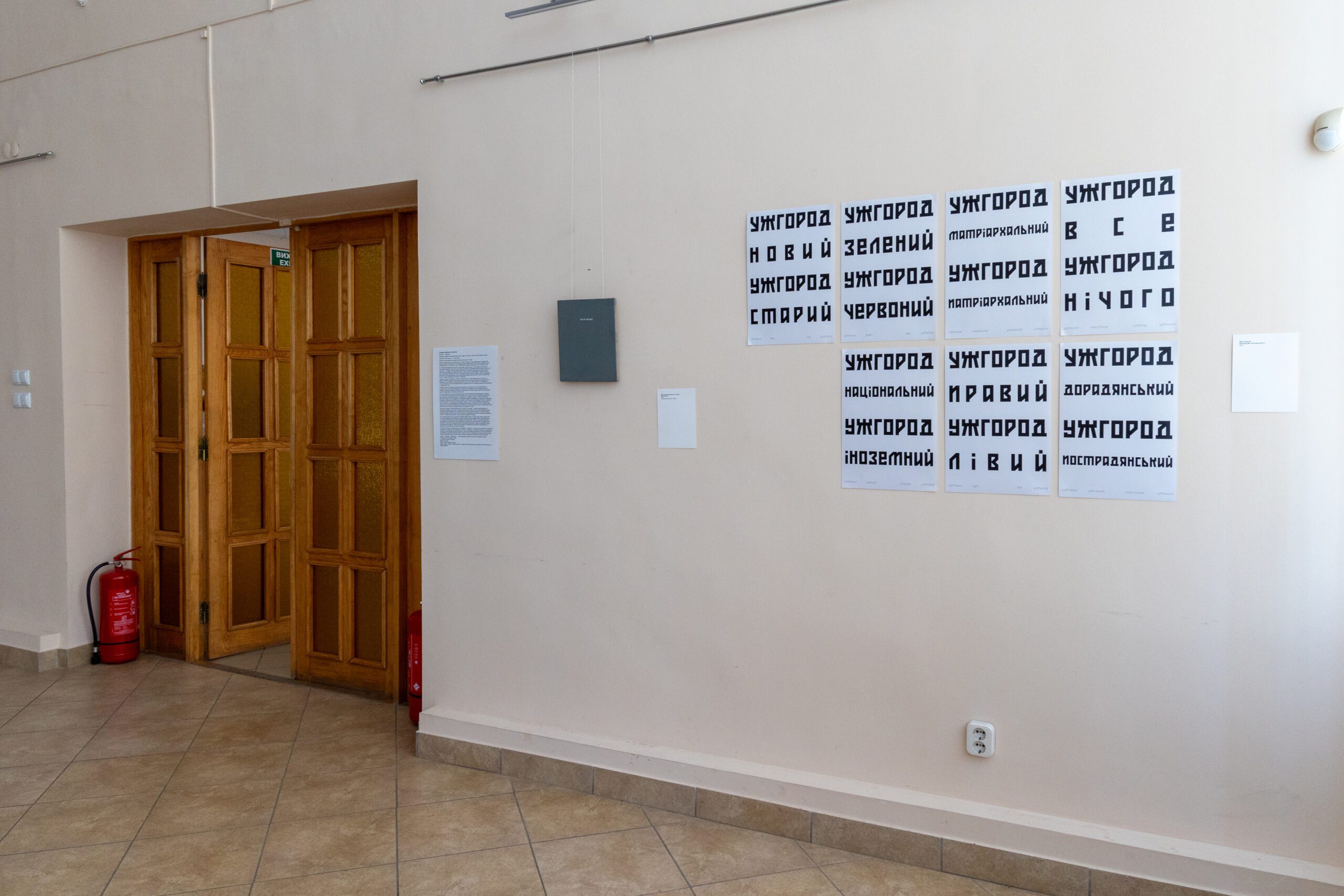
Participants’ projects
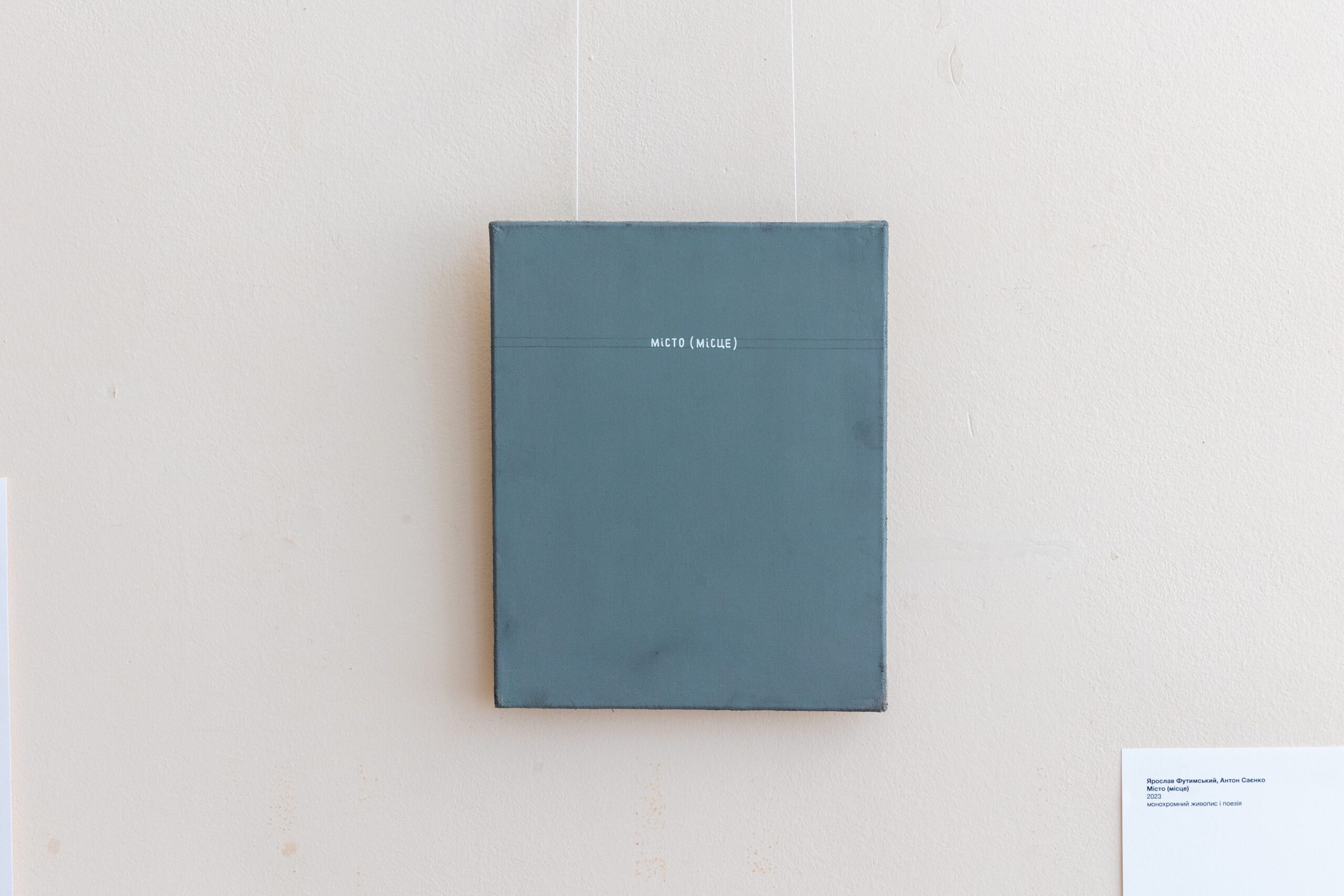
Yaroslav Futymskyi, Anton Sayenko
City (place)
2023
monochrome painting and poetry
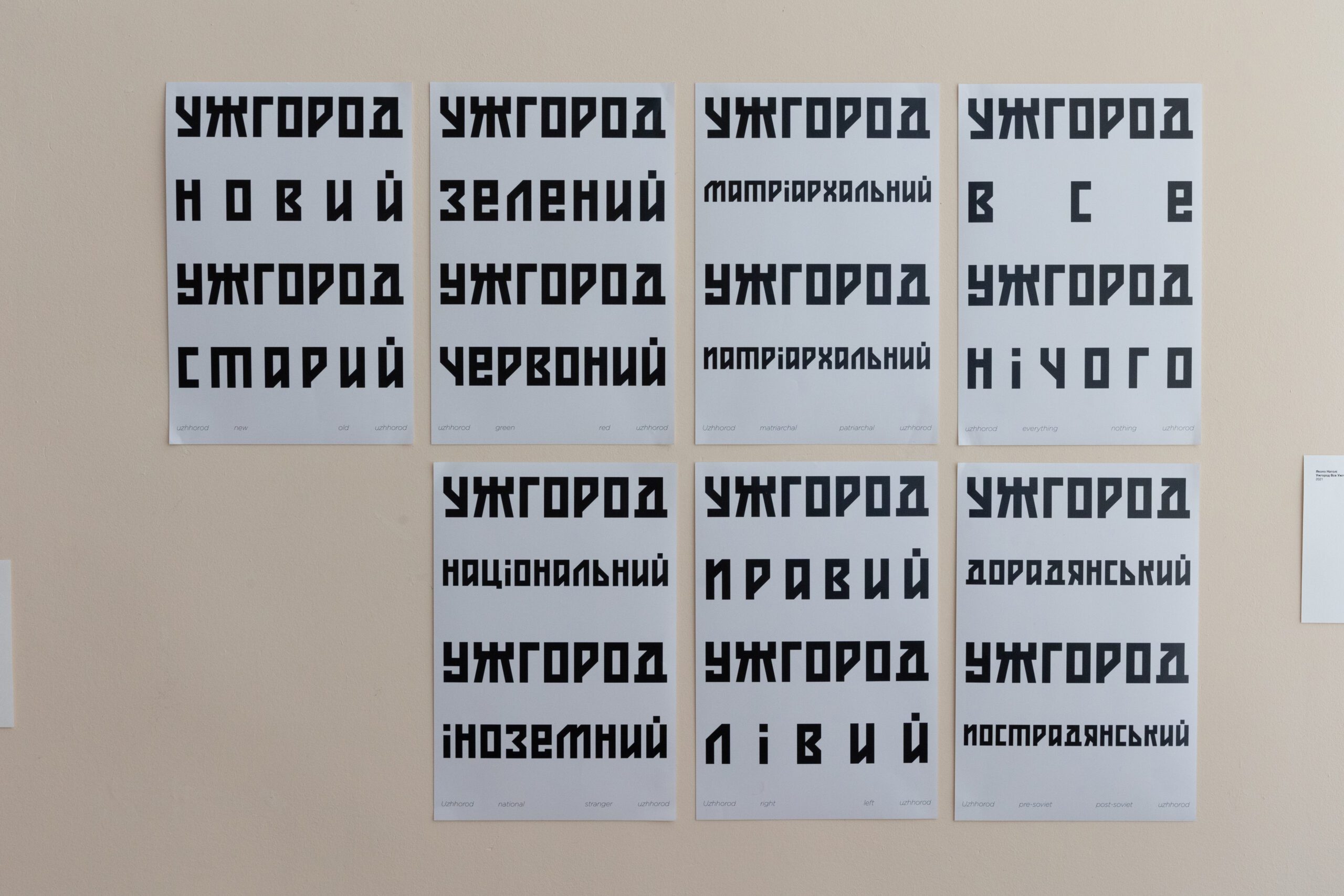
Jacopo Natoli
Uzhhorod Everything Uzhhorod Nothing
2021
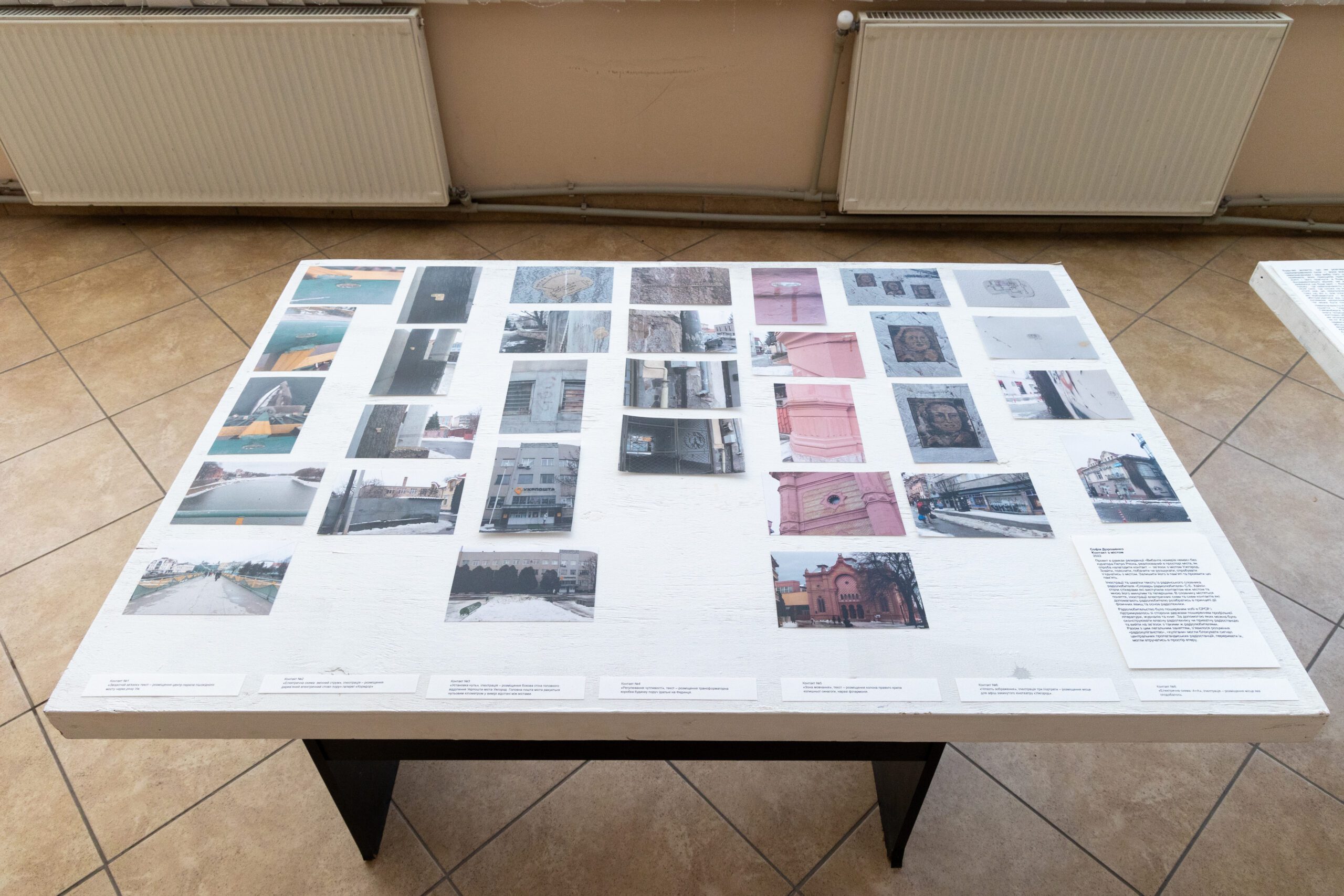
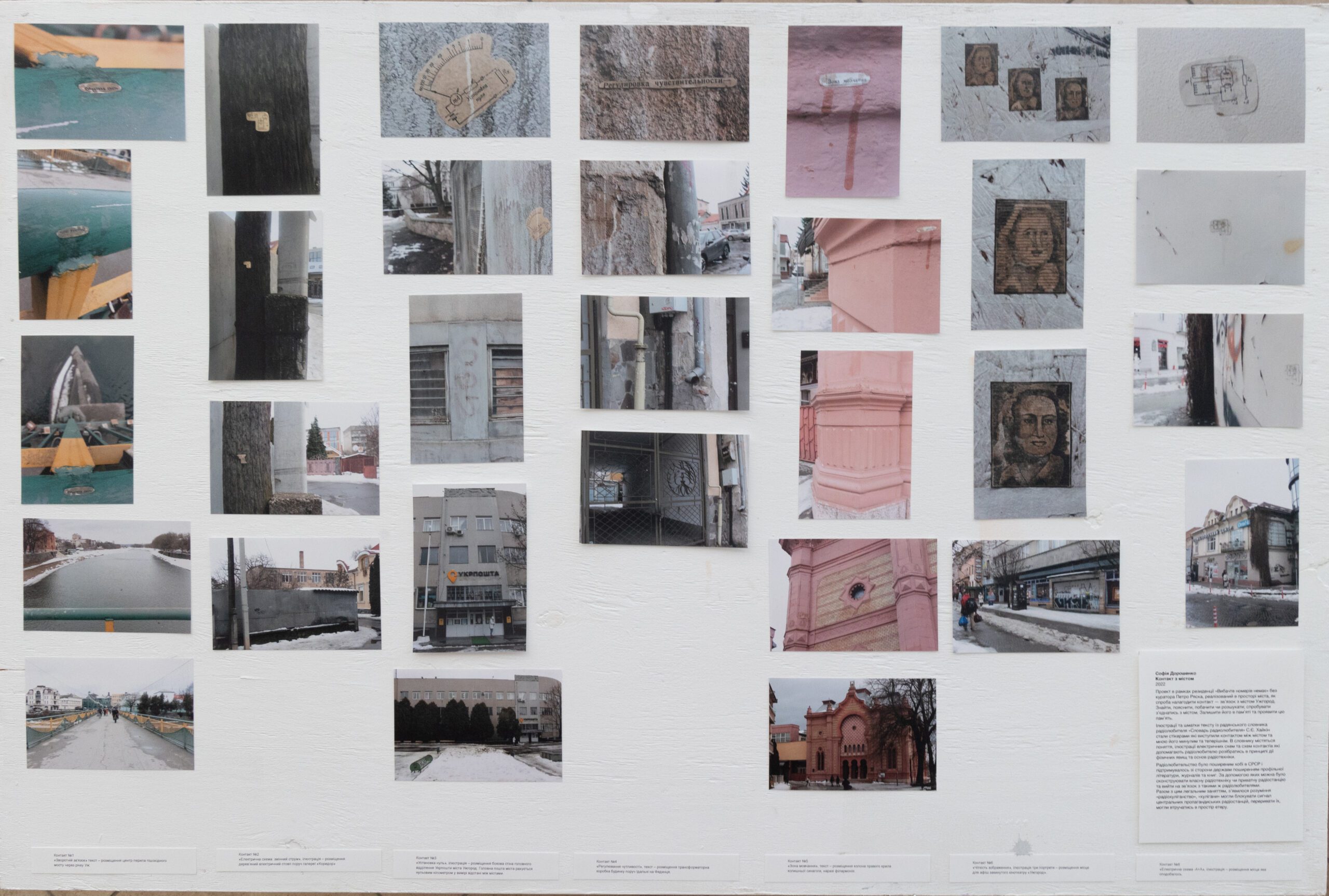
Sofia Doroshenko
Contact with the city
2022
The project was realized by the artist while participating in the residence Sorry, No Rooms Available as an attempt to establish a connection with the city of Uzhhorod
Find, explain, see, or seek. Try to connect with the city. Put it in your memory and manifest this memory.
In the project, illustrations and fragments of text from the Soviet-era “Dictionary radio amateur” by S.E. Haikin were turned into stickers that acted as a contact between the city and its past and present. The dictionary contains concepts, illustrations of electrical circuits and contact diagrams, which help the radio amateur to understand the principle of operation, physical phenomena, and the basics of radio engineering.
Amateur radio was a common hobby in the USSR. It was supported by the state through the circulation of dedicated publications, with the help of which it was possible to build your own radio equipment or a private radio station, and to get in contact with like-minded radio amateurs.
Along with this legal occupation came an understanding of “radio hooliganism.” “Hooligans” could block the signal of central propaganda radio stations, interrupting the broadcasts and interfering in the ether space.
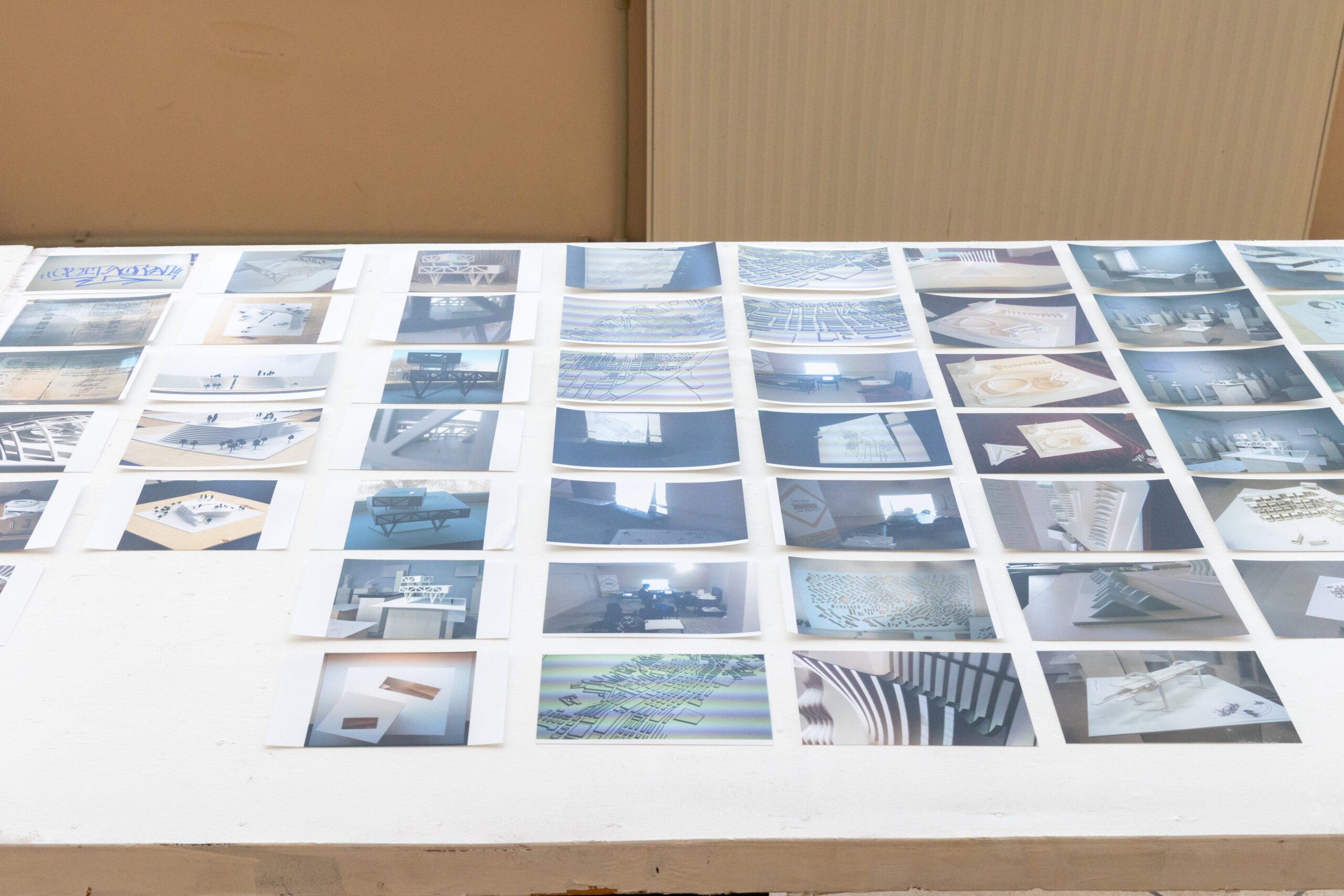
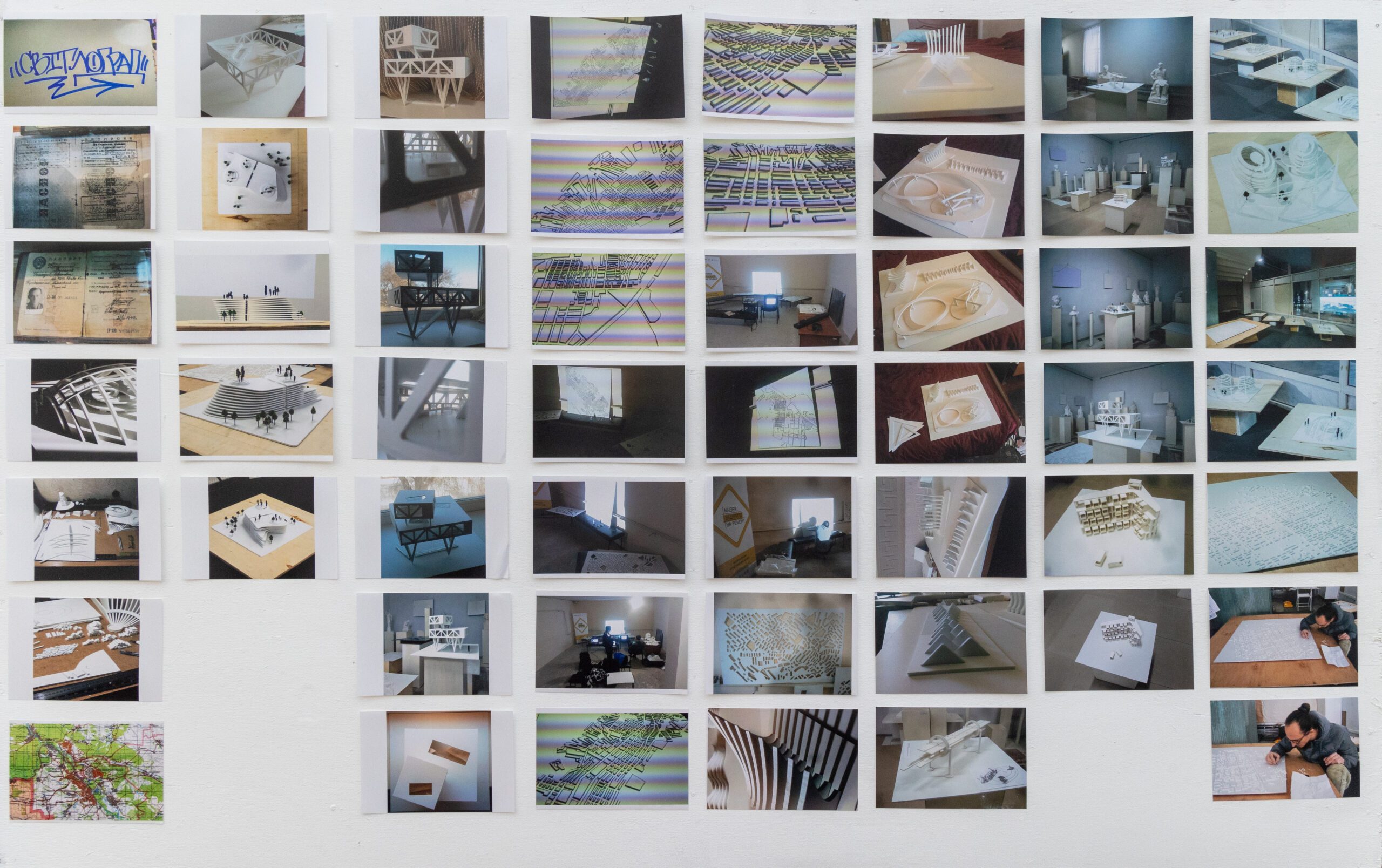
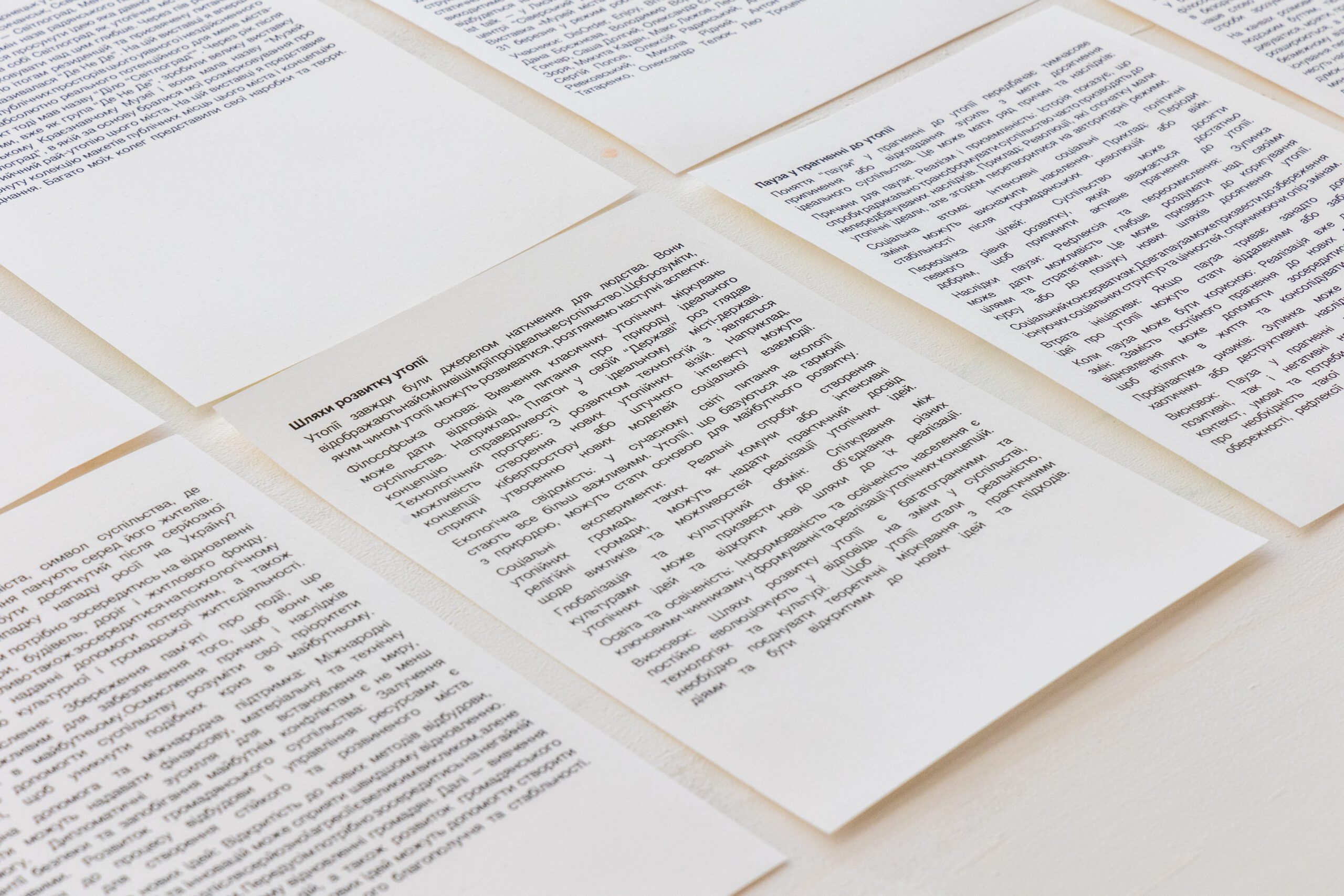
Sasha Dolgyi
Setlograd
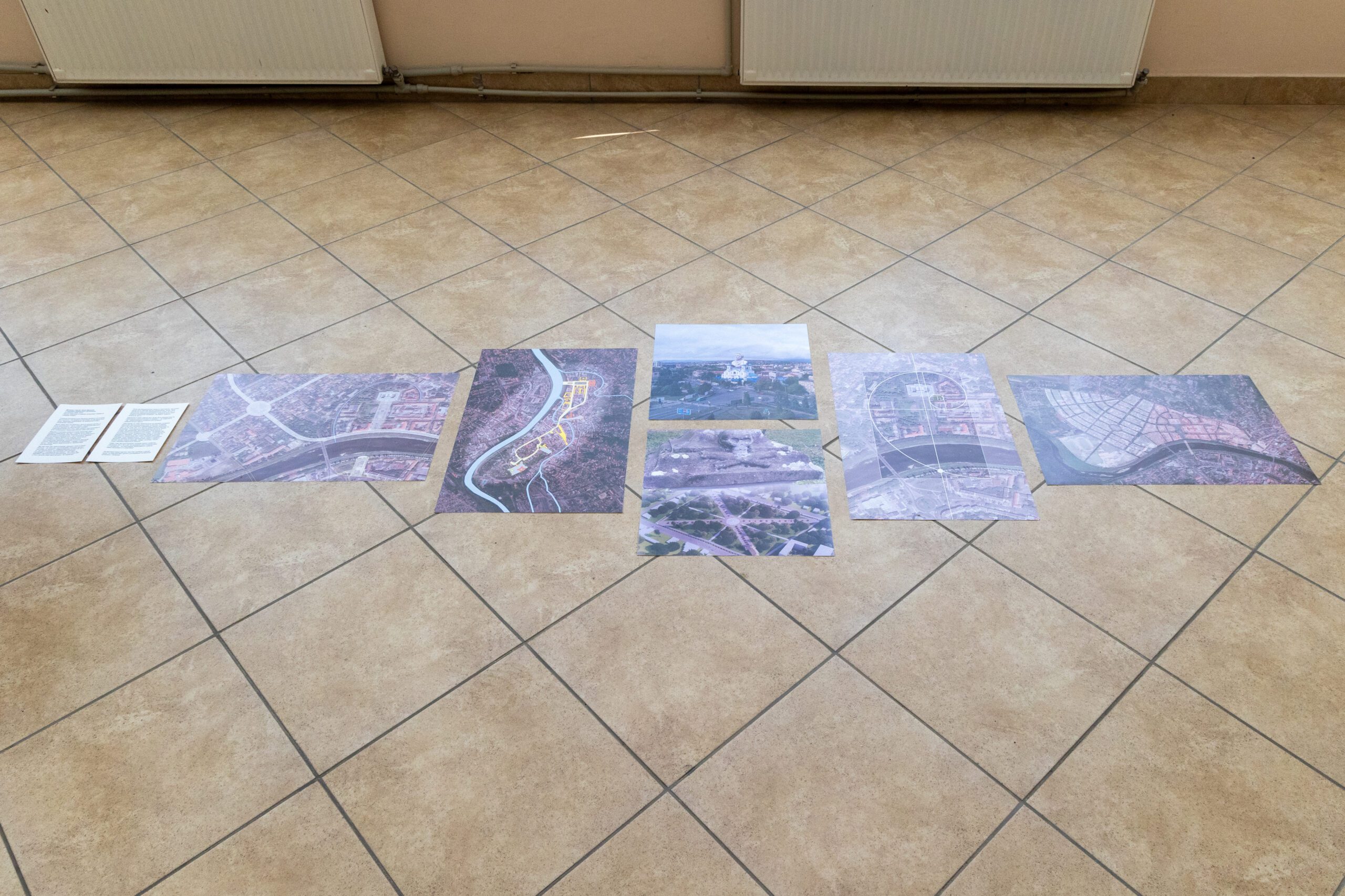
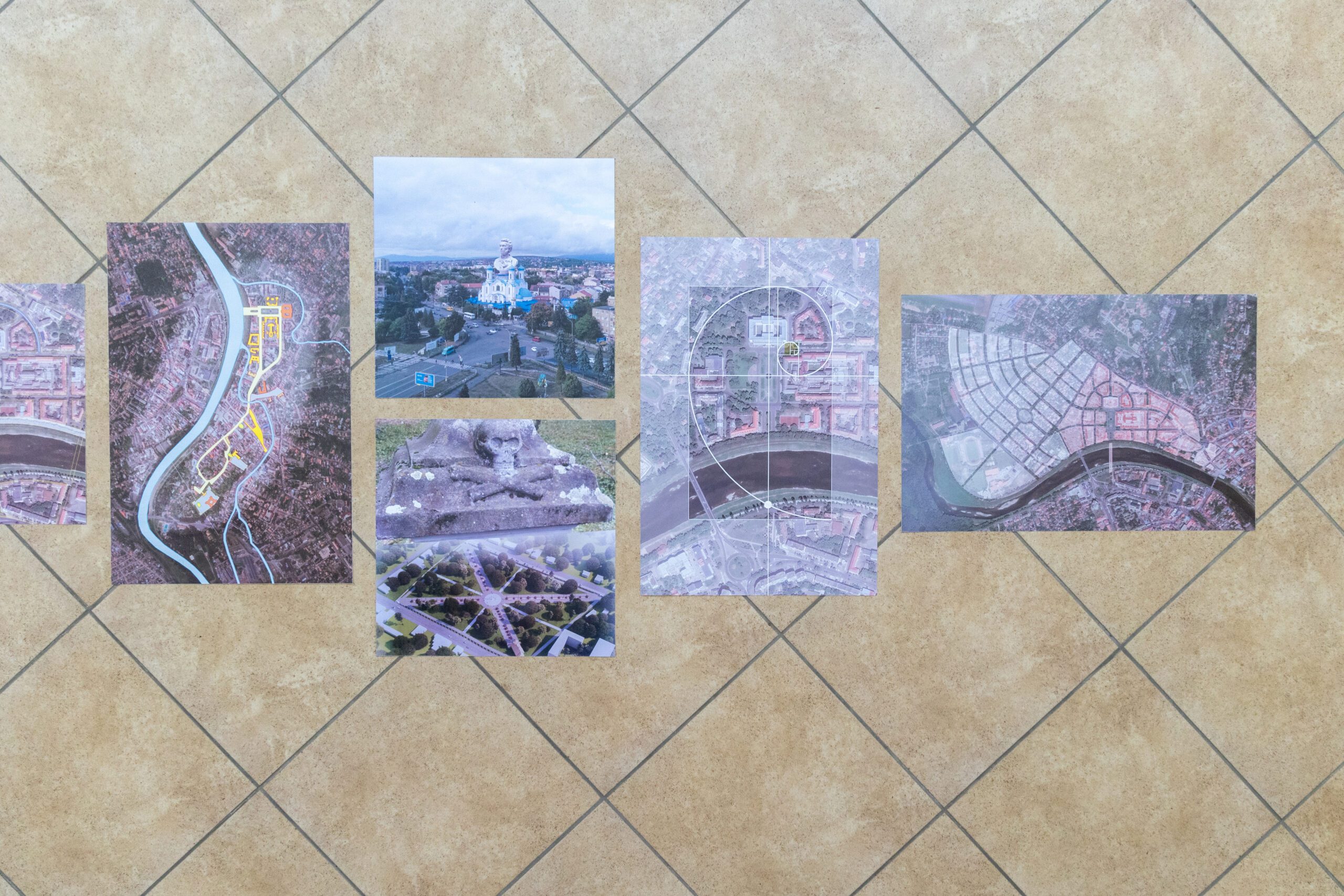
Yulia Manukyan, Serhii Dyachenko
Project “City VS Utopia”
The utopian modernist vision arose at the beginning of the 20th century as an inevitable response to futuristic movements, rapid urbanization, and a breakthrough in social theories.
If people still aspire to live in better cities, and the role of architecture is to be sustainable and human-centered, utopian approaches to architecture are needed by planners in order to seek new opportunities for a global rethinking of the very idea of the city.
Thanks to utopian urban projects, people can realize that the world they live in is in dynamic progress, not in a static state. Usual values are destroyed, and we begin to desire more and even dream in a new way. When cities need progress, utopia proves to be a viable approach, as utopians over the centuries have responded to the problems cities have faced and been able to offer a compelling alternative.
Mies van der Rohe proposed the principle “less is more” (less is more), which reveals the aesthetics of function, tectonics and lightness. The most important point here is that the architecture that expresses this principle is actually a “discourse of beauty.” Just like the 1914 Manifesto of Futurist Architecture or Le Corbusier’s “Five Points of the New Architecture.”
Cult modernist projects illustrate that utopia can be realized in a certain way. The path taken by people to approach utopia is essentially a process of self-improvement. An ideal city should create ideal citizens who should create an ideal city.
The critical history of imaginary cities can be used as a kind of diagnostic tool – both to understand and to propose solutions for the modern urban predicament.
Our approach to the topic focuses on the discourse of the complex relationship between the concept of utopia and the city, in which we consider the image of imaginary ideal cities not as a plan of action, but as a method of urban criticism and activism. By viewing imagined ideal cities as simple blueprints, we risk ignoring their contribution to the history of critical urban thought. Unlike the singular logic of a master plan, utopias never favor one or another aspect (design or building regulations) or some conventional audience. On the contrary, they emphasize that a full understanding of the urban experience can only be approached in a symbiosis of different forms of knowledge (design, law, politics, poetry, etc.) used together.
That is why we consider the Czech Uzhhorod development project of the 20s and 30s as a modernist utopian idea, and its development as an illustration of the debate, actually, of the very possibility of its implementation.
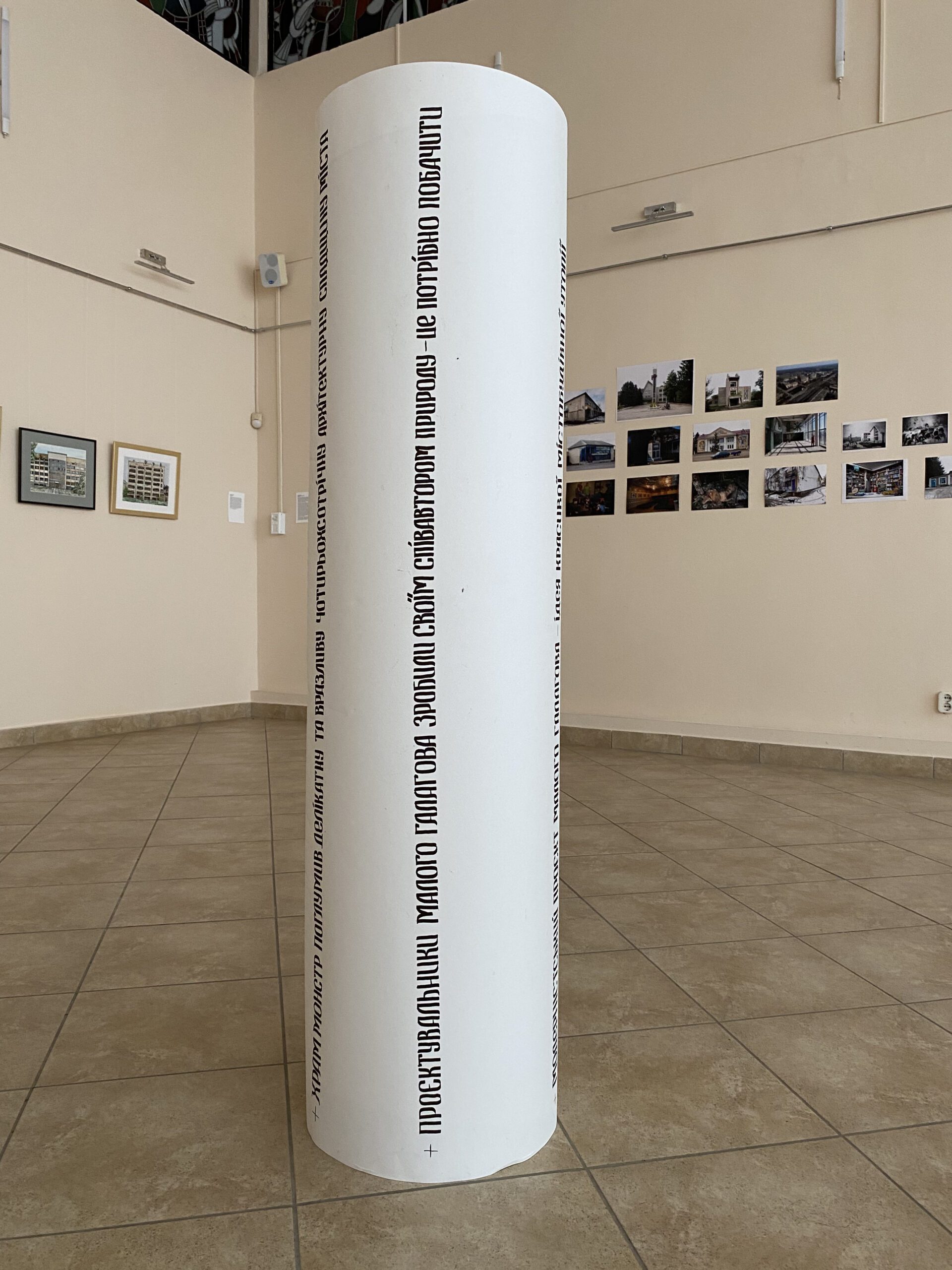
The exhibition presents illustrative (photos on the floor) and textual (cylinder in the center of the hall) quotes from the study and vision of modern Uzhhorod:
“Maly Galagov’s modernist project is the idea of a beautiful urban utopia, the development of which is an illustration of the debatability of the very possibility of its realization”;
“The historical center of Uzhgorod, stretched for one and a half kilometers, describes almost the sign of infinity”;
“The clots of the planning structure of the center prevent the city from breathing freely and revealing its potential”;
“The monster temple made a mockery of the delicate and vulnerable four-hundred-year-old architectural heritage of the city”;
“The designers of Maly Galagov have made nature their co-author – it must be seen.”
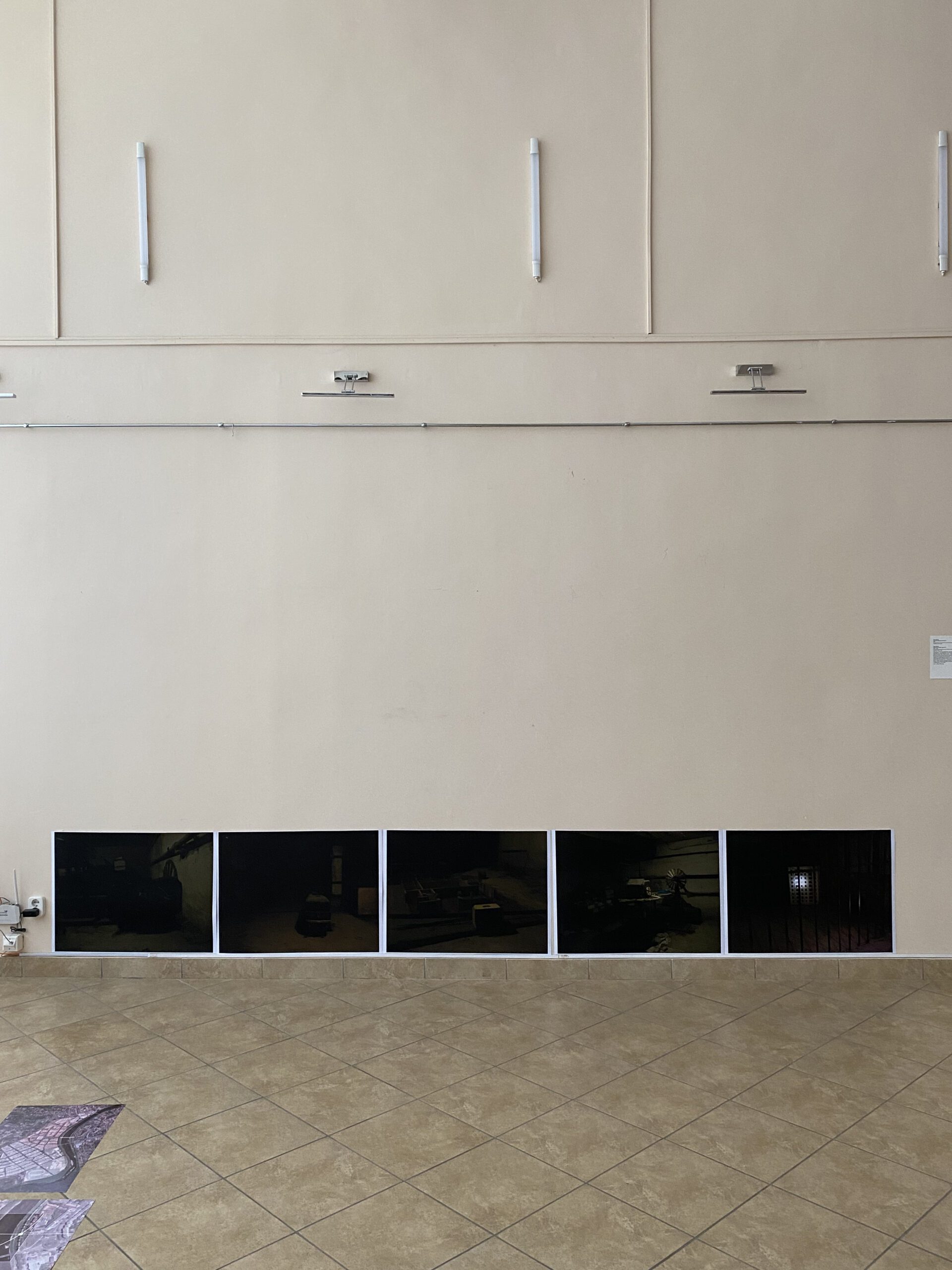
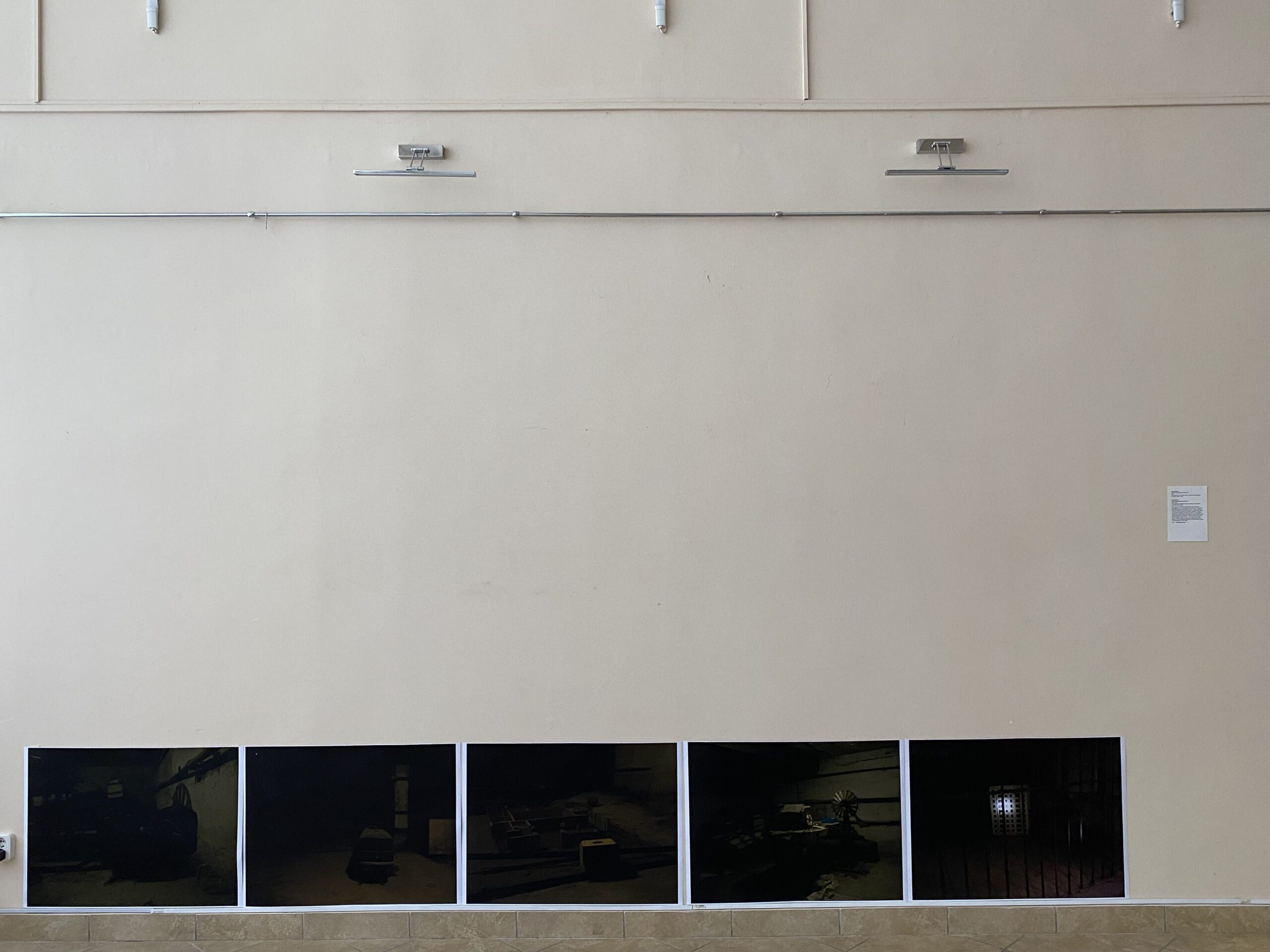
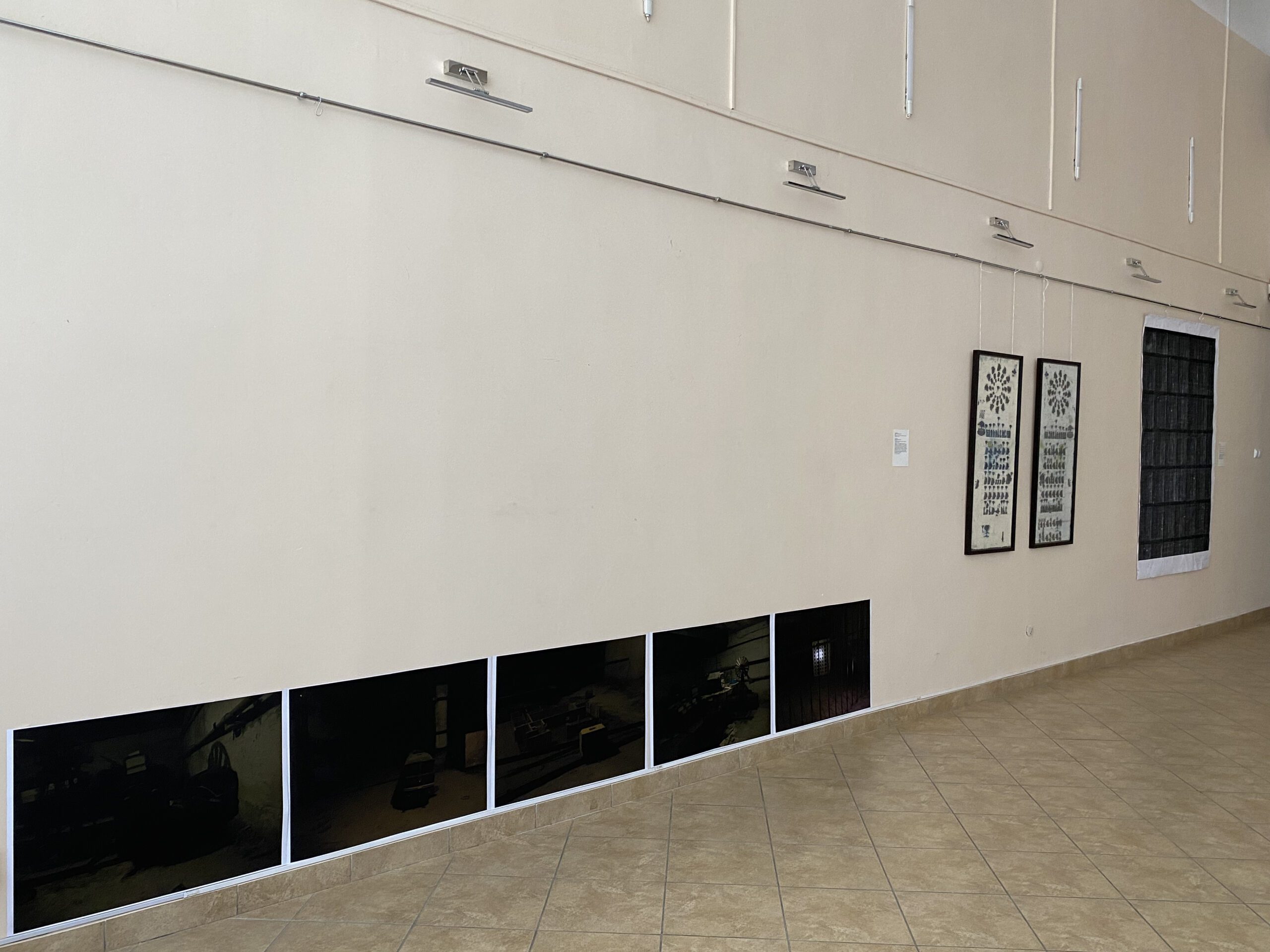
Nikita Kadan
The lower world
2022–2023
The bomb shelter of the Stanytsia Luhanska Local History Museum, August 2020.
The photos were taken with the help of photographer Anna Yatsenko as part of the expedition “Between the Prairies” by museums of the Luhansk region in 2020, organized by the Lviv Museum of Totalitarian Regimes “Territory of Terror”.
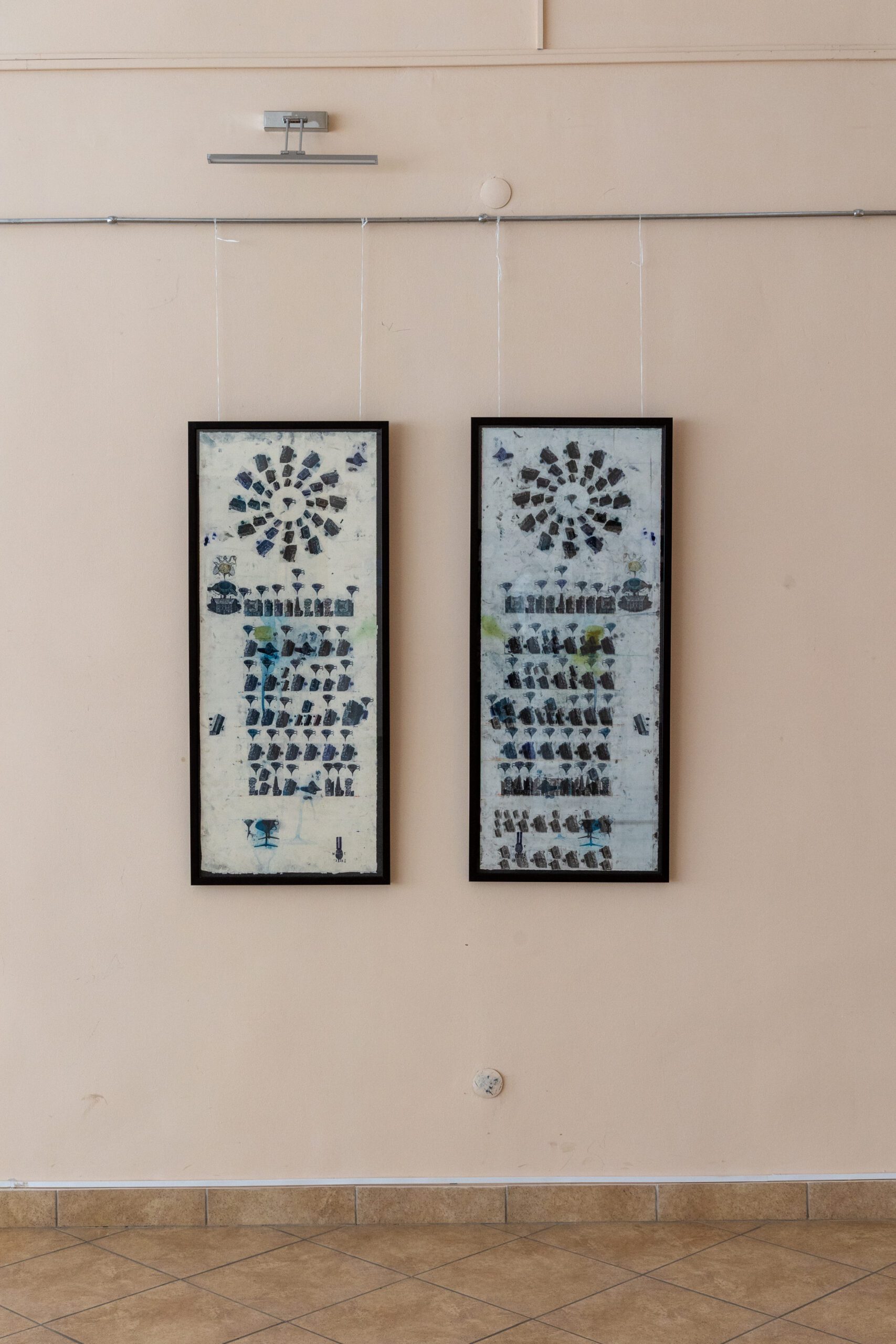
Pavel Makov
A short story about the city 5
2023
multiple color intaglio, color drawing
pencils, acrylic, paper
Makov was and remains an artist who works with the present — here and now Places, on both local and global scales. His media are mostly old — etching, drawing, metal objects. New media serve as tools for gathering preparatory materials or as a way to work with things and works of art at a certain distance — in photography and graphic design. At the same time, in the late 2010s, Makov began to thematize the past and future of the Place. First, in the book about the city Do Po* (play on words: Ukrainian — before and after, Italian dopo — later), and later in large color works about the world without and after people (for example, “Night (color tab from “Abracadabra”)“, 2019–2020).
Text — Borys Filonenko
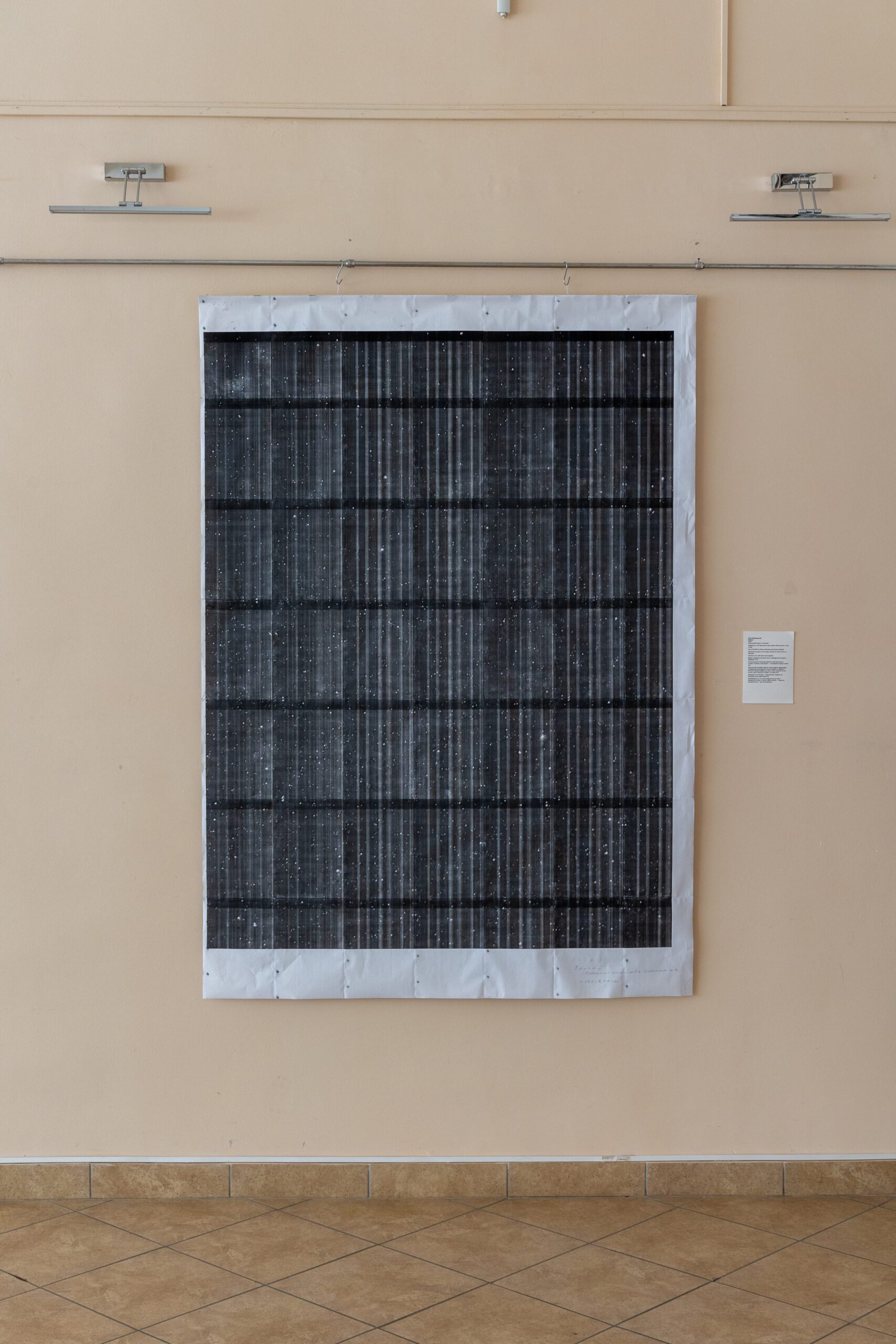
Oleg Perkovskyi
Loss
2023
monochrome printing on the printer
It would seem that what does the starry sky have to do with the city. And yet it has. Until February 24, 2022, the night was a special space of freedom: broadcasting until the morning, night sketches, writing tags around the city from friends’ trips to visit, or a late night at home.
War, a component of which is a curfew, — took that night. For the past year-and-a-half, since Russia’s full-scale invasion, Ukrainians have a new habit of not going out at night time. The pre-war photo of the starry sky is deliberately printed with defects in the laying of toning paint and assembled from 49 sheets of paper, referring to this state of disappearance of something once so familiar, loss. And not only at night.
Transcarpathia and Uzhhorod are the only regions of Ukraine where there is no curfew. Being here, the night seems to return to its own normal state. And yet, the acquired habit of not going out at night has still not dissipated.
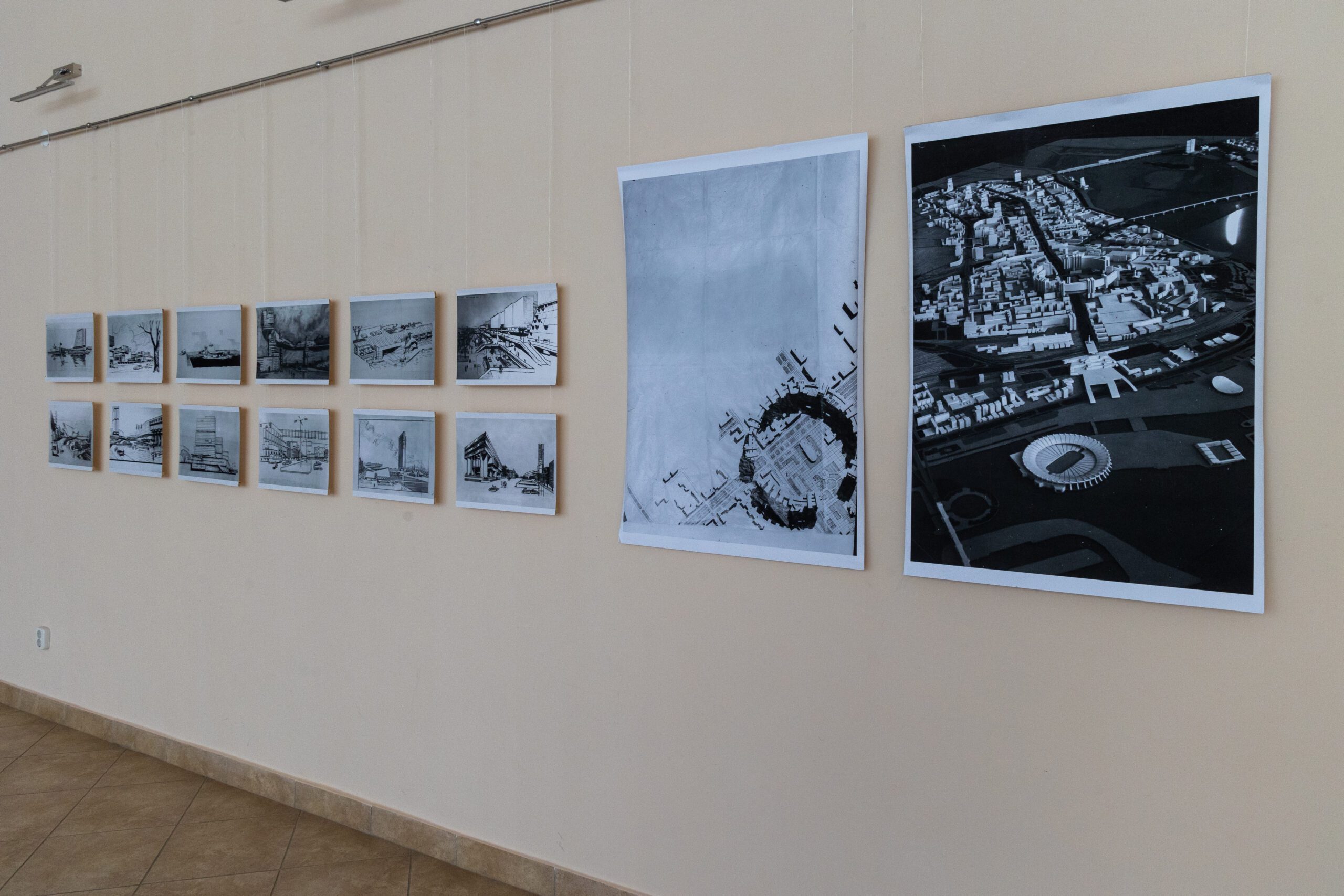
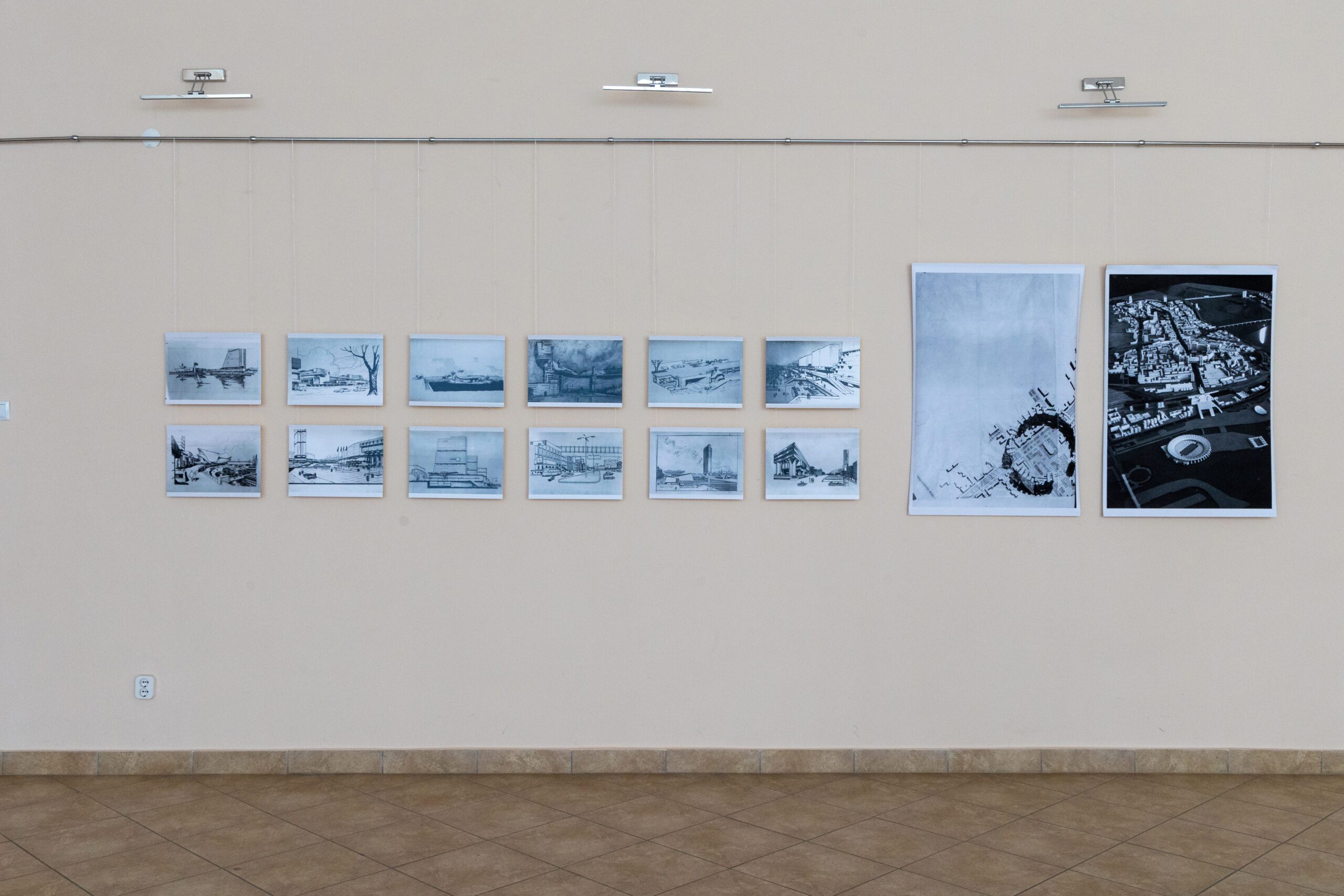
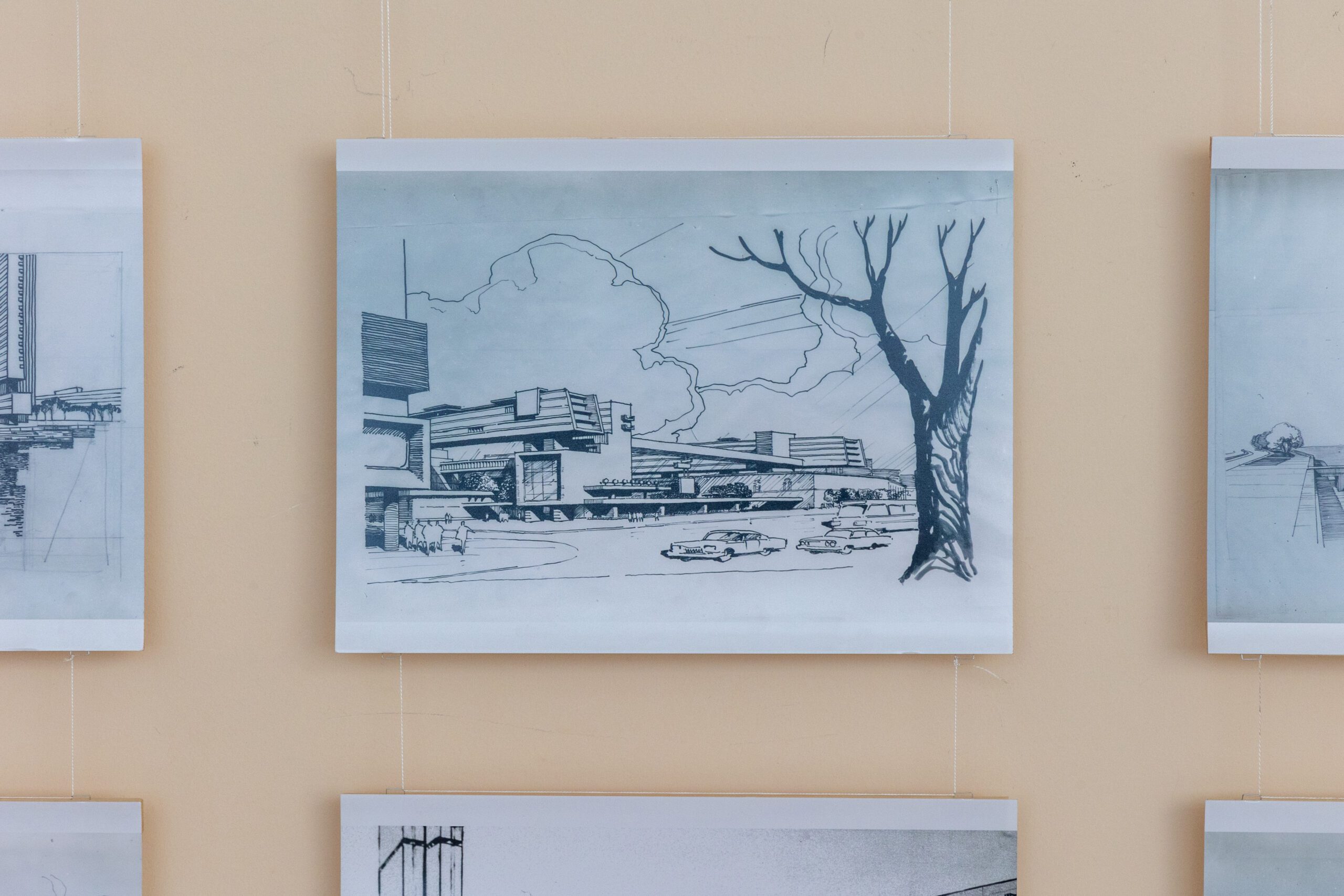
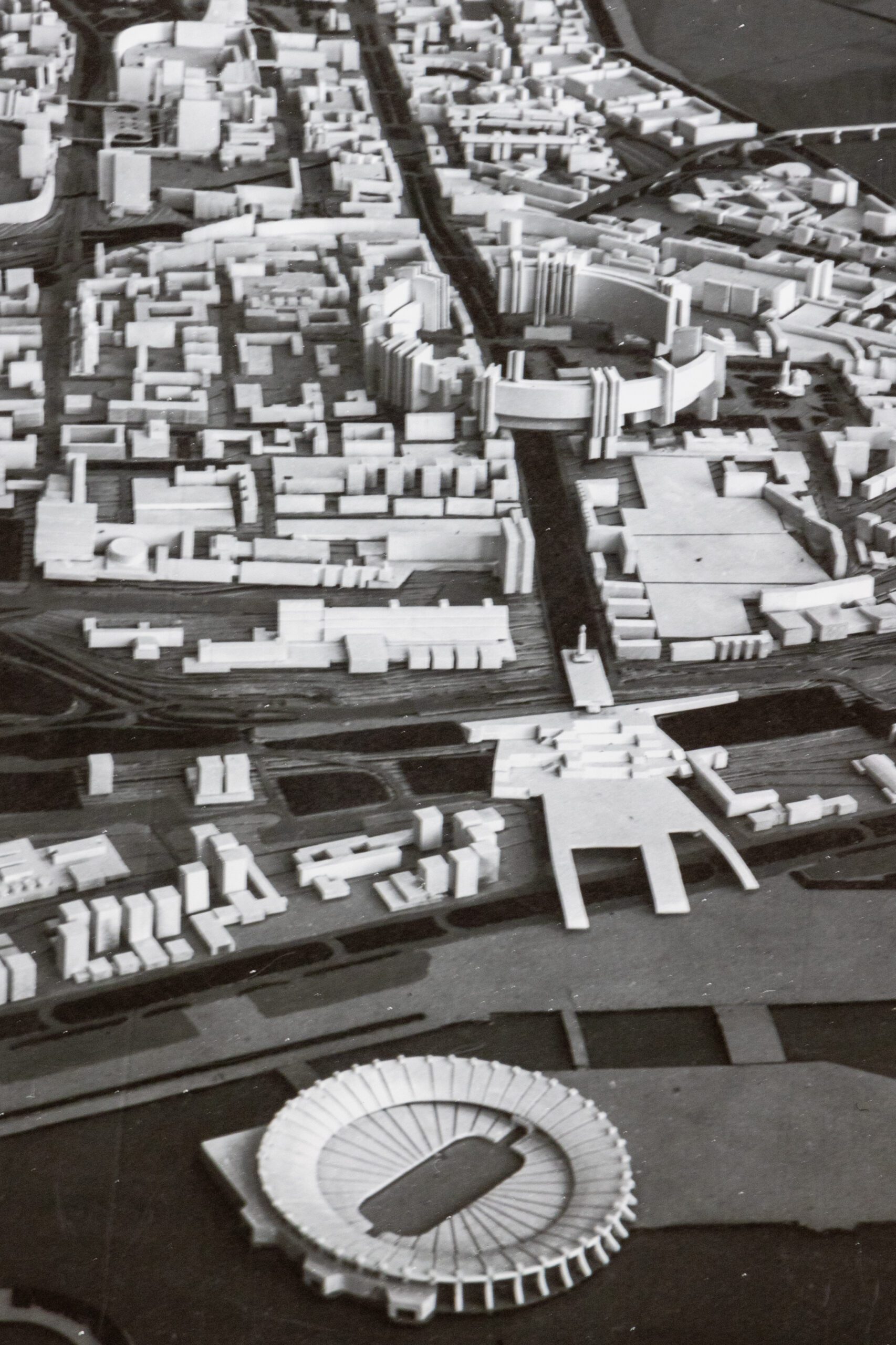
Danylo Halkin
An alternative history of the architecture of Dnipropetrovsk
1970–2023
The result of the work is research or an exhibition-document dedicated to one of the most influential architects of the USSR — Yevgeny Yashunsky, consisting of hundreds of negatives, drawings and sketches of buildings and structures for the development of the Dnipro in the post-war period, most of which have not been made public before. The material will also become part of the book “Alternative history of the architecture of Dnipropetrovsk,” where unrealized projects of architects of that period will be presented. These projects were, in many respects, ahead of time and can still serve as an example of urban planning philosophy. In addition to the research part, the exhibition aims to start forming a discourse that is relevant for Ukraine – the problem related to the ways of restoring the destroyed residential buildings, strategic facilities and the development of a vision of “new architecture against the background of ruins” left by the Russian Federation after its full-scale invasion of Ukraine.
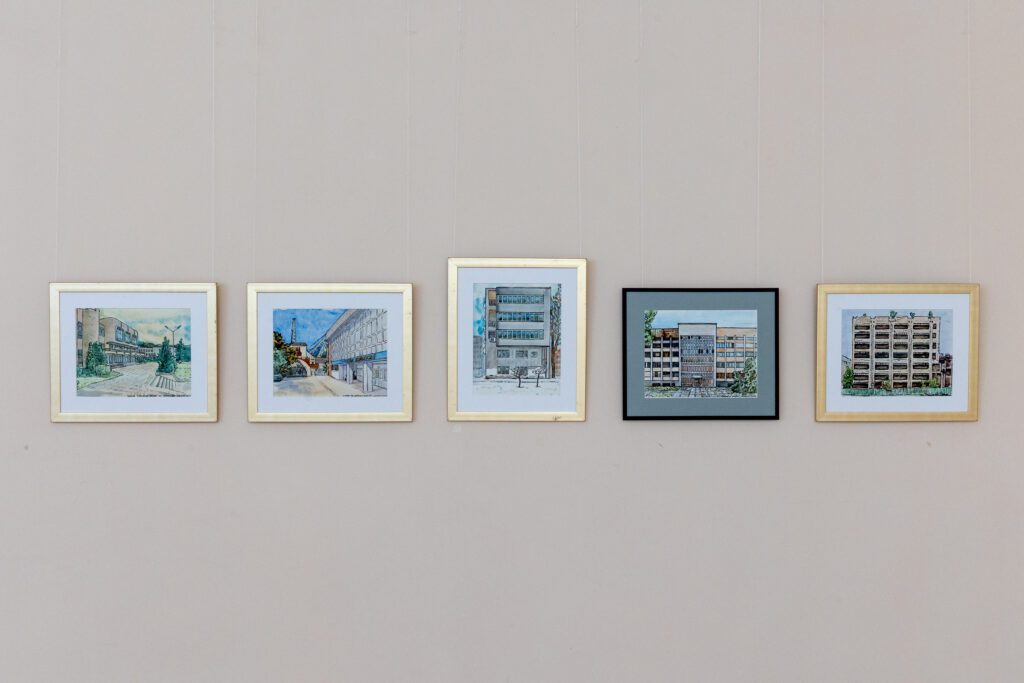
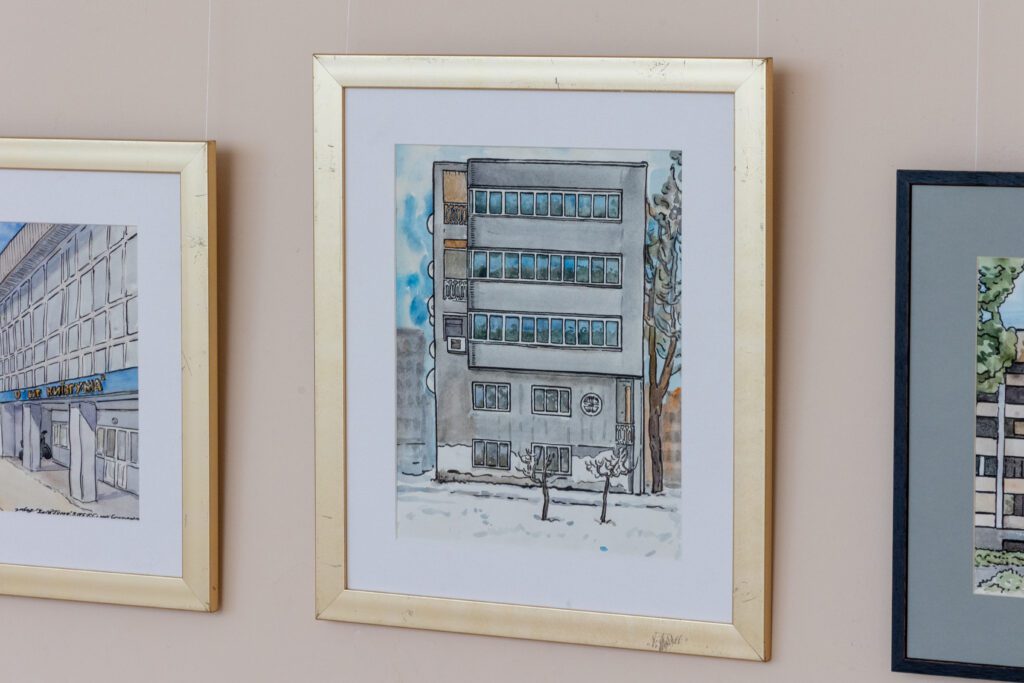
Ksenia Hnylytska
Stratigraphy
2015–2019
In her project Streetography, Ksenia Hnylytska creates a kind of visual catalog of different types and varieties of Ukrainian architectural ruins. Some of them (under construction, long-term development) are still a legacy of the late Soviet era, others (pedestals without monuments, structures which are brought to a catastrophic state in order to facilitate and cheapen their further privatization and final destruction) – arose in recent times. The artist depicts their unifying visual aesthetics not according to the lofty models of the era of romanticism; rather, they are much more reminiscent of the chamber, stylized, nostalgic works of “miniatures.” So, in fact, these ruins – lacunae of the urban landscape – are not included in a large ideological narrative. Instead, they are emblematic of a very personal and intimate experience of an individual citizen – an experience that is more aesthetic and emotional than it is historical or rational.
Text — Kateryna Stukalova
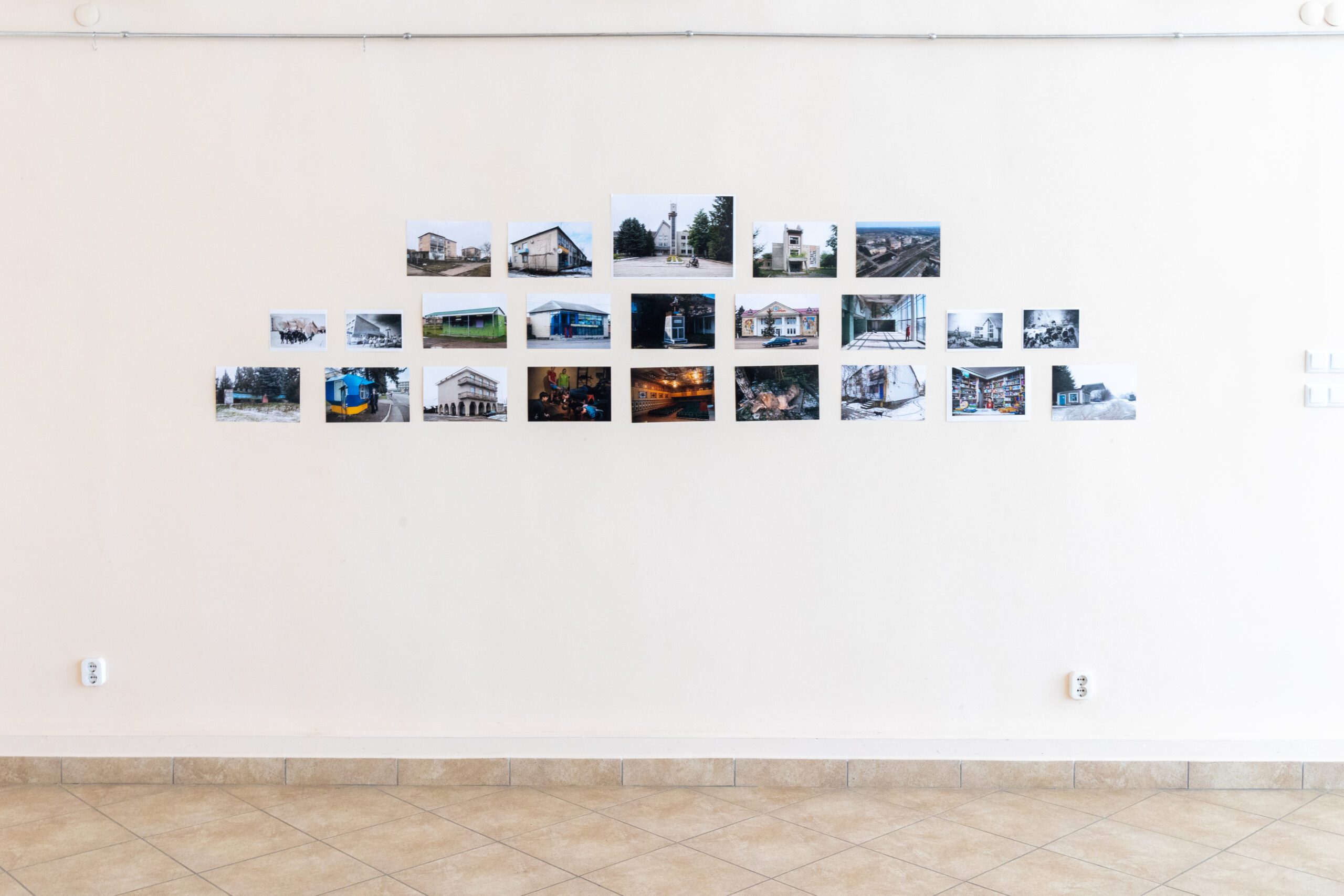
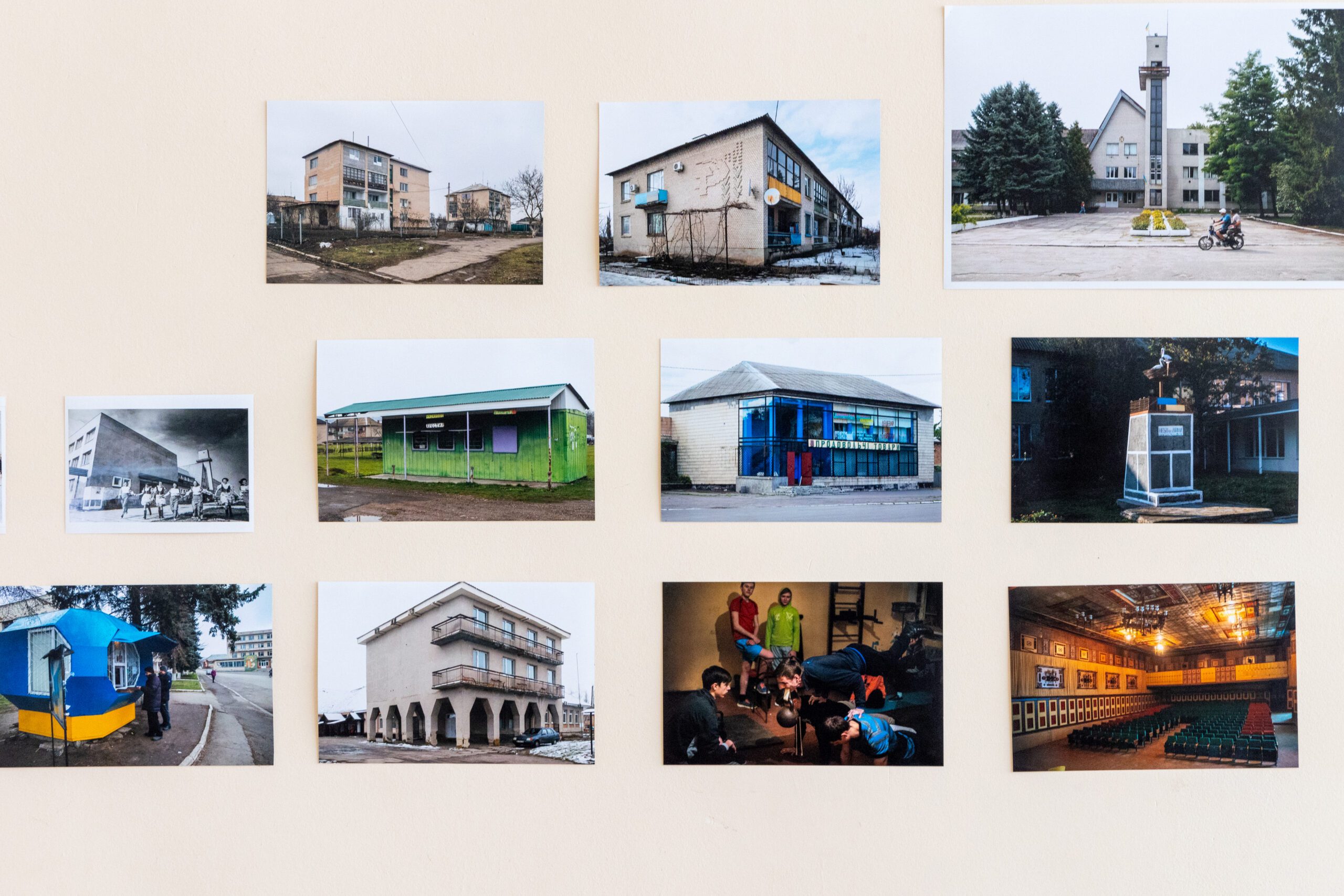
Yevhen Nikiforov – Promising / unpromising
In the post-war period, many villages had to be rebuilt. The rate called for resettlement and compaction. The state introduced a new classification: rural settlements became either “promising” or “unpromising.” One of the criteria in the decision-making process was the number of inhabitants – it should have reached 1000 to 1500 people. Enthusiasm for this type of centralization led to the neglect of “unpromising” villages were closed and clubs as well as transport connections disappeared.
Some of the “promising” villages were restructured into so-called experimental and demonstrative villages, the progressive planning of which had to eliminate the existing socio-economic and cultural household differences between the city and the village. This was a programmatic demand made by the party. Within ten years, on the territory of the republic, roughly fifty similar settlements appeared. The most famous among them are Vuzlove in L’viv region, Snizhky in Kharkiv region, Polovynkine in Luhansk region, and Stara Kotel’nya in Zhytomyr region. The peculiarity of these villages is the use of the most progressive planning techniques with new types of designs for residential and public buildings. “Actually, this is an experiment on people, not on architecture,” Yosyp Semenovych Parubochy told me during a meeting. Parubochy is a former head of one of the “experimental demonstration” villages (Vuzlove). Behind the scenes of showy facades and elegant central streets was the forced resettlement of residents from the “unpromising” settlements, who became forced labor in state and collective forms, ordered to produce at greater and greater rates after their own farms were liquidated.
The construction of demonstration villages was not widespread for a number of reasons, including high costs. And yet, it is still relevant for us to question the impact of these events on local residents in the long-term perspective. What is left after the end of the period of showmanship and experiments over space?
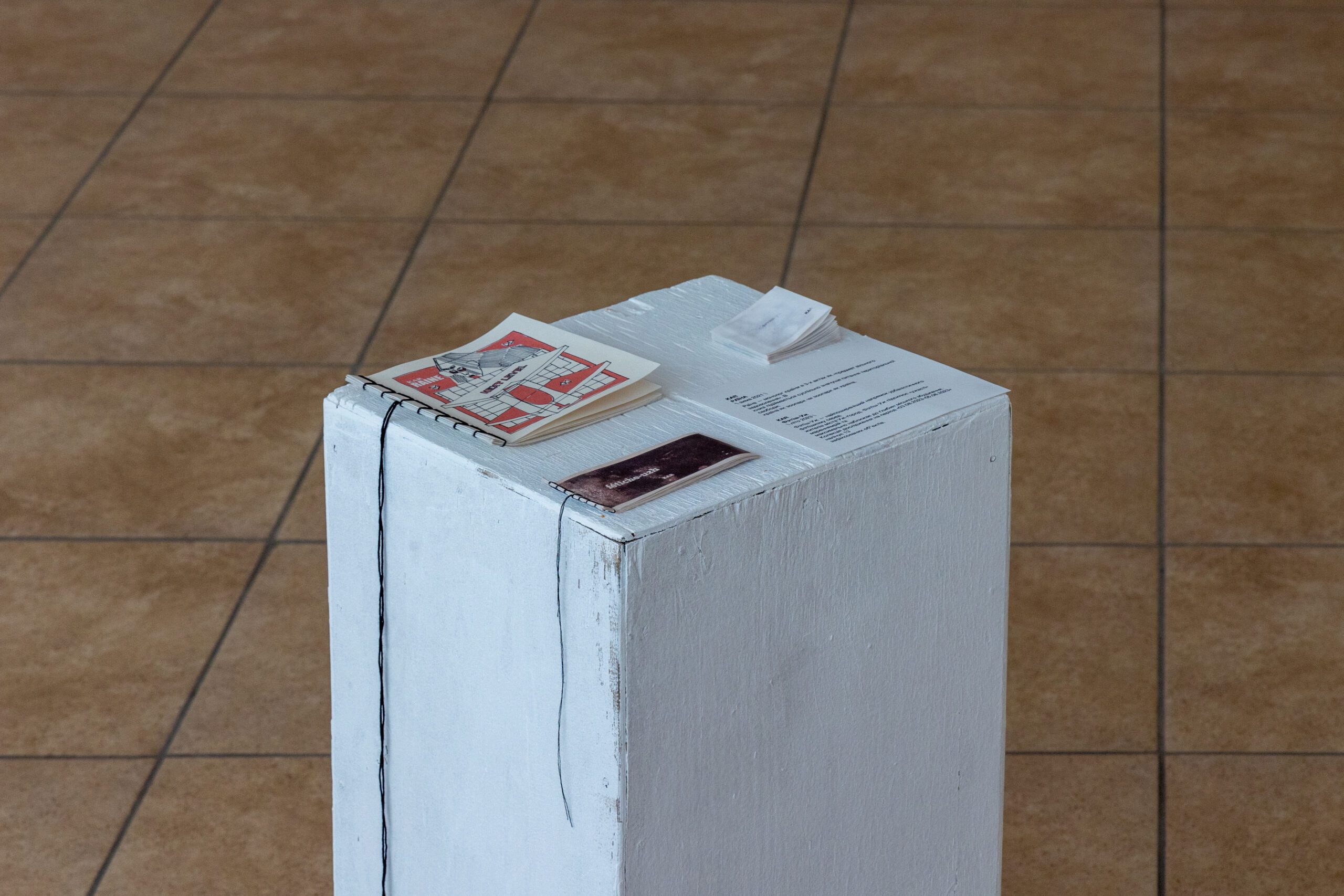
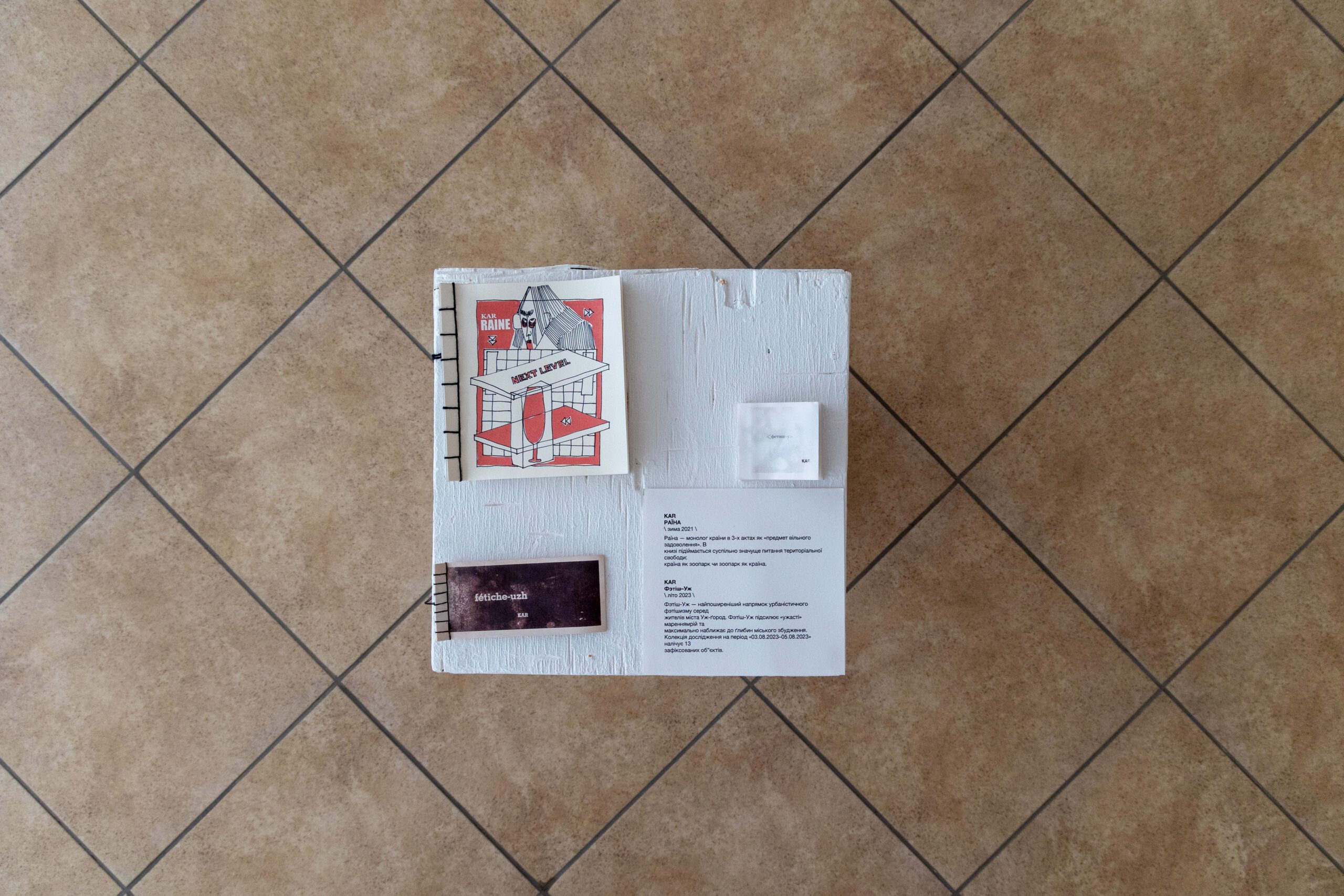
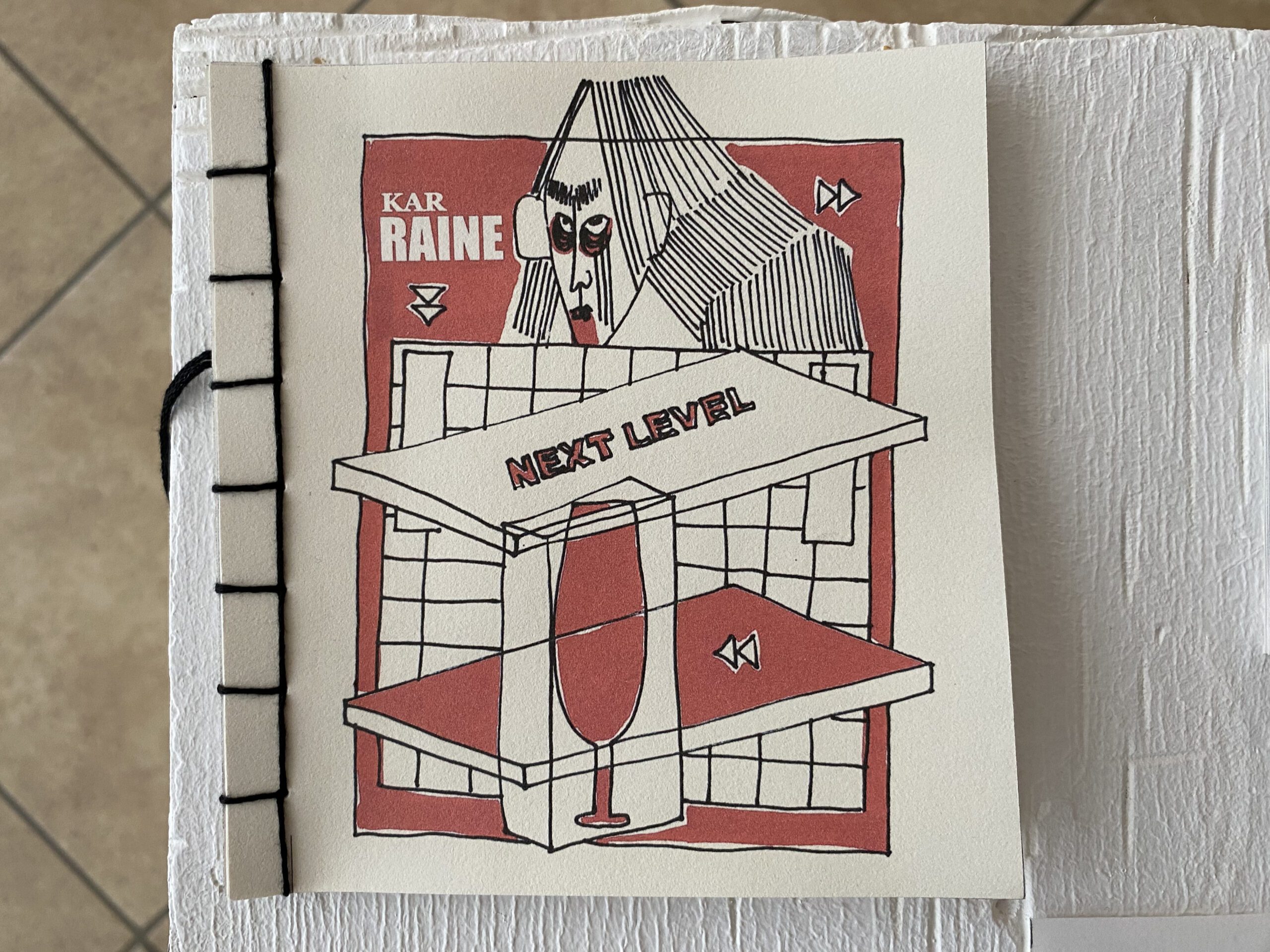
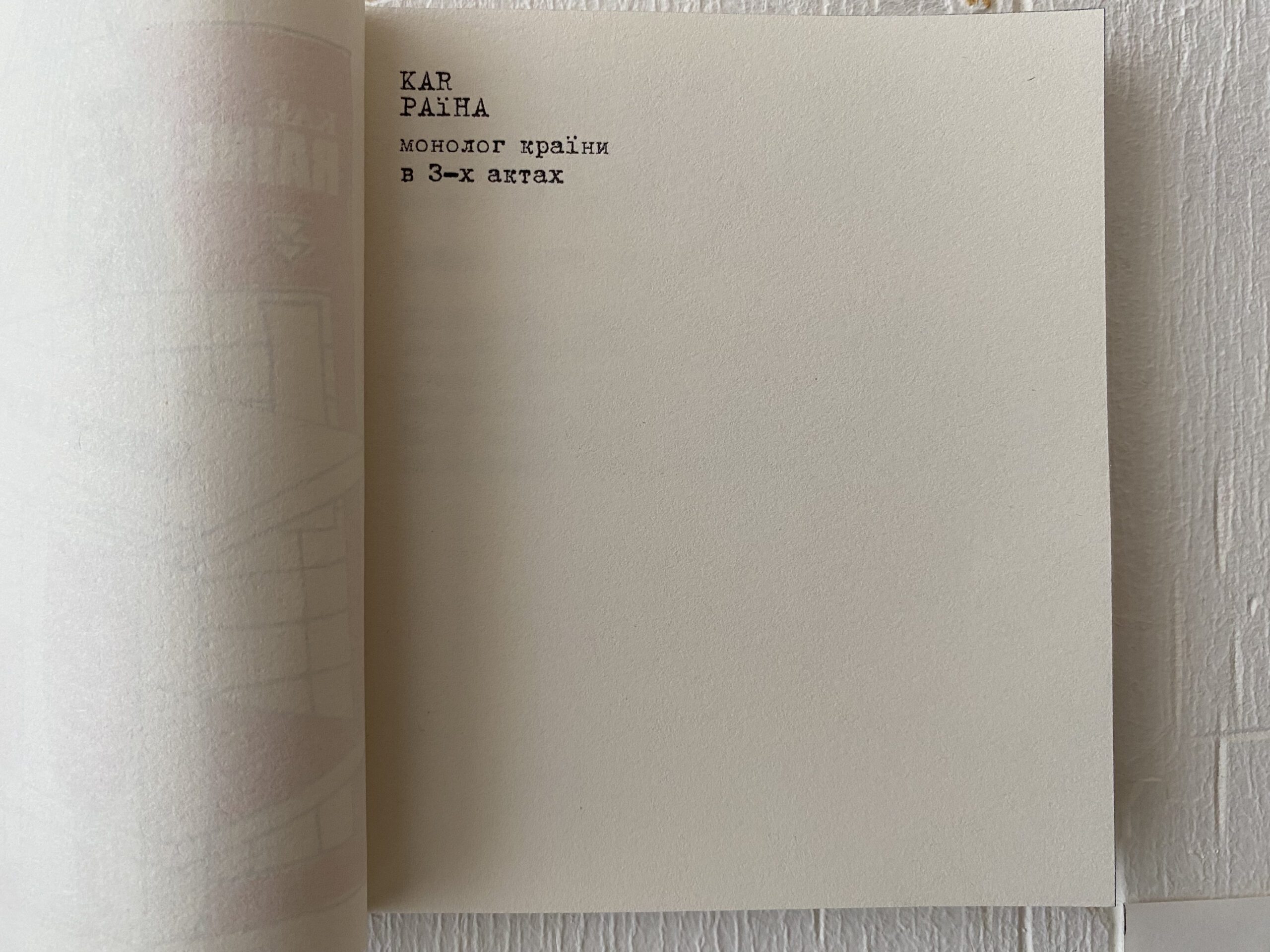
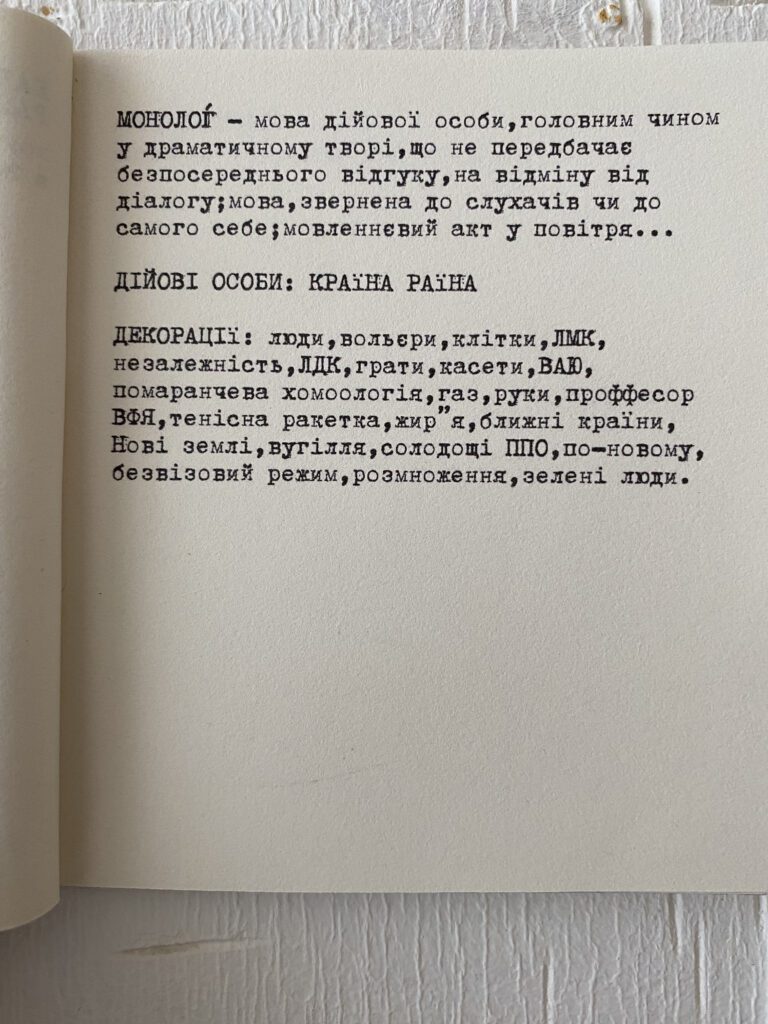
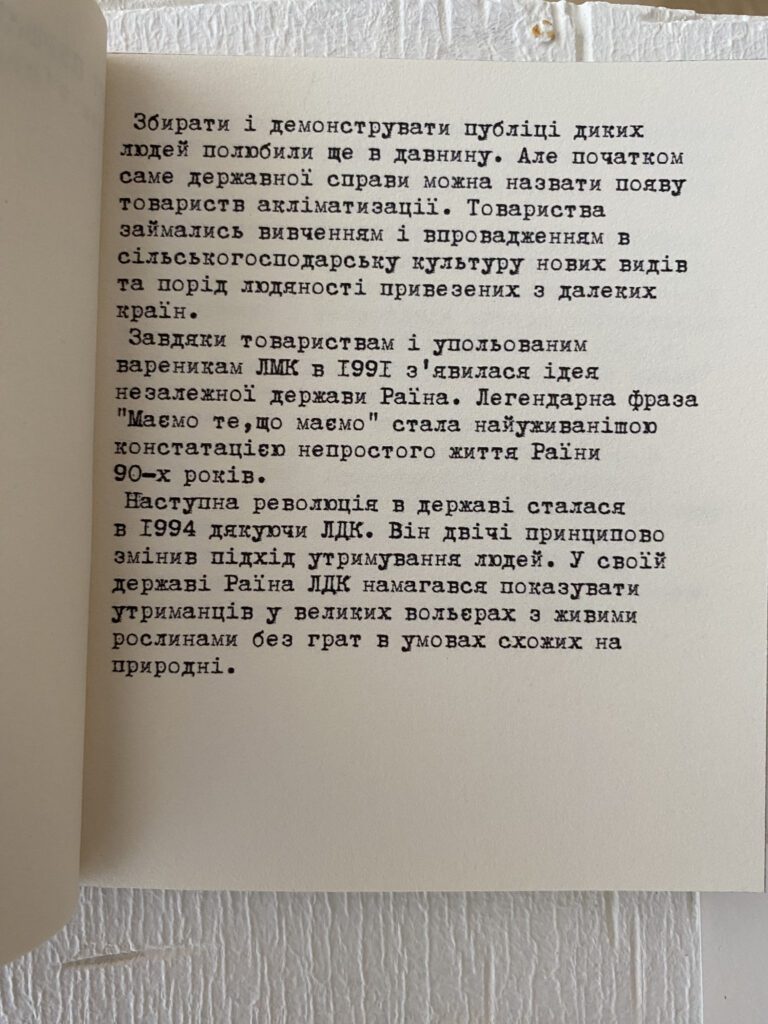
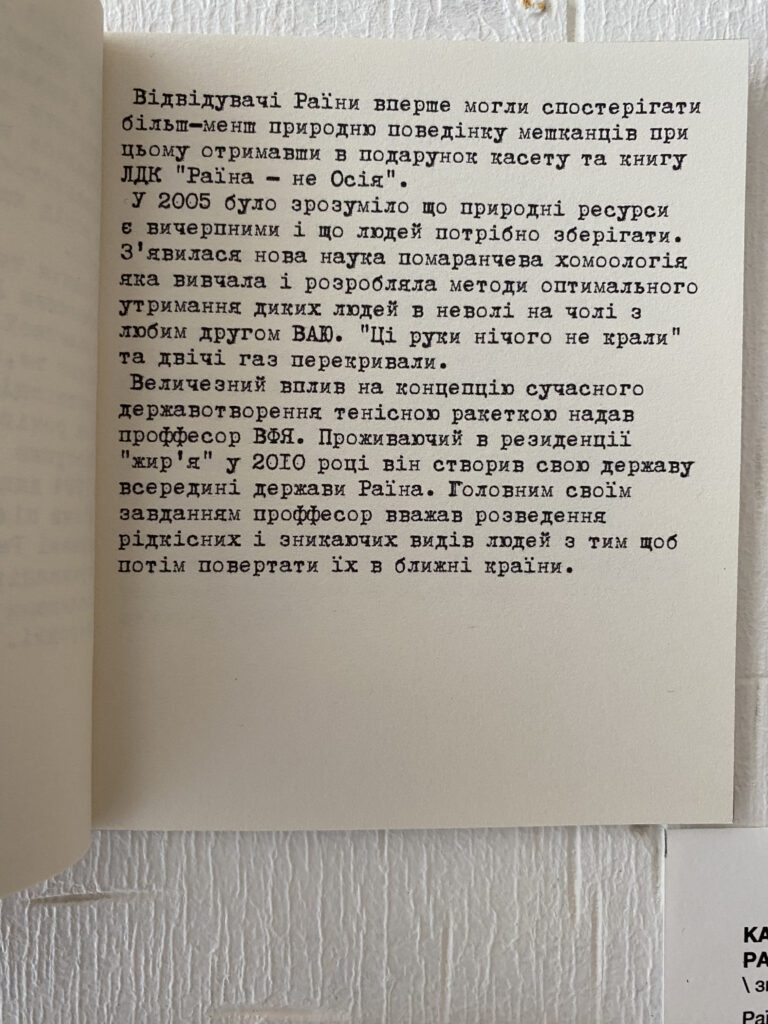
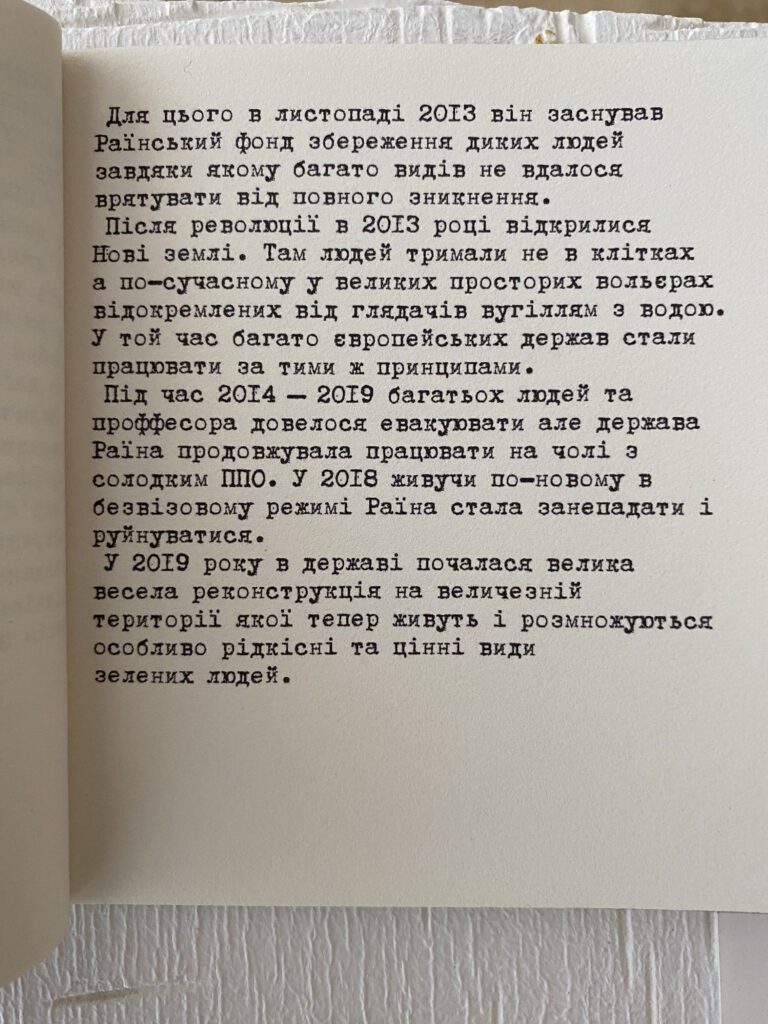
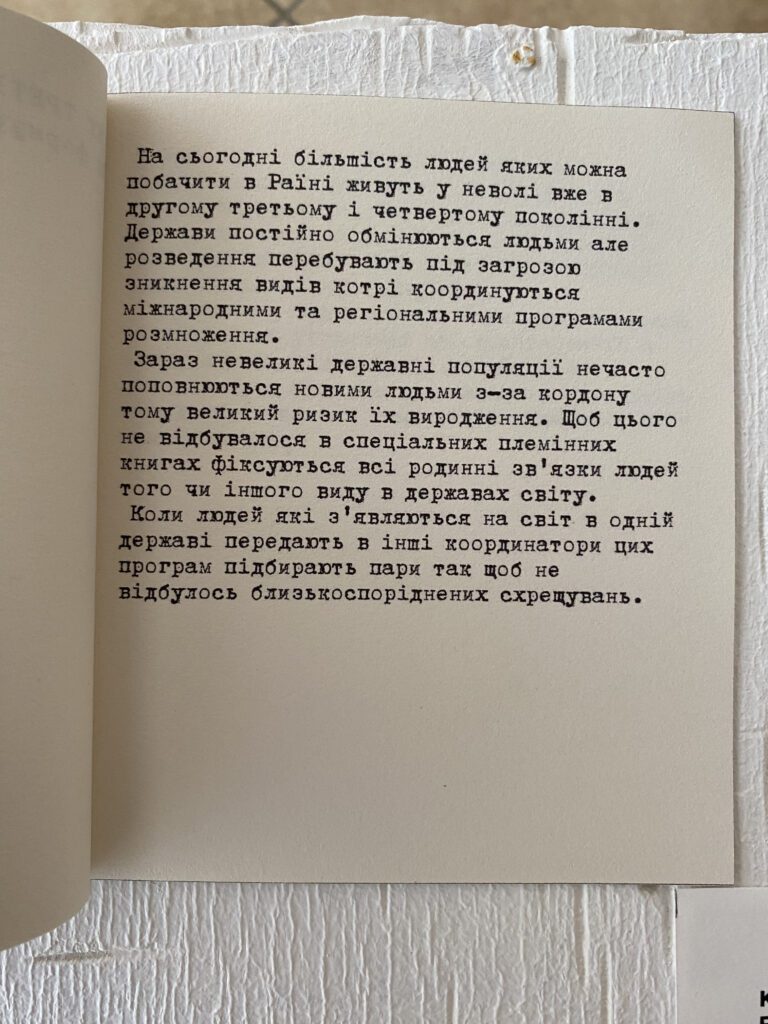
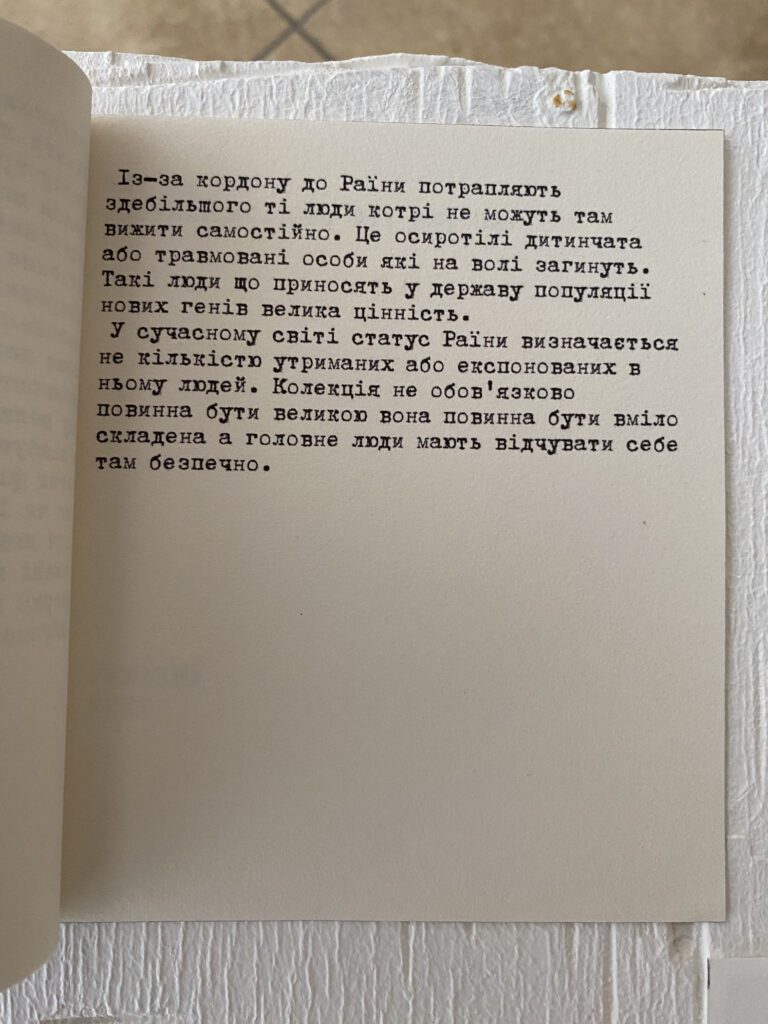
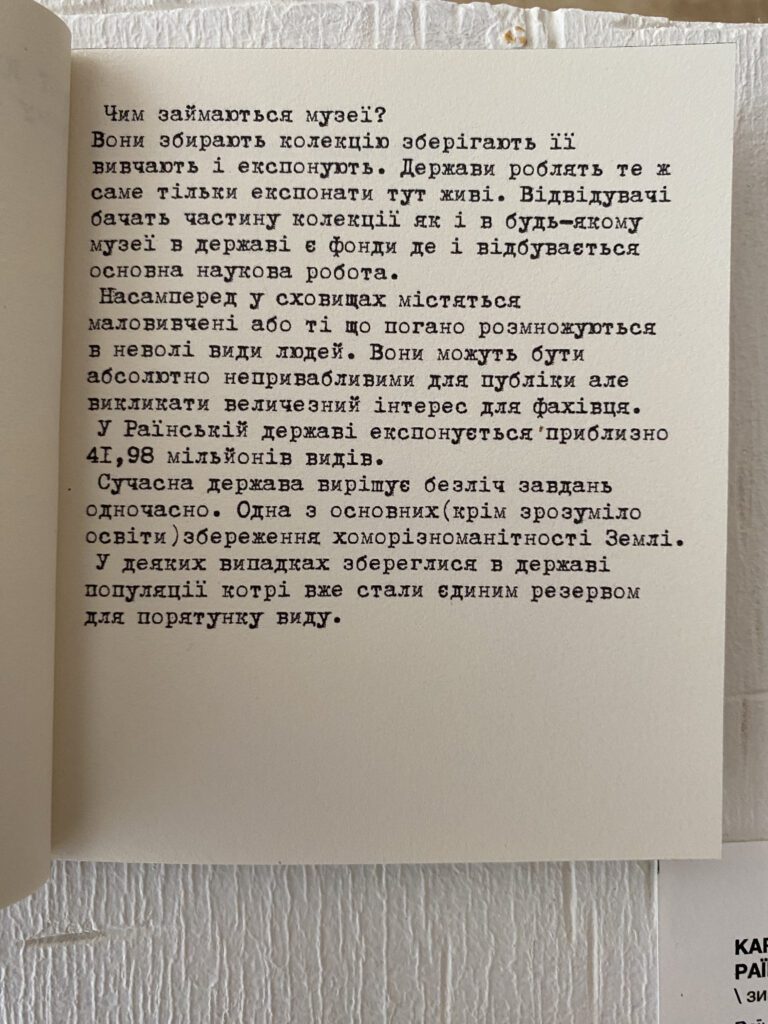
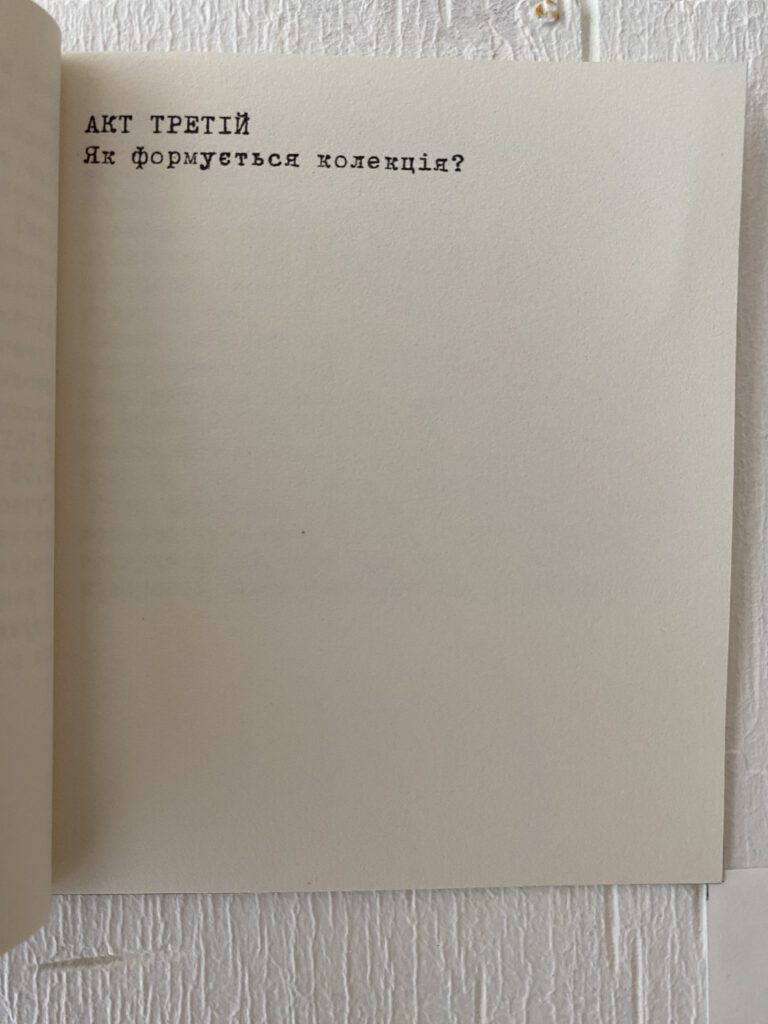
KAR – RAINA \ winter 2021 \
Raina is a monologue of the country in 3 acts as a “subject of free
pleasure”. IN the book raises a socially significant issue of territorial
freedoms: a country as a zoo or a zoo as a country.
KAR – Fetish–Uzh \ summer 2023 \
Fetish-Uzh is the most common direction of urbanism
fetishism among residents of the city of Uzhhorod. Fetish-Uzh enhances “horror” delusions and as close as possible to the depths of urban excitement.
Research collection for the period “03.08.2023–05.08.2023” has 13 fixed objects.
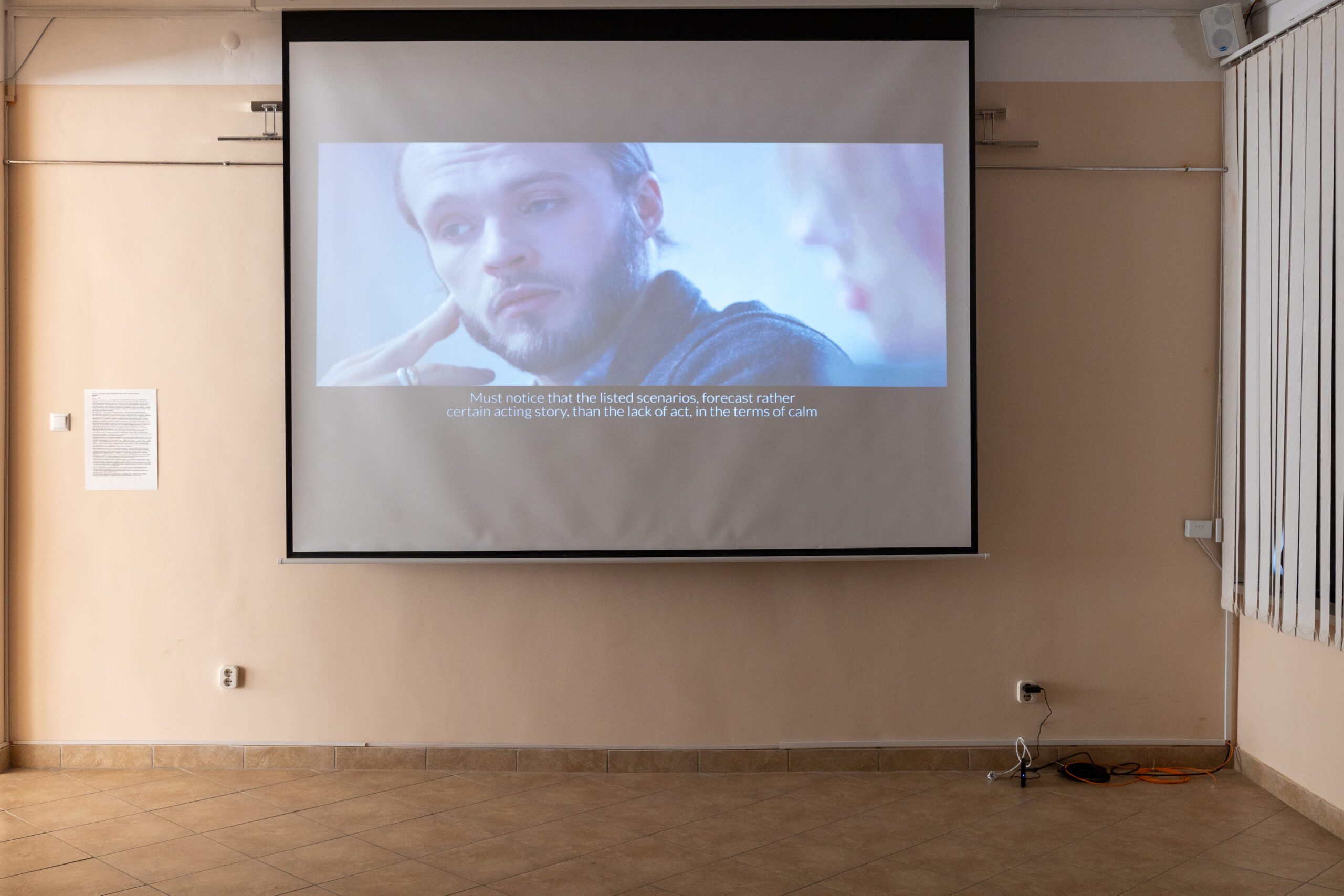
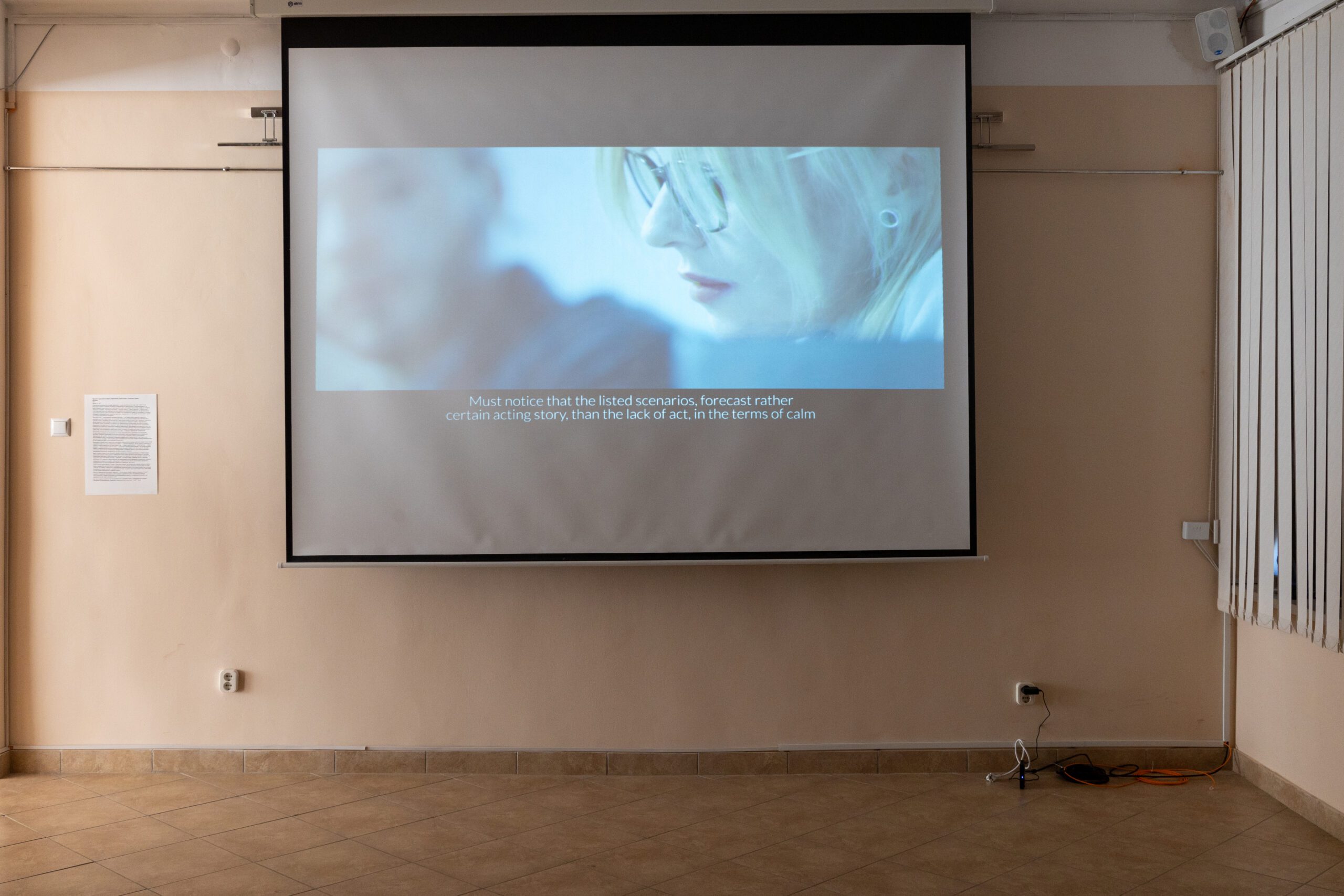
Open Group (Yuriy Biley, Anton Varga, Pavlo Kovach, Stanislav Turina)
Diorama, 2017
film, 41’ 45’’
The work progresses in the film presented at the exhibition as well as around it. The basis of the work is the return to our „group-forming” and long-lasting theme of defining the space of potential art, that is to projects like „Open Gallery”, „Ars Longa Vita Brevis”, „Object Passport”, „Cubic Meter”, „1000 km view”. We are still interested in the concept of space, however, our approach to it is changing. This time we do not define the space with its potentiality that assumes filling it with certain activity or event. We act as initiators of a situation that enables the creation of a particular space, which, at the same time, is accessible only with a very subjective understanding.
The method consists of listing the space details. Words become extremely significant and, simultaneously, act as the only embodiment of the space. In this case, the parts and the basic points of the space are invented. They become elements that can be used by the viewer to form a whole. Guided by their experience, the viewers can appropriate and take it with them by means of displacement and replacement of details. In fact, the space is ordinary, there is nothing special, complicated or provocative about it. Therefore, it becomes difficult to summarize this work as it is a “summary” in itself. This imaginary space has its defined boundaries and coordinates: it is measured with dialogues and monologues of the people who summarize it, or rather, describe it. It expands with suggestions and immediately contracts by contradiction. Some people form space with imagination, some, however, fill it in with logic or knowledge. The space as a potential project for realization is complete, however, constructed in the imagination, becomes ephemeral and boundless. By the way, we have taken interest in dioramas as visual tools and cultural phenomena. The images are adapted to artificial lighting and they are very often placed in special pavilions or museums. The factors that play a critical role in the exposition of dioramas are: the equipment in the exhibition room, the structure of the audience, lighting and sound (music and narrator). This means that great attention is paid to the viewers’ point of view, the way to get them to trust the new, constructed reality. That is why, in our work, we have assumed a simultaneous existence of a number of levels of such perception, or, as we call it in the work, „steps of perception”. If we were to shortly define these steps, we would say that they are realized on such levels: us – receiver of our work- film protagonist – receiver of the diorama, diorama protagonist, who is not asleep – current diorama protagonist, who is asleep. Whereby, the last level is self-sufficient as its continuation happens in the dream sphere, which, in this case, is just as real as all the other ones. The existence of one of these steps might justify the involvement of professional actors in the project. It is also worth mentioning that most dioramas represent historical battles. In the Soviet Union they presented one of the most spectacular forms of official art as well as propaganda tools. Taking this into consideration, our goal was to find the subject of the diorama, we were interested basically in an „ordinary space”, a space with a common pre-image. For the first time in our artistic activity, we do not attempt to demarcate a specific, real place or situation, but we create a new space by calculating mean average or construing a „perfect image” of that space. In this manner, the search for a „calm space” becomes the main theme of the film, which is realized in the working process of a specialists group, who construct a diorama presenting sleep in the forest. The visible visual part is formed by nature as a symbol of unchangeability. It is of no coincidence that the main element of the diorama is a group of people resting on a small, quiet forest clearing. The forest, which dwells in its own darkness, is divided from the clearing by a ray of light. Looking back at the meanings of „around”, we have to admit that it is also an attempt to create a „perfect open group”, at least in the world of the screenplay, the image and the film. At some point, we use our own projections to create dialogue and attempt to understand the activity within the group.
In practice, it is also a way to move away from the ready-made objects and go back to creating and organizing, return to the classical illusion of an artistic work.
12345678910 Studio
Let him sit on his bench
2020–2021
magazine
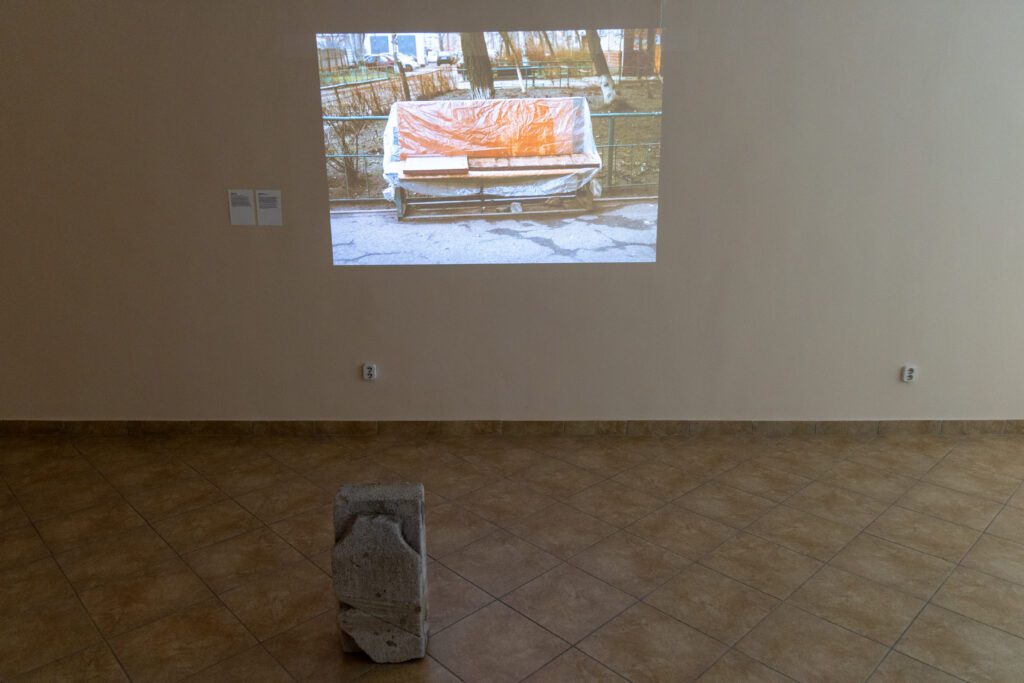
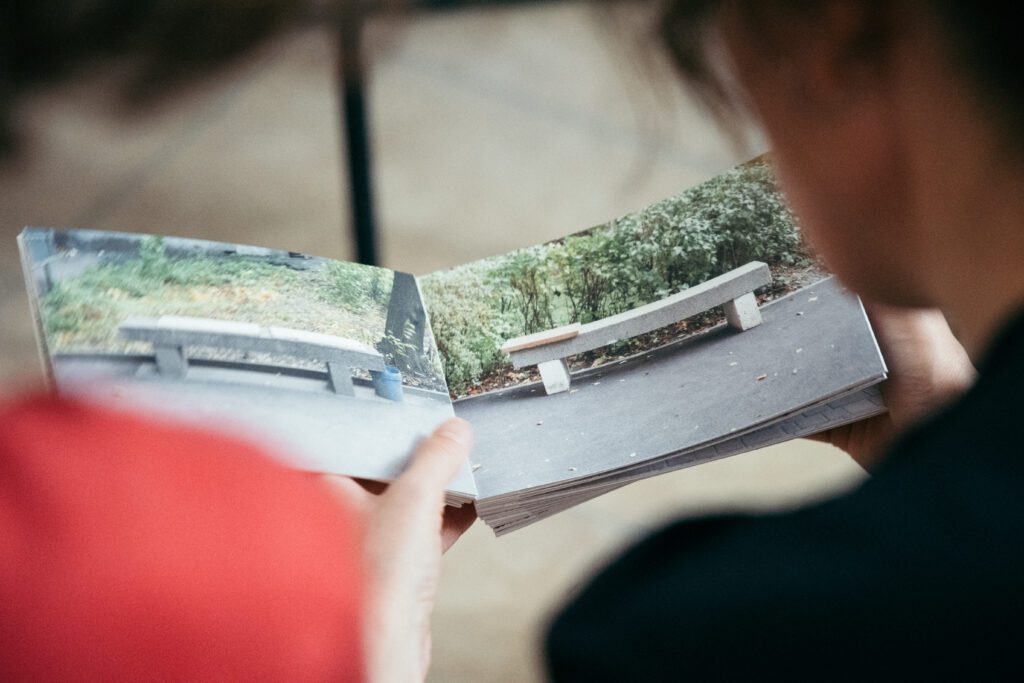
12345678910 Studio presents material from two projects that address the style and function of street furniture in Dnipro’s residential areas.
“Objects for sitting” (2015-2021) documents do-it-yourself and custom-repaired seating, which residents produce as a result of the neglect of common spaces by the municipal administration. The sixty slides in the projection indicate the remarkable variety of seats—of different sizes, materials, colors and comfort—prepared by the residents. The use of found materials and the application of individual priorities affect the design of the seats, for which it is difficult to find a place in the existing topology. While they are not necessarily built to last, their various construction techniques suggest the speed with which these social seats can be repaired and remodeled.
“Let him sit on his own bench” (2020) addresses the transformation of rudimentary concrete benches that were “gifted” by candidates for local political office to potential voters during the election campaign. 12345678910 Studio realised over the course of their research that the vast majority of these benches were modified by the residents for ease of use. This situation shows the discrepancy between the real needs of the residents and the paternal “care” provided to them.
Viewed together, the projects demonstrate that grassroots activism exists in the public space of Dnipro’s sleeping districts.
An earlier version of this installation was presented in Dedication – Traces and Tactics, a group exhibition of Ukrainian contemporary art that was presented at Kristianstads konsthall (Sweden) in 2021.
Oleg Perkovskyi
Synchronize the present
2018
40 slides of 3.5 mm
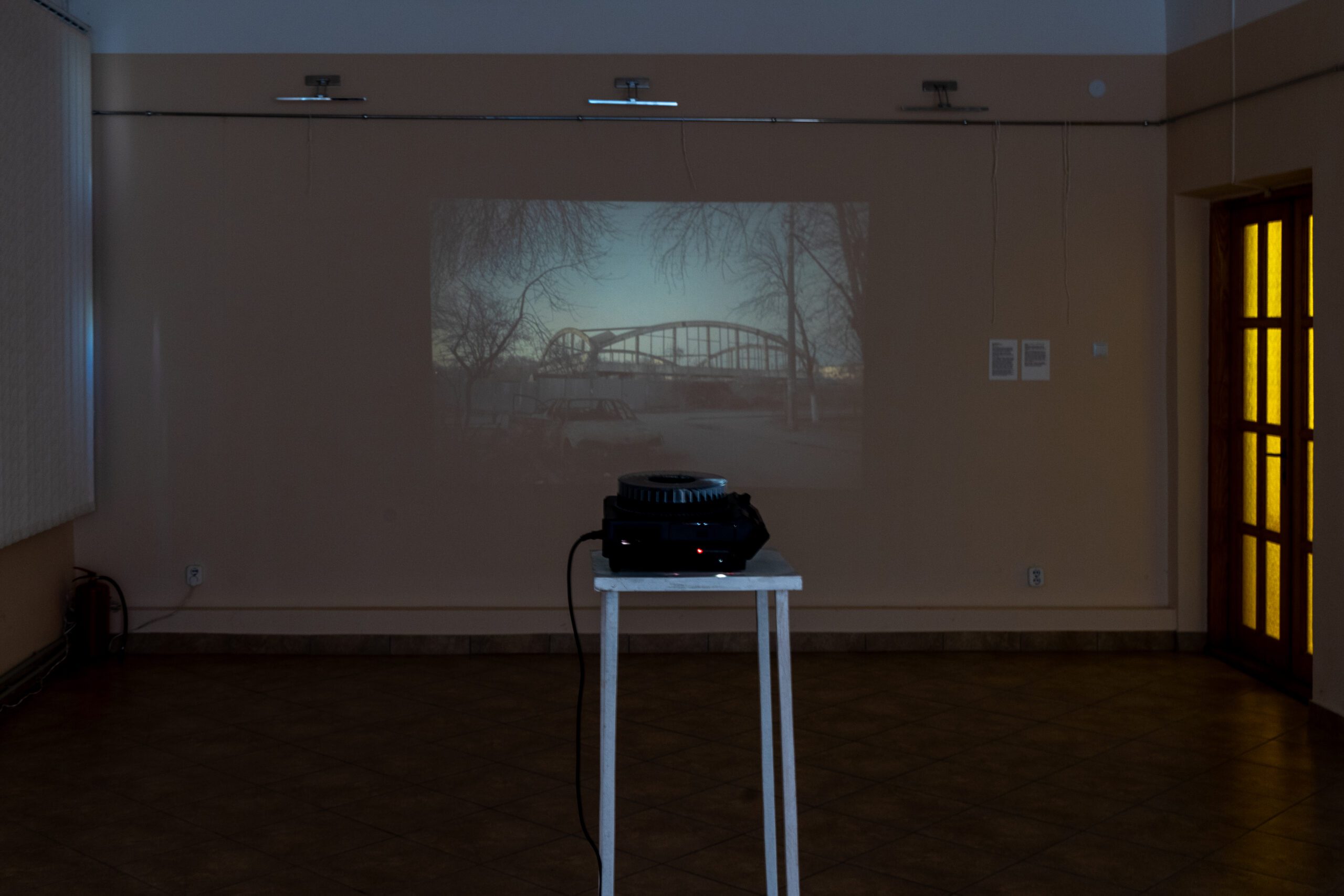
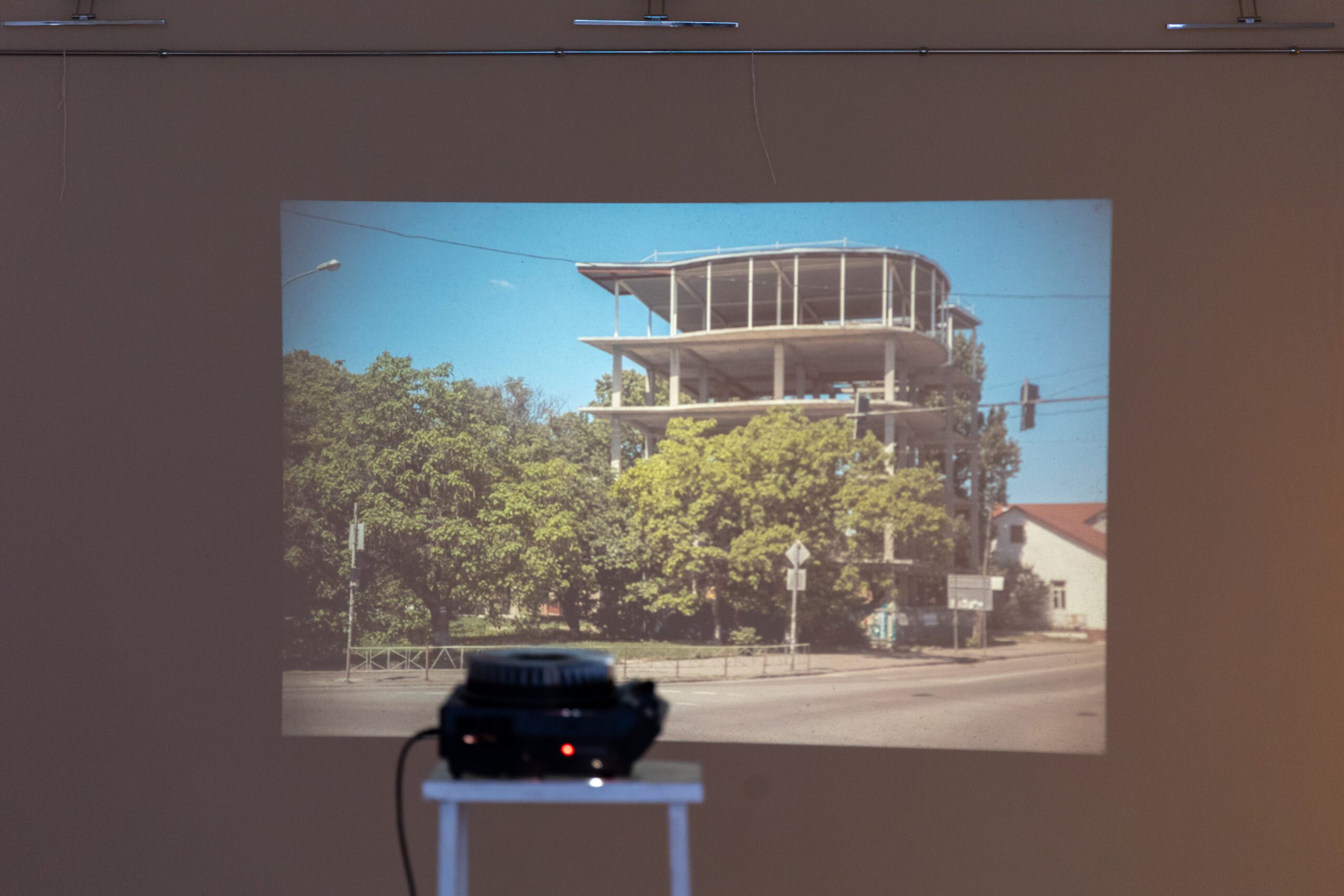
Oleh Perkovskyi – Synchronize the presentThe work “Synchronize the present” is an observation and a certain question of where and how we are all in the system coordinates of the expansion of the Universe since the “Big Bang” through the prism of the image of unfinished structures or buildings, which have been under construction for a long time.
Despite the architectural paradox, the constructions are defined to continue their existence. After the collapse, the incompleteness of the initial plan seems to end up in another dimension of existence with a dominant poeticism and whimsical peace. According to one of the well-known versions, the universe has been expanding for almost 14 billion years. In addition, the speed of expansion — in its various sections — is uneven. The most intense “expansion” occurs where the distances between the heavenly bodies are colossally large, and this process occurs not through “external expansion,” but by adding even greater distances between the heavenly bodies, as if inside themselves. We all exist in one of those areas of the universe where a large amount of matter (celestial bodies) is concentrated, and where there is more matter, the force of gravity is greater, so the rate of expansion is much slower. In other words, the dynamics of the expansion of the universe inside and around our planet is relatively calm and measured. Humanity (especially during the last decades) is developing technologies at the pace of geometric progression, the “unwinding of a dynamo machine” is happening which is incredible for awareness, super-sprinter speeds are being accumulated, but balanced paces can sometimes be felt.
The chosen vector often does not provide for itself time to be more considered in making fateful decisions. Humanity – in a certain sense – seems to be out of sync with the universe. Incompleteness is noted here as being created by people/society on a subconscious level as a hidden desire to slow down time a little, to find it for oneself, to synchronize with Earthly and Extraterrestrial actual nature. Another manifested paradigm of the project is the local context — when, at the stage of construction, the architectural image of the unfinished building is often more complete and aesthetically attractive than an already finished project. Architecture is a constantly accessible art. When there is an opinion that unfinished projects look better than completed ones — is this not a signal to clarify the professional suitability of both architects and all those involved in decision-making, which here and now (hic et ubique) affect the aesthetic views of citizens, on the views that can acquire all the signs of substitution and errors with the corresponding probability of alarming consequences in the future. The embodiment of this idea is the photographed unfinished buildings of one of the cities of Ukraine – Uzhhorod. Unfinished buildings can appear before the viewer as completely finished structures, contextually composed with the architectural rhythm of streets or localities.
Video from the group exhibition “In search of an ideal settlement”
Video credit P. Ryaska
The “Kindling – Reform -” project became possible thanks to the support of:
The Swedish Institute
The beaux-arts Academy in Paris
European Cultural Foundation
Baltic Art Center
Milvus Artistic Research Center
Sincere thanks to The Naked Room gallery for providing the works of Kseniya Hnylytska and Pavlo Makov for the group exhibition